Italianised Landscape with Animals — History & Facts
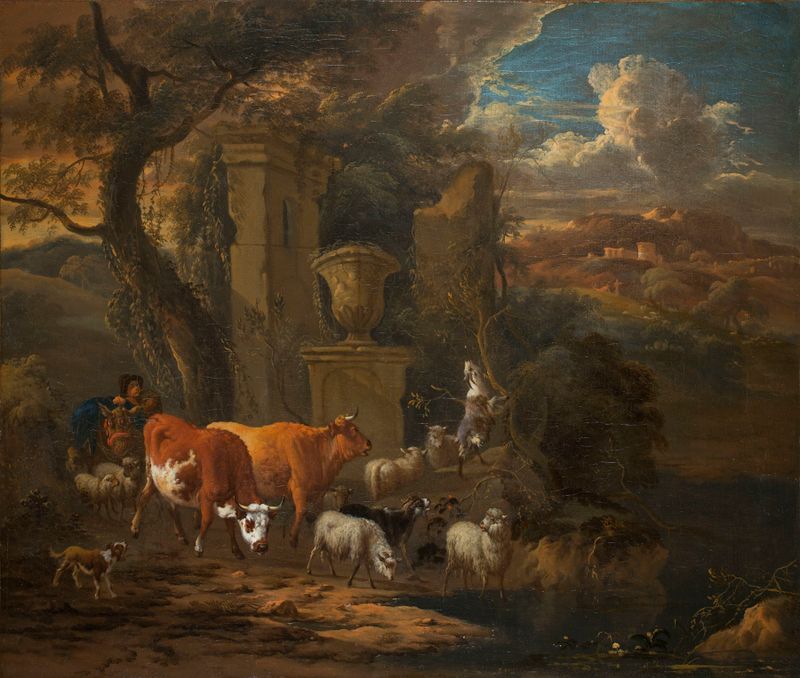
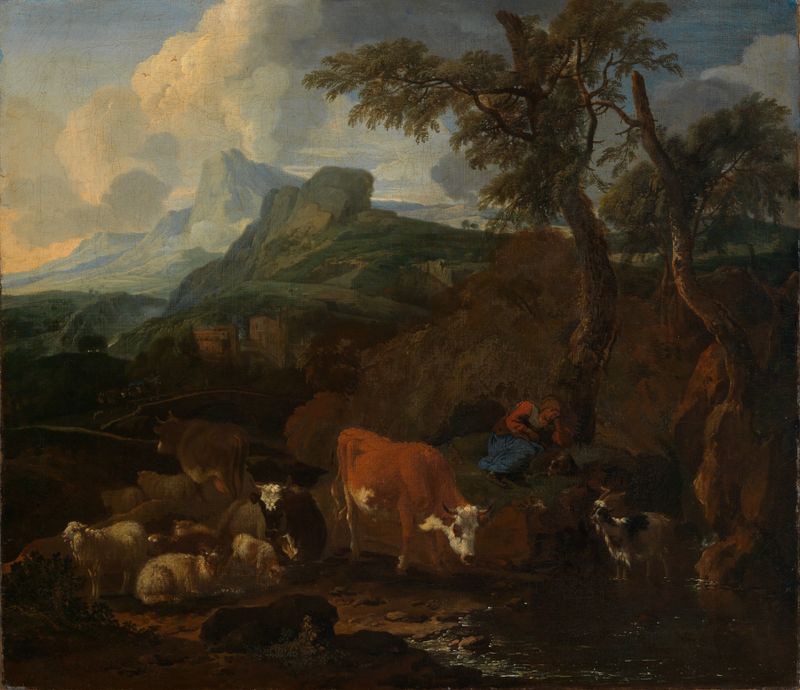
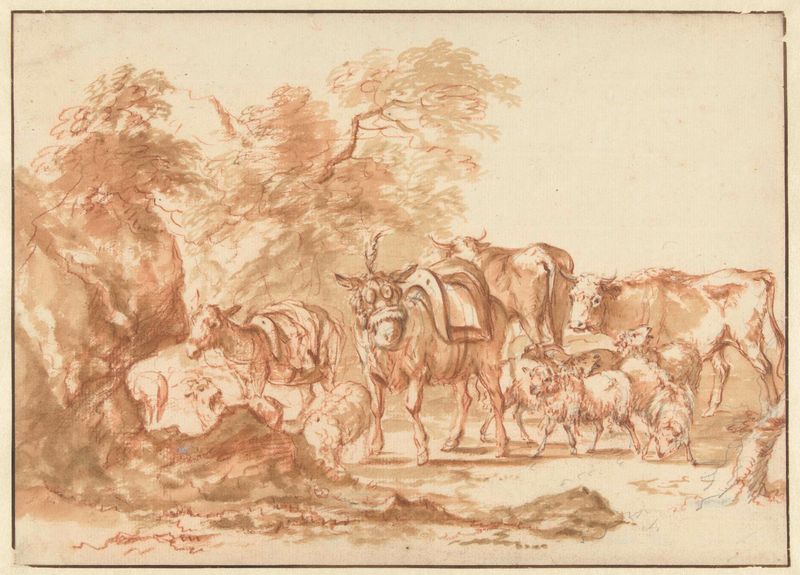
What secret hides in the quiet of the canvas? A pastoral beauty enveloped in an unspoken tension, where the serene landscape juxtaposes the lurking violence of nature. Focus first on the rolling hills that cradle the scene, their gentle curves bathed in soft, dappled light. Notice how the sky, a delicate blend of blues and grays, contrasts with the earthy greens and browns below. Look closely at the animals scattered throughout — a pair of deer, a group of sheep — each rendered with meticulous detail, inviting you to pause and ponder their existence.
The brushwork, though fluid, hints at a potential turmoil beneath the surface, crafted to maintain an illusion of tranquility. As you delve deeper, elements of unease emerge. The animals, while seemingly placid, stand on the precipice of something unseen; their positioning suggests an impending danger. The juxtaposition of idyllic serenity and the potential for violence creates a disquieting tension, urging viewers to reflect on the fragile balance of life within nature.
The lush landscape, often associated with peace, becomes an arena for survival, hinting at the darker truths behind the picturesque imagery. In 1693, the artist created this work during a period of personal and artistic transition, as he navigated the evolving trends in Dutch landscape painting. Operating within the rich context of the Baroque movement, he sought to blend realism with idealized beauty, fostering a complex dialogue between nature and the viewer. It was a time when artists were increasingly exploring the dynamics of form and emotion, yet Carree’s subtle engagement with violence reveals a deeper understanding of life's dualities.