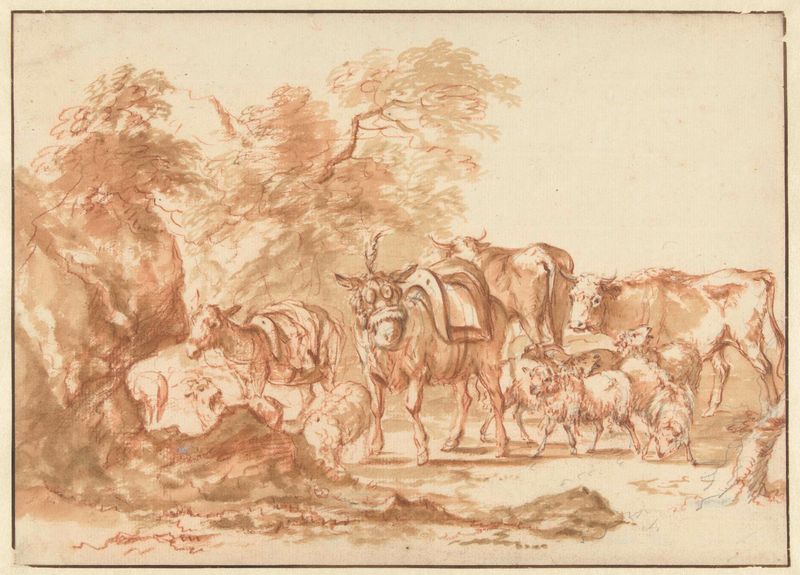
Ruhende Hirtin mit Herde in südlicher Landschaft — History & Facts
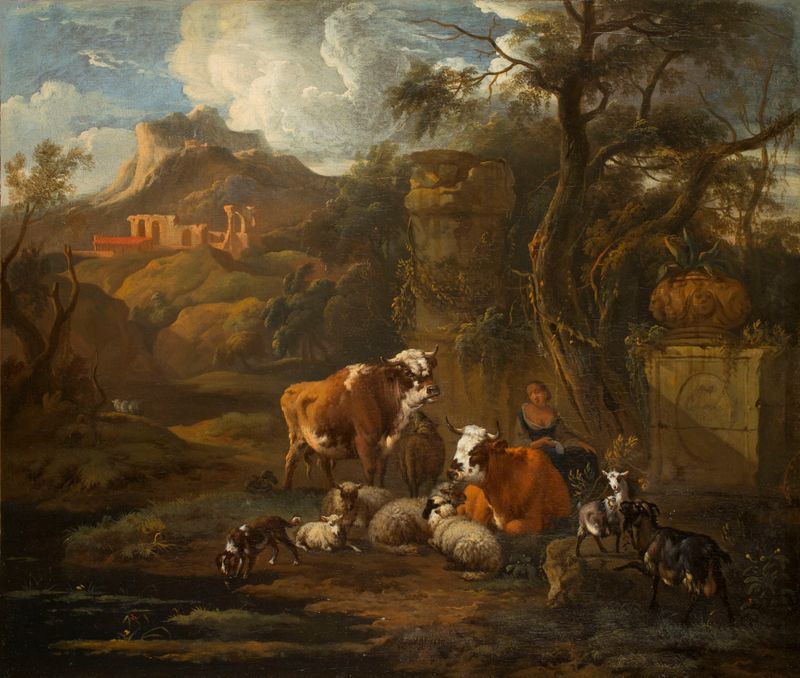
In a world where moments slip through our fingers like sand, art becomes our tether to loss and memory. Look to the left at the shepherdess, her serene figure draped in soft hues of ochre and green, embodying both tranquility and solitude. The gentle curve of her body mirrors the rolling hills behind her, while the grazing sheep blend seamlessly into the landscape, whispering of harmony and quiet coexistence. The delicate brushstrokes evoke the warmth of late afternoon sunlight, casting gentle shadows that enhance the sense of stillness, leaving us to ponder what burdens she carries beneath her calm exterior. Yet, is there not a deeper ache in her posture, an unspoken narrative woven into the fabric of this pastoral scene? The sheep, symbols of innocence, seem oblivious to the weight of her gaze, suggesting a divergence between her internal world and the serene environment surrounding her.
The empty space beyond the animals hints at absence—a reminder of what is lost, perhaps a loved one or a home left behind. The lush landscape, while beautiful, becomes a backdrop for their shared solitude, each brushstroke echoing the complexities of longing. Created during an uncertain time in the late 17th century, this piece reflects Carree's exploration of pastoral themes amid the changing tides of European art. Living in the Netherlands, where the Baroque style was gaining prominence, he infused his work with a sense of emotional depth that resonated with viewers seeking solace in the natural world.
As society grappled with transformation, this painting serves as a poignant reminder of what it means to endure in silence amidst the beauty of life and loss.