
Catwyck on the Rhine — History & Facts
What first grips the eye in Catwyck on the Rhine is the sense of winter’s hush, broken only by the lively dance of figures on the ice. The painter draws you in through the arch of bare trees, their black branches tracing a delicate web against a sky heavy with snow-laden clouds. The church, with its tall spire and solid stonework, anchors the scene, its pale roof catching what little light seeps through the overcast.
Below, townsfolk skate and play, their gestures animated yet small against the broad sweep of the frozen river and the looming sky. The palette is all muted greys and browns, punctuated by the warm ochre of brick and the soft blue of distant shadows, lending the whole view a quiet, expectant mood—a world paused in the cold, yet full of life. Painted between 1660 and 1665, this work belongs to a tradition of Dutch winter landscapes that flourished in the seventeenth century, when scenes of everyday life and local pride found eager buyers among the prosperous middle class. Such paintings were not just decoration; they were celebrations of community, resilience, and the pleasures of ordinary days, even in the heart of winter.
Abraham Beerstraaten was one of many artists who captured these moments, his brush recording the rhythms of a world shaped by rivers, churches, and the changing seasons. Today, Catwyck on the Rhine is part of the Art UK collection, a quiet testament to a time when the Dutch Republic’s towns and waterways inspired painters to turn the familiar into something worth lingering over. Look again at the figures on the ice: each one is a tiny story, caught in the pale winter light.
More Artworks by Abraham Beerstraaten
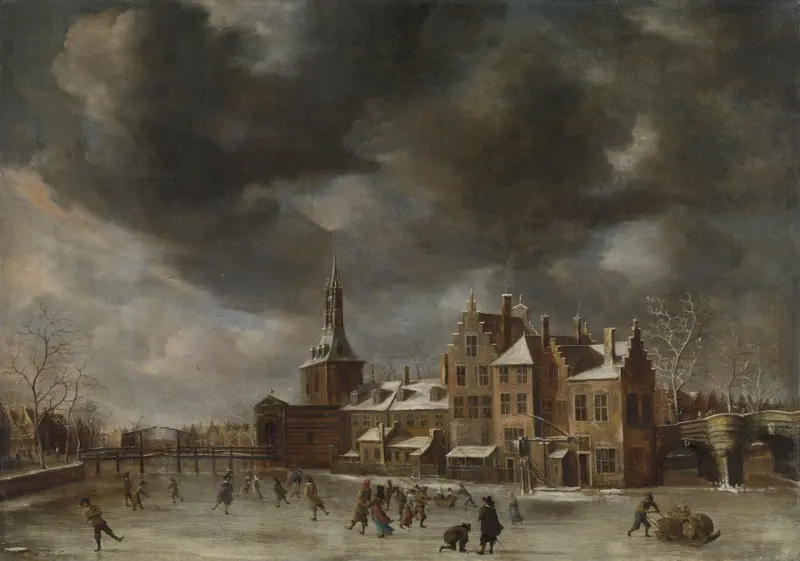
The Blauwpoort in Leiden in the Winter
Abraham Beerstraaten
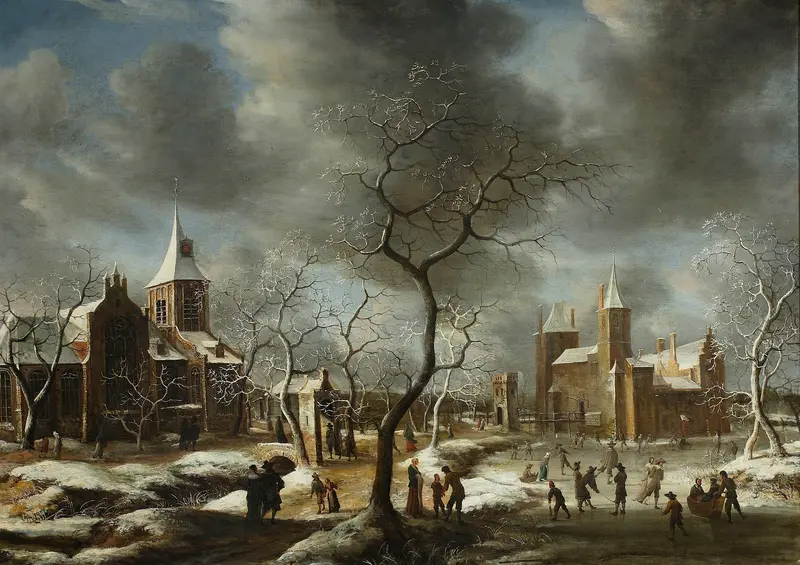
Landscape with ice-skaters
Abraham Beerstraaten
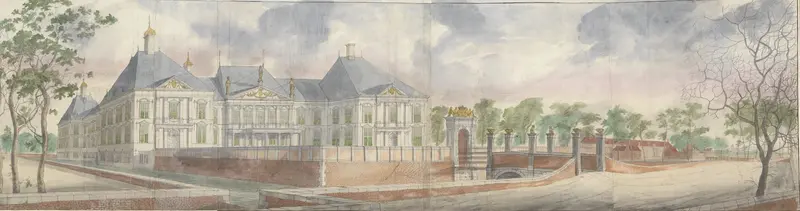
Het Huis te Honselaersdijk en omgeving, over het voorplein te zien
Abraham Beerstraaten
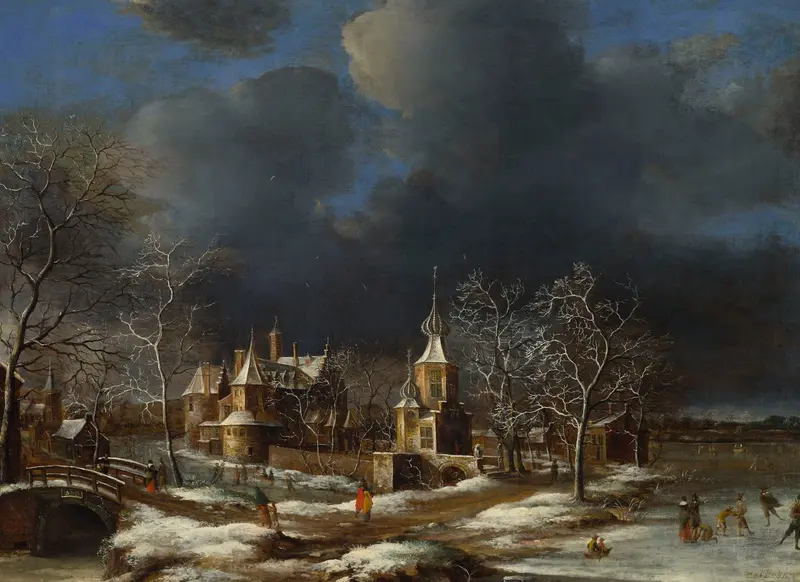
Poelgeest Castle at Koudekerk
Abraham Beerstraaten
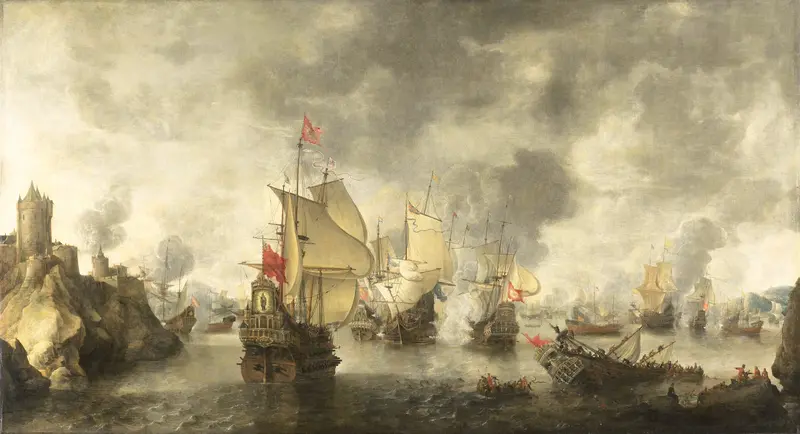
Battle of the Combined Venetian and Dutch Fleets against the Turks in the Bay of Foya, 1649
Abraham Beerstraaten
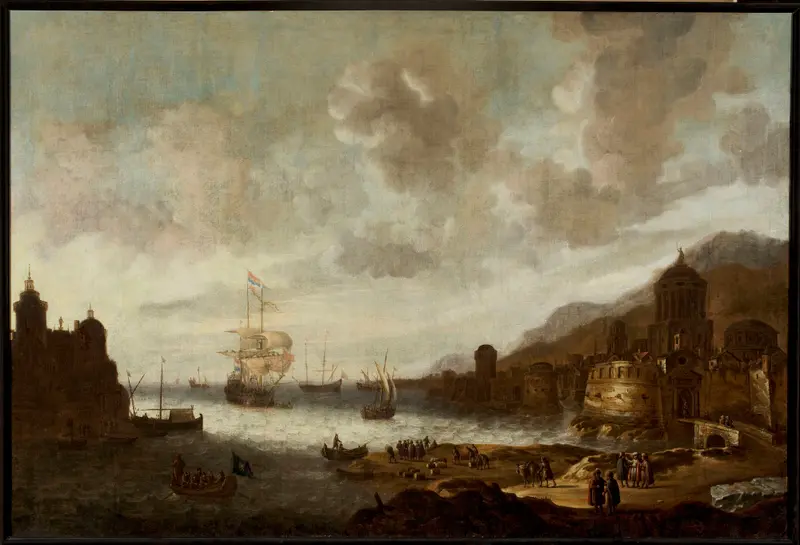
Dutch ship in an exotic port
Abraham Beerstraaten
Battle of the combined Venetian and Dutch fleets against the Turks in the Bay of Foya
Abraham Beerstraaten
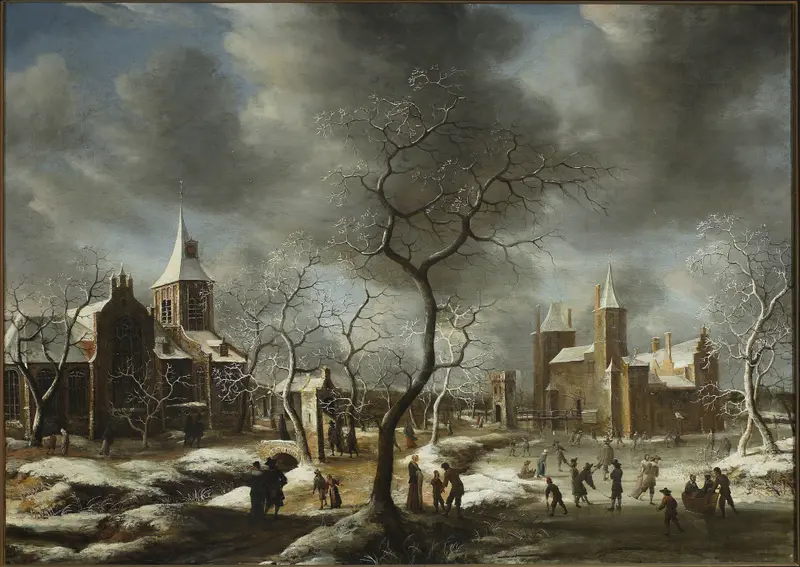
Winter landscape with skaters.
Abraham Beerstraaten
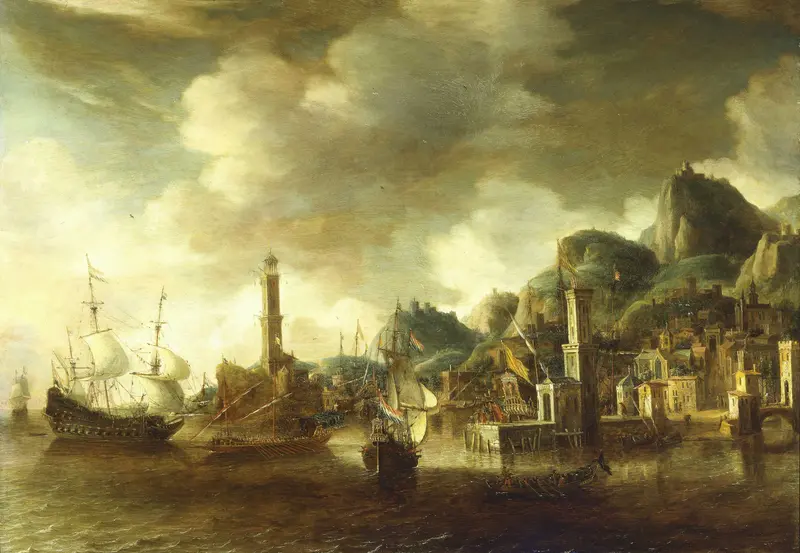
A Dutch Flagship and a Fluyt Running into a Mediterranean Harbour
Abraham Beerstraaten
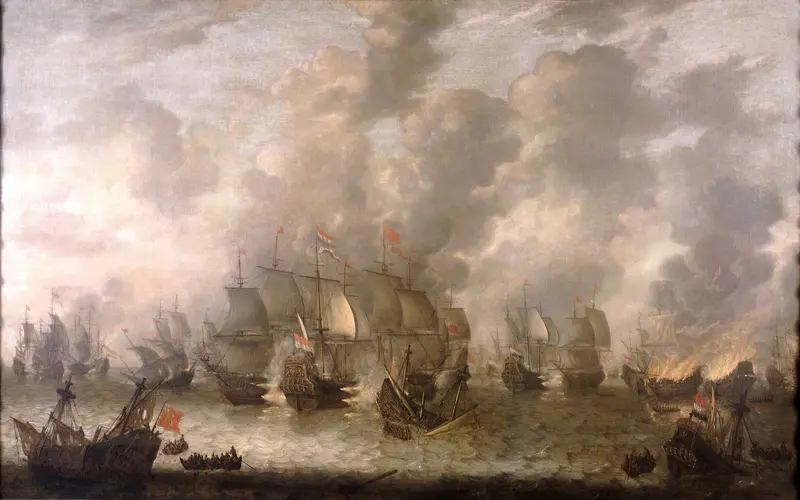
The Battle of Scheveningen, 31 July
Abraham Beerstraaten
More Landscape Art

The Starry Night
Vincent van Gogh

View of Delft
Johannes Vermeer

Water Lilies
Claude Monet

The Grand Canal, Venice, looking north-west from the Ca' Corner to the Ca' Contarini degli Scrigni, with the campanile of Santa Maria della Carità
Canaletto

Windsor Castle
Canaletto

The Grand Canal looking North-East from the Palazzo Dolfin-Manin to the Rialto Bridge
Canaletto