
Caulking of a Vessel — History & Facts
Did the painter know this moment would outlive them? In capturing the caulking of a vessel, a seemingly mundane task becomes a testament to human effort and destiny, forever encased in oil and canvas. Look to the center of the composition, where a shipbuilder kneels, focused on his diligent work. The textured strokes of paint bring life to the wood and tools as they glisten under soft, diffused light. Notice how the interplay of shadow and illumination guides your gaze, emphasizing the laborious nature of his task while grounding the viewer in the warm, earthy palette of browns and ochres.
Each figure is rendered with meticulous detail, inviting an appreciation for craftsmanship beyond the visible. As you absorb the scene, consider the contrast between the vessel, a symbol of ambition and exploration, and the laborer, whose hands are intimately connected to the ship's fate. The tension lies not only in the manual task but also in the unspoken relationship between man and his creation, suggesting a narrative of dreams tied to the aspirations of seafaring. The caulking process itself becomes a metaphor for sealing destinies, hinting at the myriad journeys this ship might embark upon. During the late 17th century, the artist worked in the Netherlands, a hub of maritime trade and exploration.
This period was marked by an increased interest in seafaring culture and the rise of commerce, reflecting a society eager to expand its horizons. Verschuier, deeply influenced by the bustling maritime activities around him, captured this iconic moment, anchoring it to a historical context that resonates with the ambitions of his time.
More Artworks by Lieve Pietersz. Verschuier
Browse all →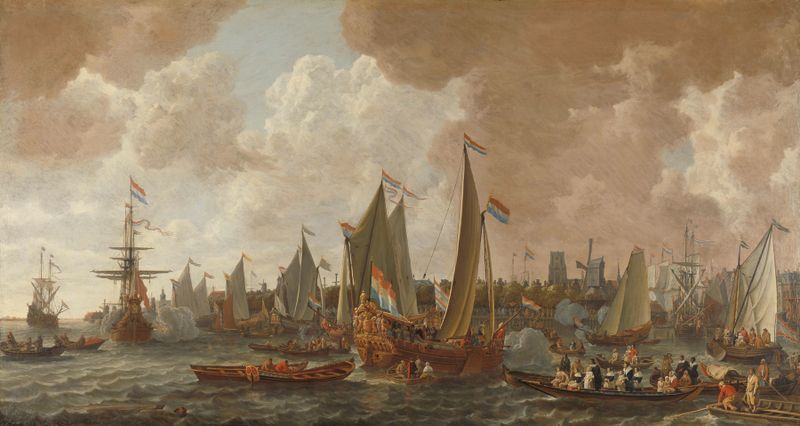
Arrival of Charles II, King of England, in Rotterdam, 24 May 1660
Lieve Pietersz. Verschuier
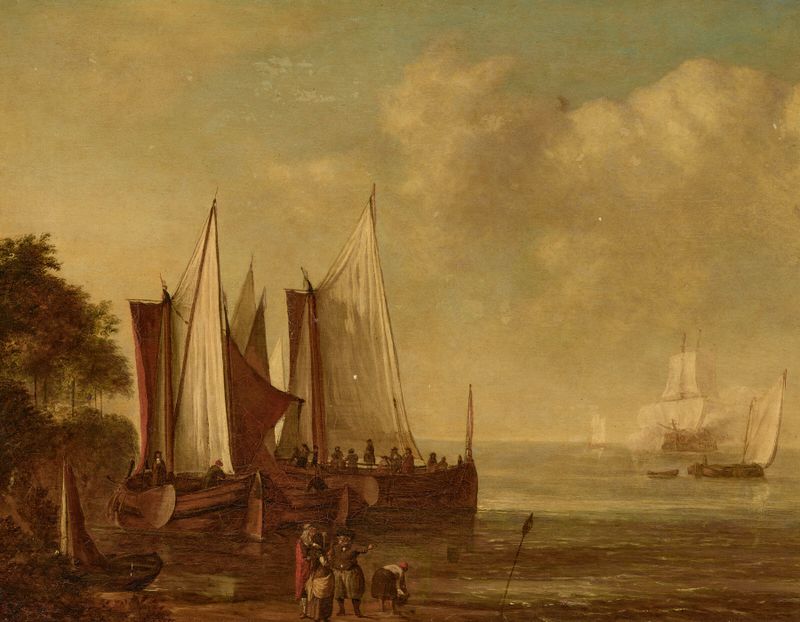
Sailing barges off the coast with figures standing on the shore
Lieve Pietersz. Verschuier
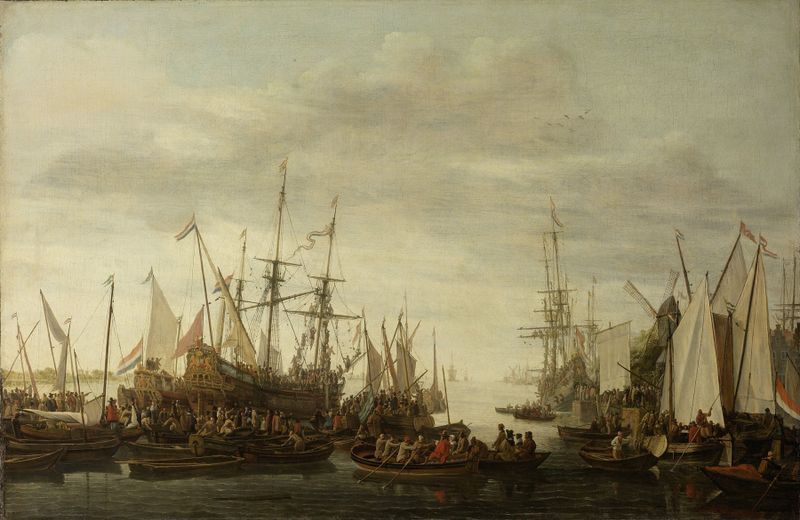
A Keelhauling, according to the non attested Tradition, of the Ship’s Doctor of Admiral Jan van Nes
Lieve Pietersz. Verschuier
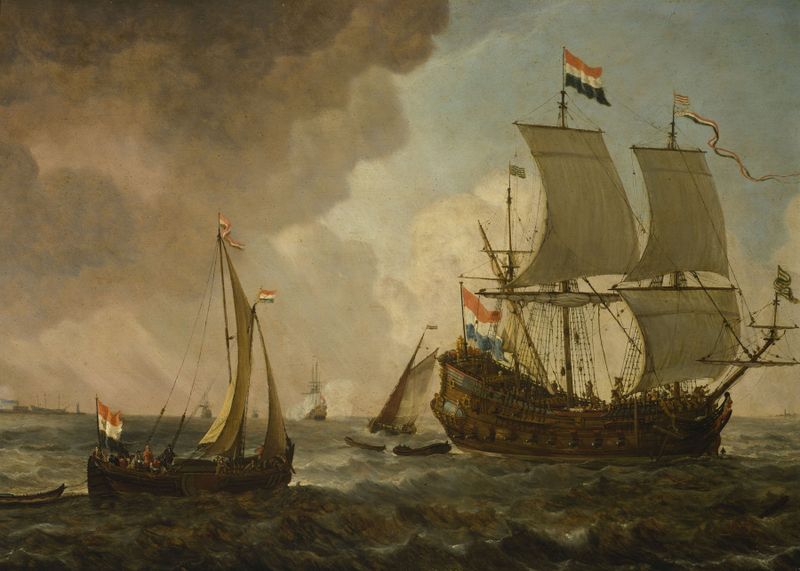
Ships on the sea
Lieve Pietersz. Verschuier





