
Arrival of Charles II, King of England, in Rotterdam, 24 May 1660 — History & Facts
Is this a mirror — or a memory? The interplay of light and shadow in Arrival of Charles II, King of England, in Rotterdam invites us to ponder the transient nature of time and history. Look to the center of the canvas where the jubilant crowd gathers, their faces illuminated by the warm, golden light cascading from the sky. The artist employs a vibrant palette of blues and greens, contrasting sharply with the warm tones of the crowd’s clothing, drawing our gaze to the central figures. Notice how the figures are arranged in a semi-circle, framing Charles II as he steps down from his gilded barge, an emblematic moment depicted with meticulous attention to detail that captures both movement and stillness. The tension between celebration and uncertainty thrives in this scene.
While joyous faces reach upward in anticipation, the somber shadows lurking at the edges remind us that history is rarely uncomplicated. The interplay between the brilliant light spotlighting the king and the darker tones surrounding the crowd creates a dichotomy of hope and unease, encapsulating the complexities of a monarchy returning after years of turmoil. Painted in Rotterdam around 1660, this work emerged during a period of political upheaval as England welcomed back its monarchy following the tumult of the English Civil War. Lieve Pietersz.
Verschuier, known for his ability to convey the spirit of his time through historical moments, captured both the essence of a nation’s longing for stability and the nuances of public sentiment in the wake of Charles II's return.
More Artworks by Lieve Pietersz. Verschuier
Browse all →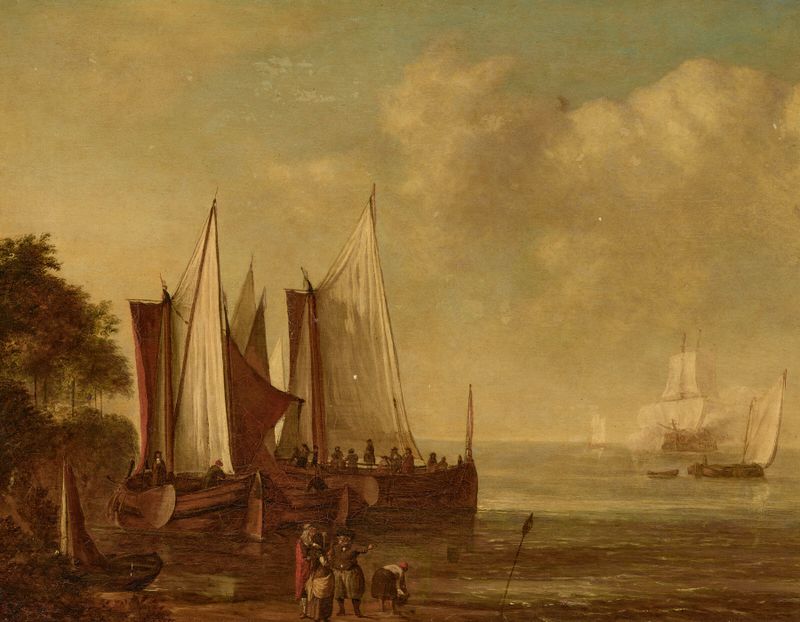
Sailing barges off the coast with figures standing on the shore
Lieve Pietersz. Verschuier
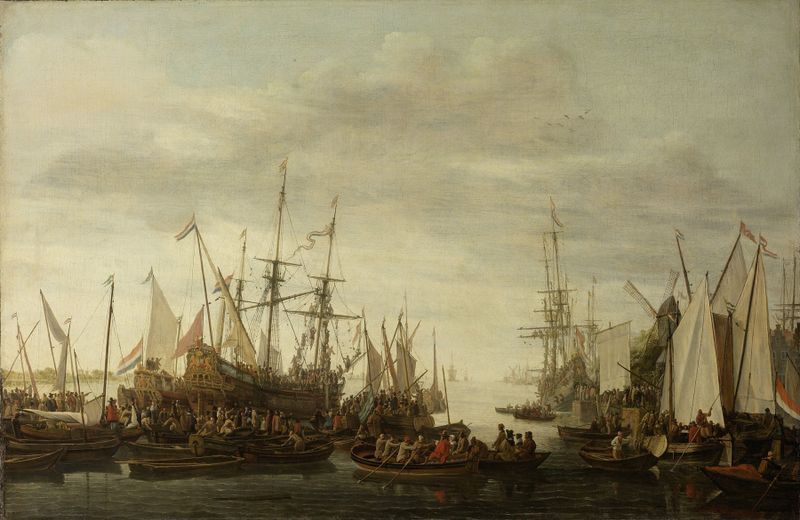
A Keelhauling, according to the non attested Tradition, of the Ship’s Doctor of Admiral Jan van Nes
Lieve Pietersz. Verschuier
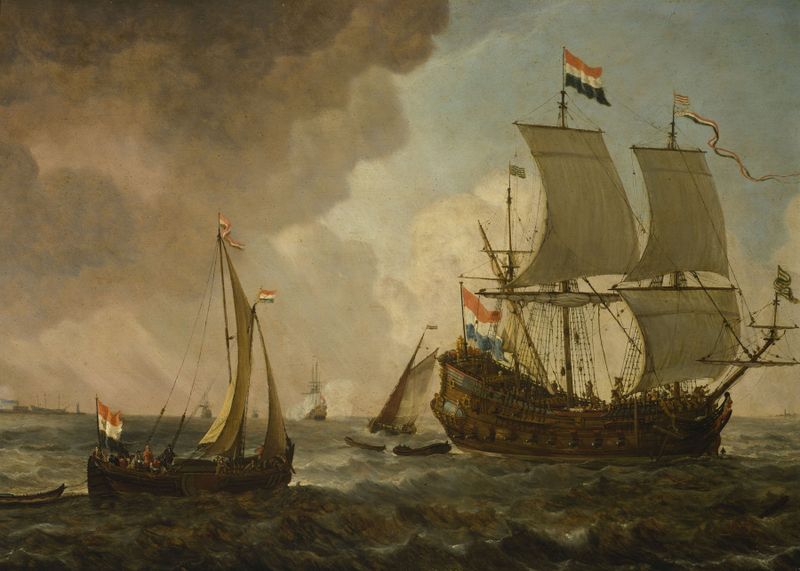
Ships on the sea
Lieve Pietersz. Verschuier
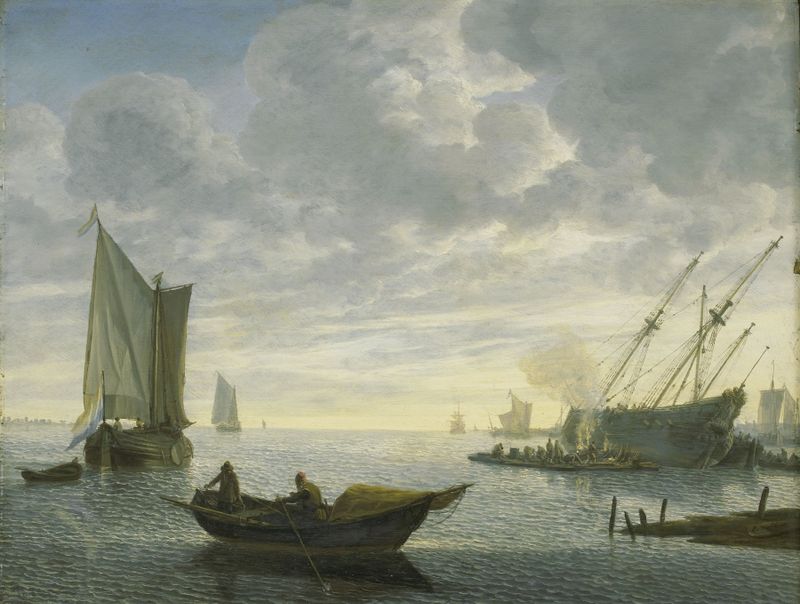
Caulking of a Vessel
Lieve Pietersz. Verschuier
More Historical Art
Browse all →
The Night Watch Militia Company of District II under the Command of Captain Frans Banninck Cocq
Rembrandt van Rijn

Lincoln Memorial
Henry Bacon

The Third of May 1808
Francisco de Goya

Isaac and Rebecca, Known as ‘The Jewish Bride’
Rembrandt van Rijn

The Charge of the Mamelukes (1814)
Francisco de Goya

De vier ruiters van de apocalyps
Albrecht Dürer