
Ships on the sea — History & Facts
When did color learn to lie? As we gaze upon this canvas, we are drawn into a world where the vastness of the sea meets the infinite expanse of the sky, both offering a silent promise of adventure and isolation. Focus on the horizon, where a fragile line divides the cobalt blue of the ocean from the softer hues of the sky. Notice the delicate brushstrokes that create wave patterns, shimmering with hints of white foam. The ships, though present, are mere silhouettes against the expansive backdrop, their muted tones echoing the emptiness of the scene.
Each vessel appears almost ghostly, a reminder of journeys undertaken and the solitude that often accompanies them. Upon deeper reflection, the contrast between the grandeur of nature and the insignificance of human endeavors unfolds. The ships, majestic yet seemingly abandoned, evoke a sense of longing and introspection. The interplay of light and shadow creates emotional tension, hinting at stories untold and the quiet weight of isolation that permeates the canvas.
Here, emptiness takes on a profound presence, inviting viewers to consider their own place in a vast world. Verschuier painted during a time when maritime activity was both a source of wealth and a symbol of exploration. Active in the early 17th century, he found himself amidst the rising prominence of Dutch marine painting, a genre that captured the essence of the sea and its importance in trade and identity. This work reflects not only his skill in depicting ships but also the deeper narrative of voyages that shaped the Dutch Golden Age.
More Artworks by Lieve Pietersz. Verschuier
Browse all →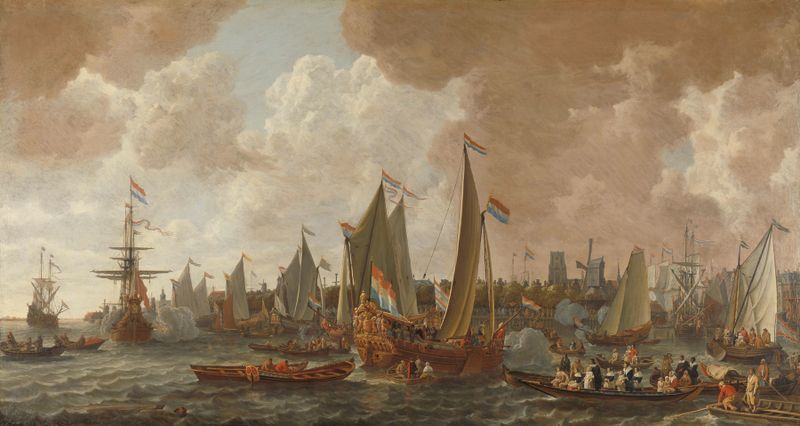
Arrival of Charles II, King of England, in Rotterdam, 24 May 1660
Lieve Pietersz. Verschuier
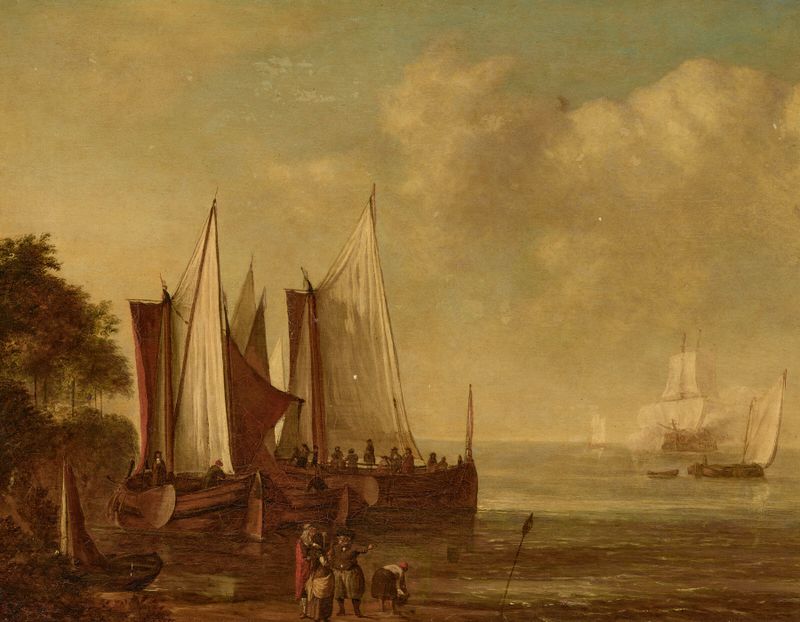
Sailing barges off the coast with figures standing on the shore
Lieve Pietersz. Verschuier
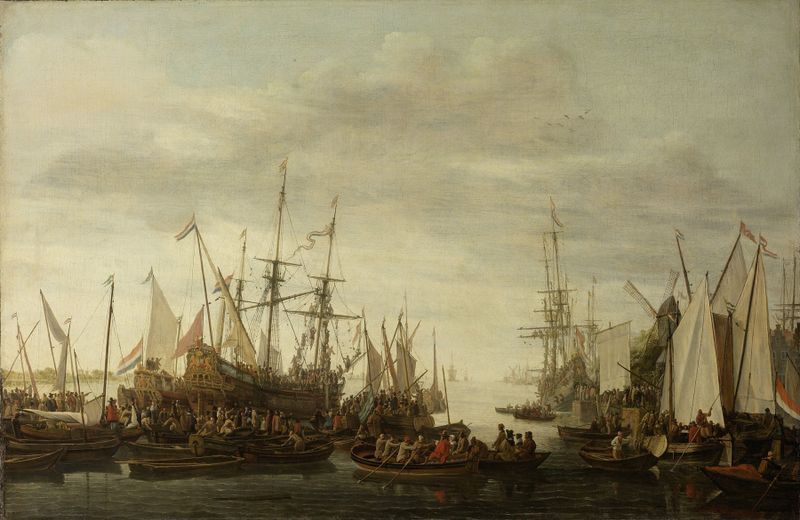
A Keelhauling, according to the non attested Tradition, of the Ship’s Doctor of Admiral Jan van Nes
Lieve Pietersz. Verschuier
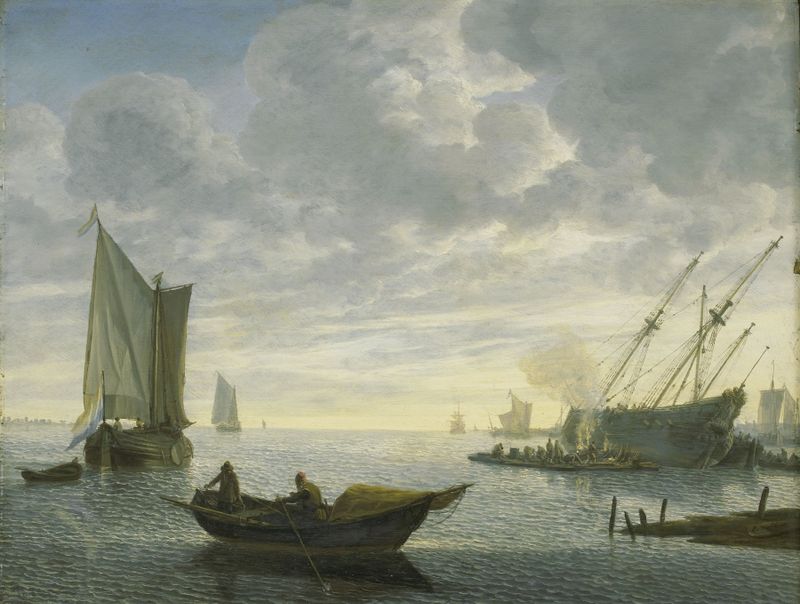
Caulking of a Vessel
Lieve Pietersz. Verschuier





