Champ De Blé — History & Facts
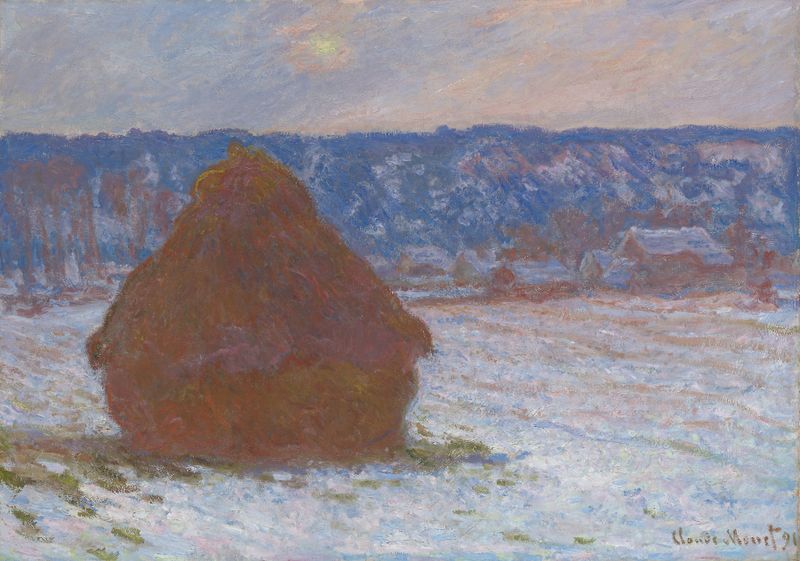
Could a single brushstroke hold eternity? In Champ De Blé, the essence of rebirth is captured not just in the golden wheat swaying in the wind, but in the very act of creation itself. Look to the left at the vibrant strokes of yellow and ochre, where the fields extend to meet the horizon. The painter's deft hand captures the play of sunlight on the grain, each stroke pulsating with life and movement. Notice how the blending of colors creates a dreamy haze, inviting you to step into this ephemeral moment, while the gentle curves of the landscape draw your eye across the canvas.
The soft blues of the sky contrast beautifully with the warmth of the wheat, illustrating a dynamic balance between earth and sky. Delve deeper into the painting, and you’ll find layers of emotional tension woven through the scene. The wheat, a symbol of agriculture and sustenance, suggests a cycle of growth and renewal, embodying the promise of harvest. However, the breezy atmosphere carries an undercurrent of uncertainty, as the landscape seems to waver between the serenity of nature and the unpredictability of life.
The interplay of light and shadow hints at the complexities of existence, evoking a sense of nostalgia intertwined with hope. In 1881, during a pivotal phase of his career, Monet worked on Champ De Blé near his home in Giverny, France. This period marked a transition in his style, as he increasingly embraced the Impressionistic techniques that would define his legacy. Art was evolving, embracing new ideas and the fleeting nature of reality, much like the golden fields captured in this masterpiece.