
Channel of Lake Albano — History & Facts
This notion resonates in the delicate balance captured within this artwork, where nature's majesty converges with the weight of human emotion. Look to the foreground, where the shimmering waters of Lake Albano stretch across the canvas, inviting the gaze with their serene surface. Notice how the gentle strokes of blue and green mingle, evoking a sense of tranquility, yet holding an unsettling depth beneath. The distant hills rise softly against the backdrop, their gentle gradients painted in hues of gold and beige, hinting at the warmth of the sun.
The composition's harmony contrasts significantly with the looming shadows, creating a dialogue between light and dark that begs for introspection. As you delve deeper, consider the interplay of nature's elements. The stillness of the lake, juxtaposed with the rugged mountains, reflects the tension between serenity and turmoil. There’s an underlying narrative of longing and balance, as if the water seeks to mirror the sky, yet is tethered by the earth’s gravity.
Each brushstroke tells a story, echoing the duality of beauty and sorrow, suggesting that even in moments of peace, there lies an unspoken yearning. In 1824, the artist crafted this scene amidst a rapidly changing art world, characterized by Romanticism's rise in Europe. Living in Germany, Fries was drawn to Italy’s landscapes, which inspired many of his works. At this time, artists were increasingly exploring nature as not just a backdrop but as an integral part of human experience, reflecting both its splendor and its complexities.
More Artworks by Ernst Fries
Browse all →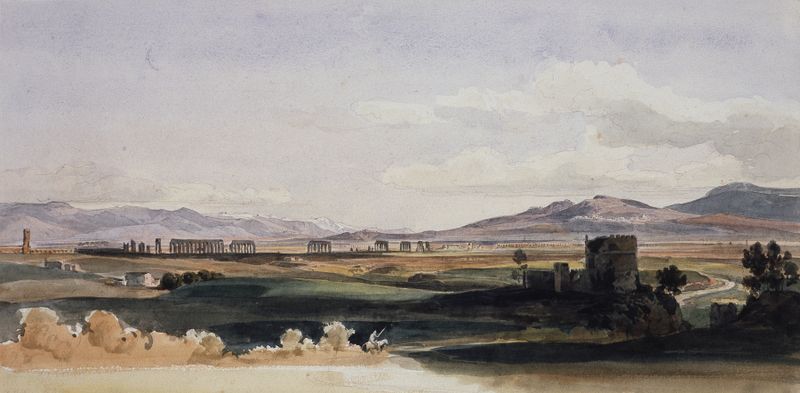
Römische Campagna und das Albaner Gebirge
Ernst Fries
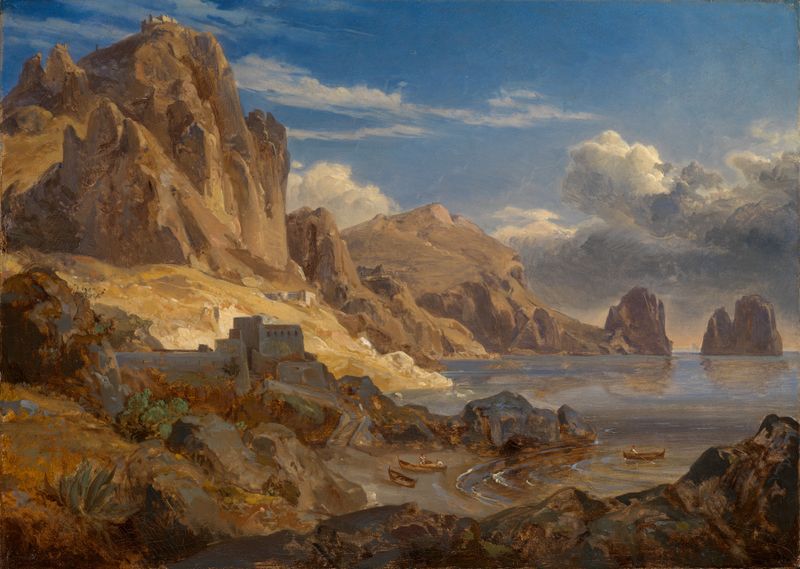
Küste bei Capri mit Blick auf die Faraglioni
Ernst Fries
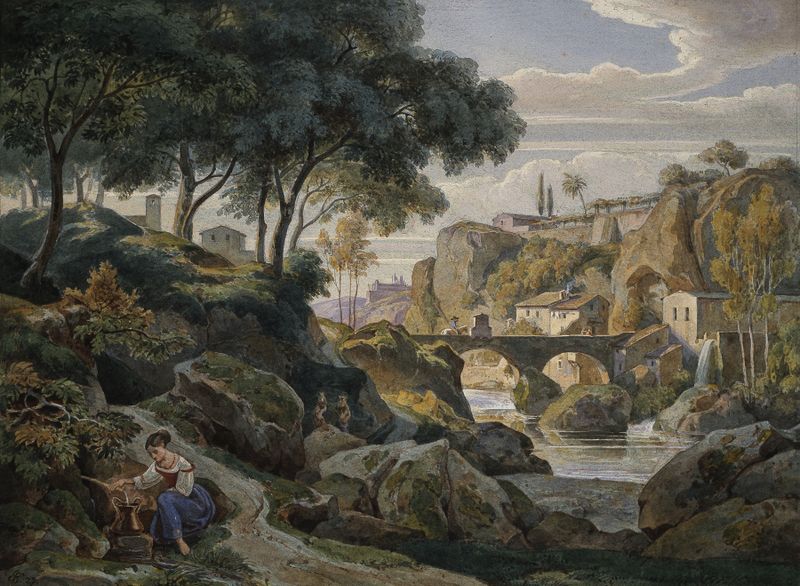
Italienische Gebirgslandschaft mit steinerner Brücke
Ernst Fries
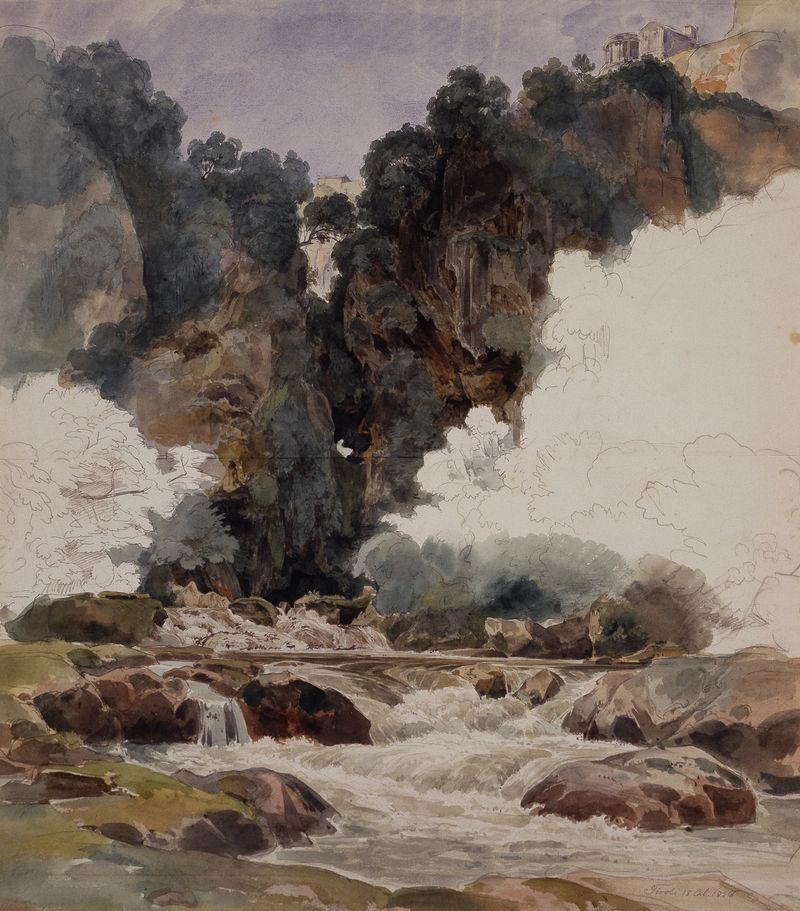
The Neptune Grotto close to Tivoli
Ernst Fries
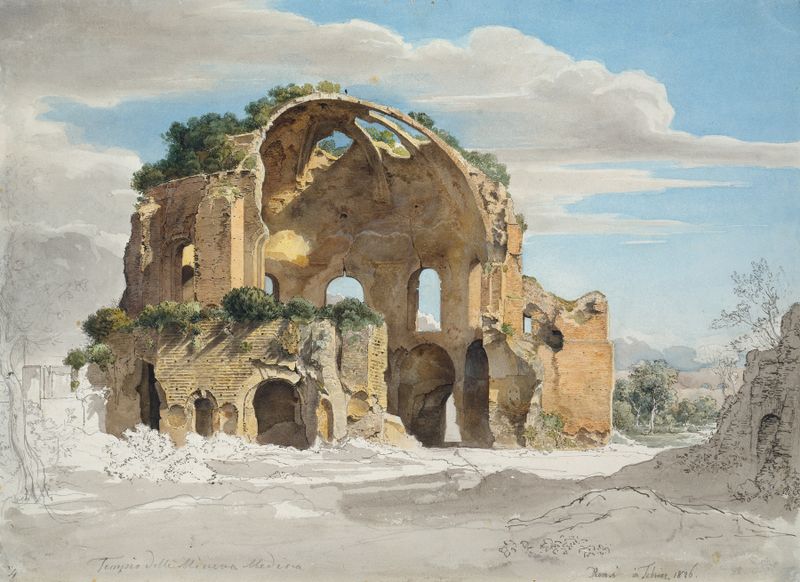
Tempel der Minerva Medica in Rom
Ernst Fries
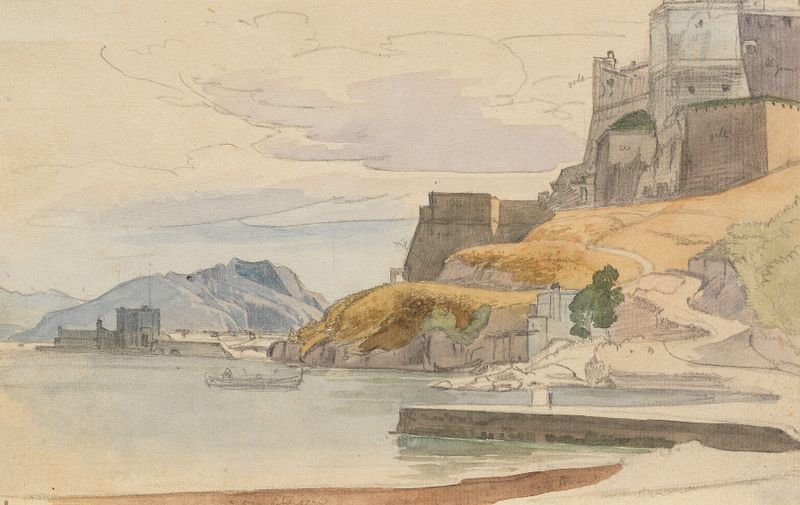
Landscape Study 2
Ernst Fries
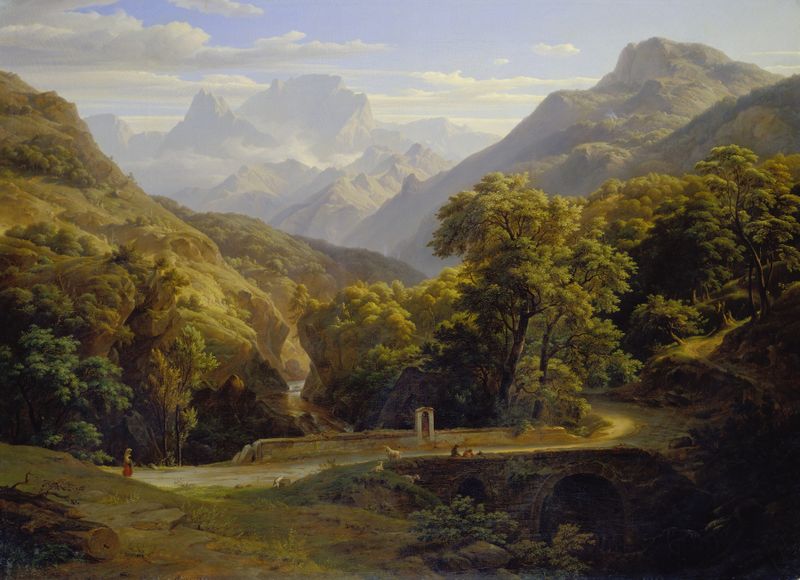
Mountainscape
Ernst Fries
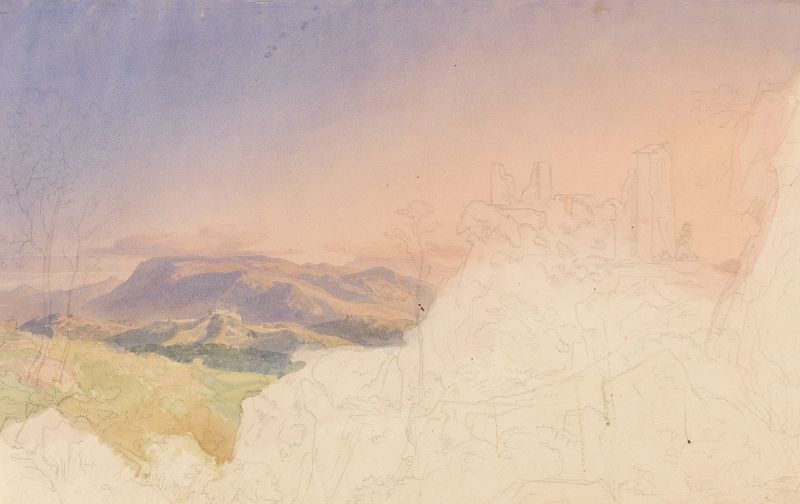
Landscape Study 3
Ernst Fries





