
The Neptune Grotto close to Tivoli — History & Facts
Could beauty survive in a century of chaos? In The Neptune Grotto close to Tivoli, a serene oasis emerges from tumultuous times, inviting viewers to wade into its tranquil embrace. Look to the left at the intricate play of light filtering through lush foliage, casting dappled shadows upon the rocky terrain. The cool blues and greens harmonize with warm earth tones, evoking both peace and vitality. Notice how the figures, dwarfed by nature, are arranged in graceful poses, their gestures suggesting a dialogue with the surrounding beauty, while the cascading water hints at eternal movement and life. Beneath the surface, the artwork encapsulates a moment of introspection amidst nature’s grandeur.
The juxtaposition of human form against the overwhelming scale of the grotto reflects humanity's quest for solace. The shimmering water not only mirrors the scene but also symbolizes the fleeting nature of beauty and existence, intertwining emotion and longing in a single, captivating moment. In 1826, Ernst Fries painted this piece during a period marked by significant transformations in Europe, where romanticism was blooming alongside social upheaval. Living in Germany, he immersed himself in the picturesque landscapes of Italy, drawing inspiration from both natural beauty and classical influences.
This work stands as a testament to his ability to capture harmony in a world often overshadowed by chaos.
More Artworks by Ernst Fries
Browse all →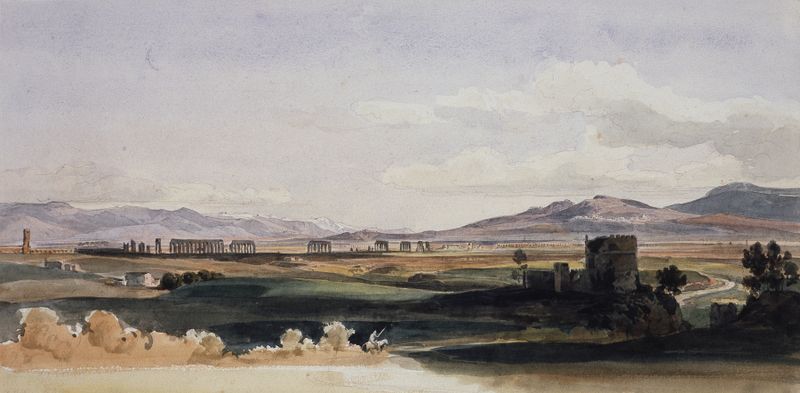
Römische Campagna und das Albaner Gebirge
Ernst Fries
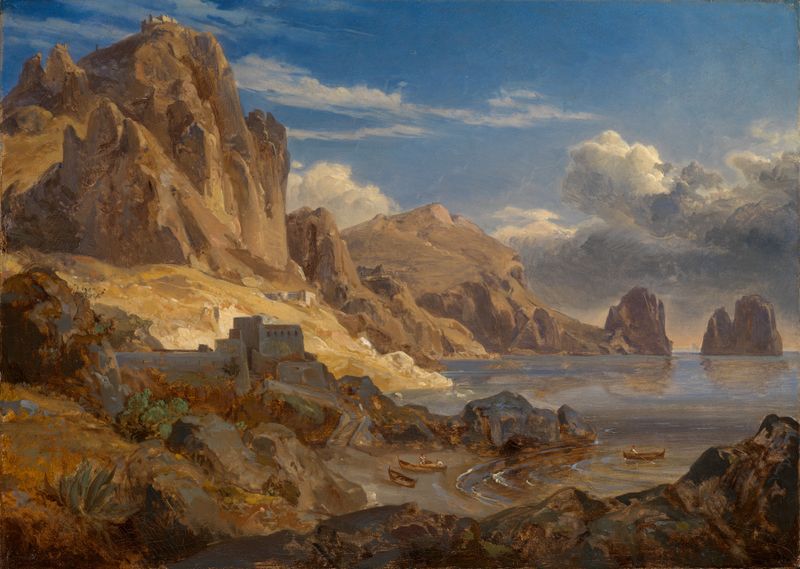
Küste bei Capri mit Blick auf die Faraglioni
Ernst Fries
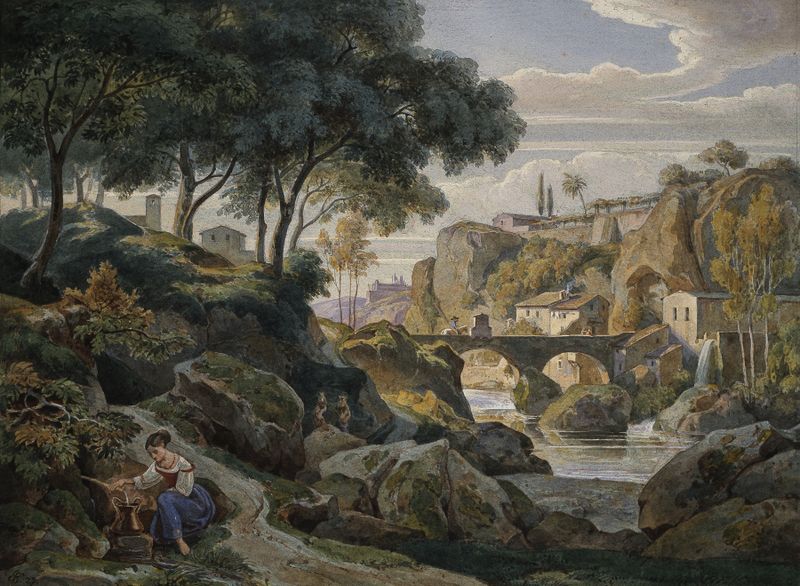
Italienische Gebirgslandschaft mit steinerner Brücke
Ernst Fries
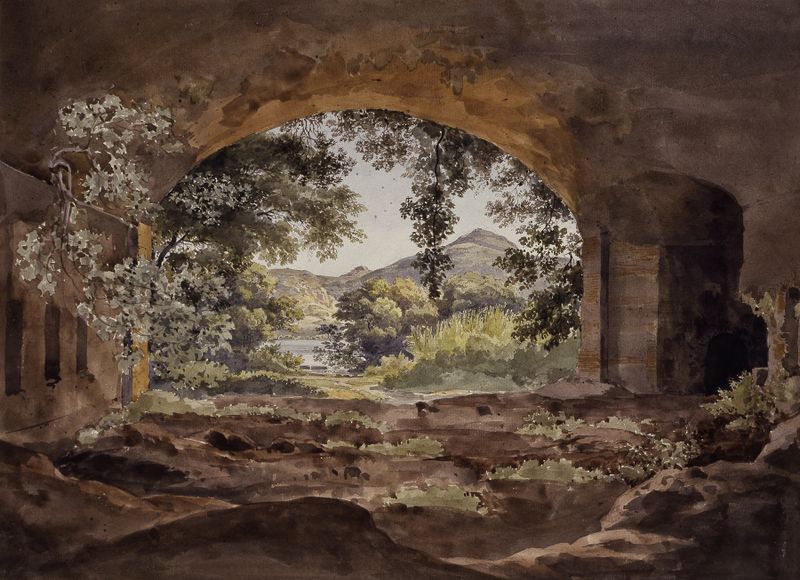
Channel of Lake Albano
Ernst Fries
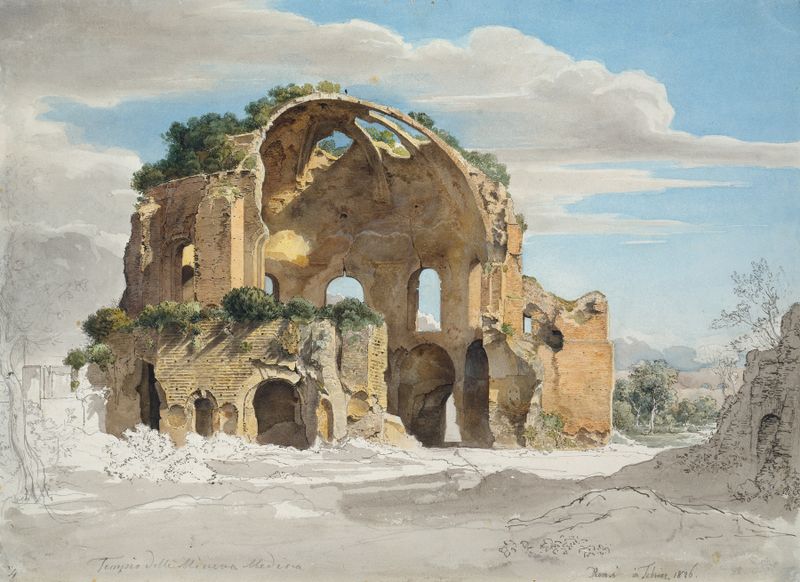
Tempel der Minerva Medica in Rom
Ernst Fries
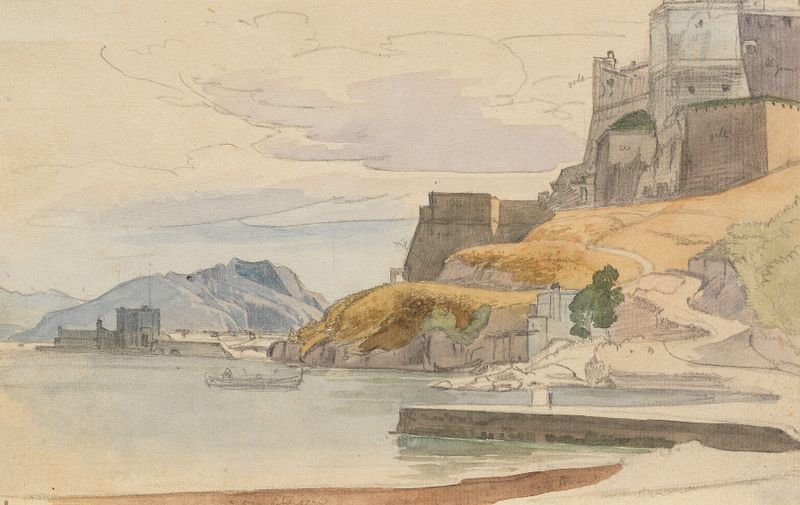
Landscape Study 2
Ernst Fries
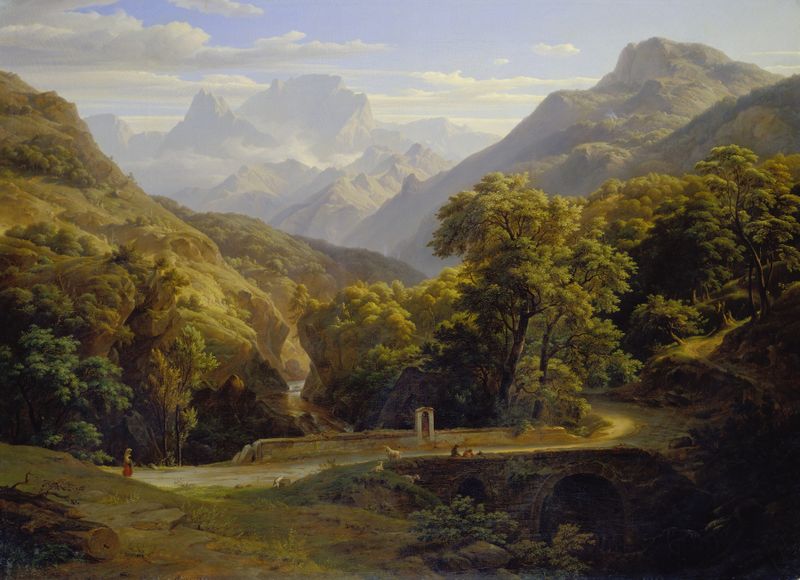
Mountainscape
Ernst Fries
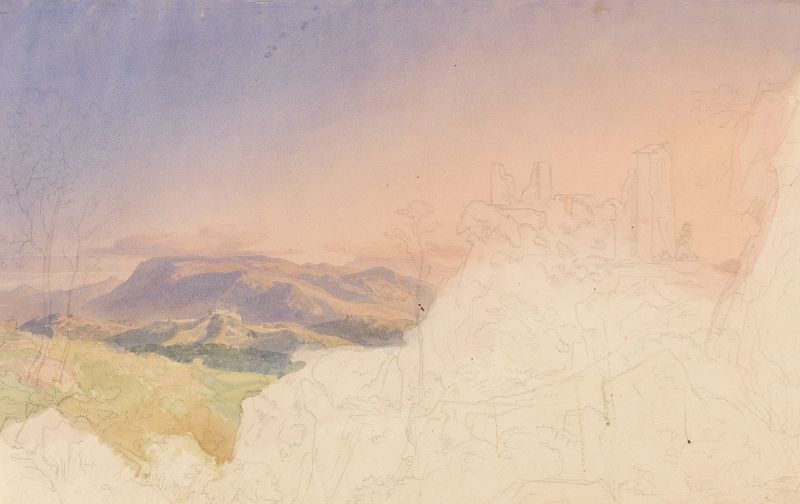
Landscape Study 3
Ernst Fries





