
Chateau, Cote Saint Andre — History & Facts
Can beauty exist without sorrow? The delicate interplay of light and shadow in this work evokes a profound awakening, revealing the layers of emotion woven into the fabric of nature. Look to the left at the soft hues of the evening sky, where pale blues and warm ambers blend seamlessly, suggesting the onset of twilight. The chateau stands stoically, its architectural lines both proud and melancholic, while the surrounding landscape unfolds with lush greens and vibrant strokes of gold. Notice how the brushwork creates a rhythmic flow, guiding the eye toward the horizon where the world gently fades into the dusk—a reminder of time’s passage and the ephemeral nature of beauty. The contrast between the robust structure of the chateau and the gentle fluidity of the natural elements reflects the tension between human endeavor and the inevitable decay of all things.
The soft, almost dreamlike quality of the light captures a moment of tranquility, yet there lingers an undercurrent of nostalgia for what once was, hinting at the transient joys that life offers. Each detail—the curling smoke from the chimney, the serene water below—acts as a narrative thread, weaving together the story of a place rich in history and emotion. Johan Barthold Jongkind painted this landscape in 1882 while living in France, a time when Impressionism was blossoming, and traditional techniques were being challenged. He was deeply influenced by his contemporaries, yet he pursued his unique vision, focusing on the interplay of light and atmosphere that defined much of his work.
This painting reflects not only his personal journey but also the broader artistic movement that sought to capture the essence of fleeting moments.
More Artworks by Johan Barthold Jongkind
Browse all →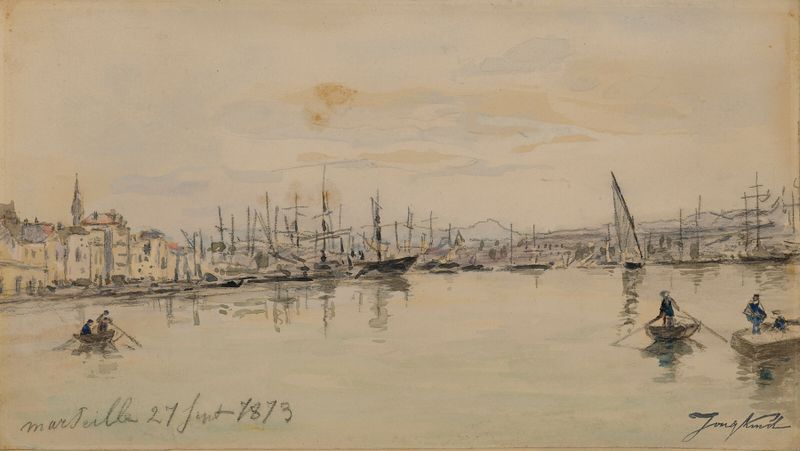
Le Port de Marseille
Johan Barthold Jongkind

Canal Saint-Martin
Johan Barthold Jongkind

Countryside near Brezins, between Grenoble and Vienne
Johan Barthold Jongkind

Notre-Dame vue du quai de la Tournelle
Johan Barthold Jongkind

Environs de Grenoble
Johan Barthold Jongkind

Clair de lune à Overschie (environs de Rotterdam)
Johan Barthold Jongkind

Port de Honfleur
Johan Barthold Jongkind
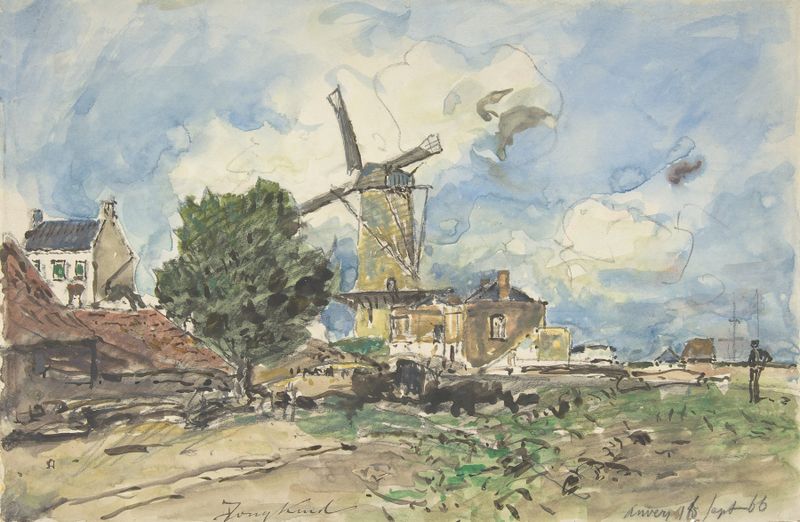
Wind Mill at Antwerp
Johan Barthold Jongkind

Le Havre
Johan Barthold Jongkind

The Church of Overschie
Johan Barthold Jongkind





