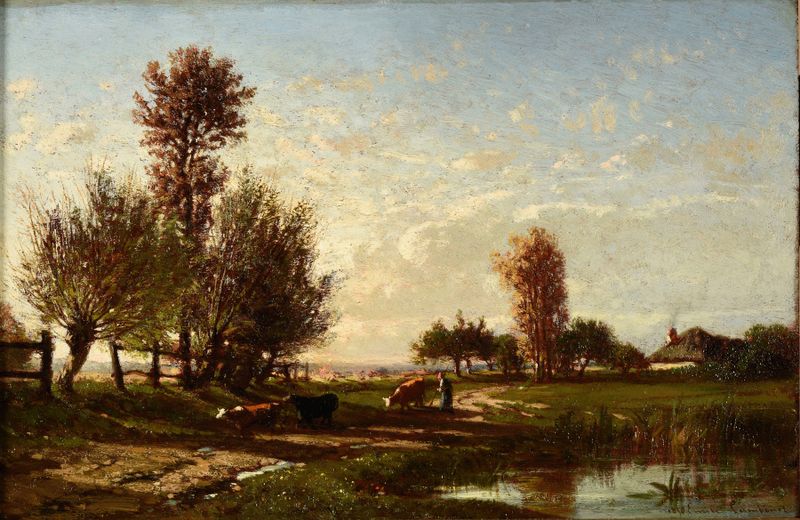
Chaumière au bord de l’eau — History & Facts
In that suspended moment between what has been and what is yet to come, destiny unfolds quietly yet insistently. Each brushstroke whispers secrets, inviting contemplation of the paths taken and those forever obscured. Look to the left of the canvas, where a rustic cottage peeks out from behind a curtain of verdant foliage. Its sun-dappled walls reflect a warm, inviting glow, creating a stark contrast with the cool blues of the surrounding water.
The artist’s meticulous attention to detail brings the scene alive, from the gentle ripples on the surface to the delicate interplay of shadow and light filtering through the trees. Each element harmonizes, drawing the viewer's gaze into the serene embrace of nature, making the painting feel both intimate and expansive. Yet beneath this idyllic surface, deeper layers of meaning emerge. The juxtaposition of the tranquil cottage and the flowing water suggests the transient nature of life — a reminder that even the most peaceful moments are fleeting.
The lush greenery signifies growth and possibility, while the water hints at the passage of time and the inevitability of change. Together, they evoke a sense of longing for what might have been, as well as hope for what is yet to come. Émile Lambinet painted this work in 1854 while living in France, a time when Naturalism began to challenge the idealized forms of Romanticism. The artist was deeply influenced by the beauty of the rural landscape, reflecting a growing interest in capturing everyday life and nature.
This piece exemplifies that shift, illustrating his commitment to portraying nature's beauty while subtly hinting at the complexities of human experience entwined within it.