Paysage avec cours d’eau — History & Facts
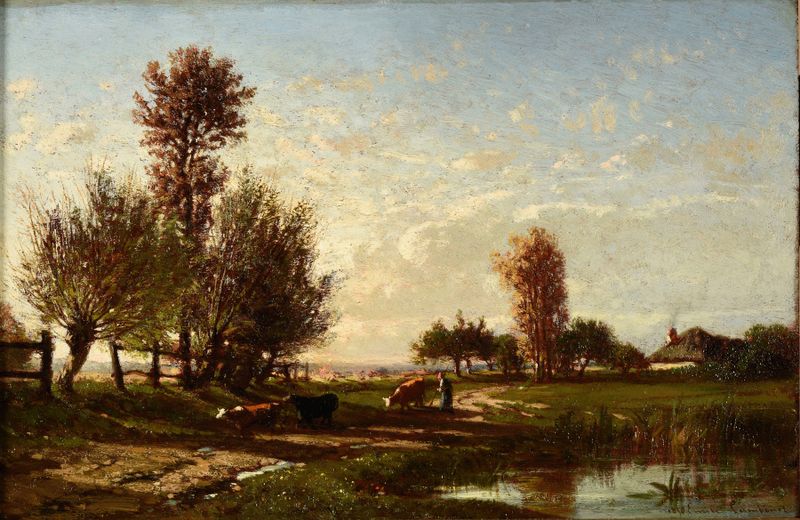
This thought lingers in the air, echoing the delicate balance of strength and fragility in the natural world. In Paysage avec cours d’eau, the artist captures a serene landscape that dances between the sublime and the ephemeral, inviting the viewer to ponder the transient nature of beauty. Look to the left at the tranquil river, its gentle current reflecting a patchwork of greens and blues. The brushwork is soft yet deliberate, with dappled light filtering through the branches above, illuminating the scene in a way that feels both intimate and expansive.
Notice how the horizon is painted in warm, golden hues, suggesting a fleeting moment at dusk, where day surrenders to night. The composition is a harmonious blend of nature’s bounty, drawing the eye toward the inviting water while allowing the surrounding foliage to cradle the scene gently. Yet, within this idyllic portrayal lies a deeper tension. The fragile beauty of the landscape hints at vulnerability, as the lush greenery and tranquil waters stand at the mercy of time and change.
The delicate interplay of light and shadow conveys a sense of impermanence, capturing a moment that, while picturesque, could easily slip away. This juxtaposition evokes a poignant reminder of nature’s resilience and fragility, prompting reflection on human life intertwined with the natural world. In 1856, when the artist created this piece, he was living in France, amidst a period of artistic exploration and upheaval. The mid-19th century witnessed the rise of Impressionism, which sought to capture the fleeting effects of light and atmosphere.
Lambinet, influenced by this movement, painted landscapes that emphasized the emotional resonance of nature, responding to the evolving preferences of a society captivated by the beauty and complexity of the world around them.