Cheever’s Mill on the St. Croix River — History & Facts
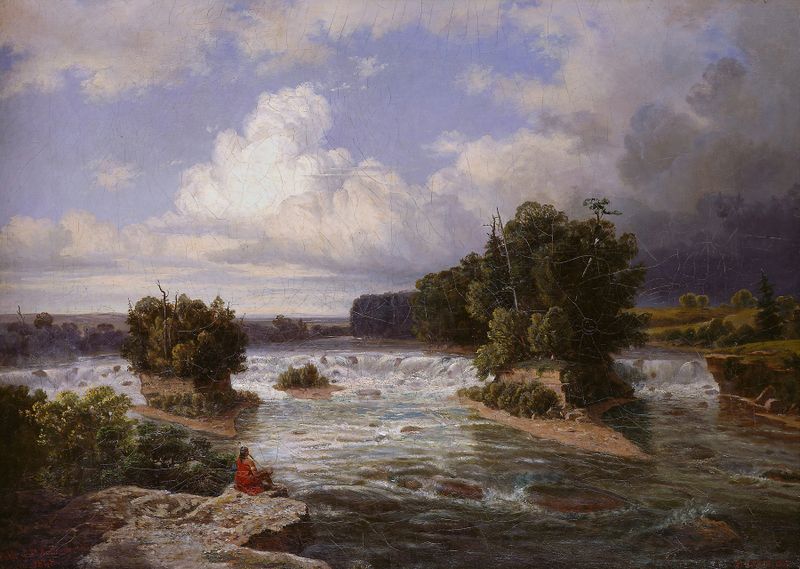
Could beauty survive in a century of chaos? In an age marked by turmoil and rapid change, the serene depiction of a mill hints at a deeper ecstasy that transcends the ravages of time. Look to the center where the mill stands proudly, its wooden structure intertwined with nature’s bounty. Notice how the artist captures the play of light on the water, its shimmering surface reflecting both the vitality of life and the calmness of stillness. Surrounding the scene, the soft greens and browns of the foliage contrast with the vibrant blues of the sky, creating a harmonious palette that invites viewers into a world where nature and industry coexist. As you examine the details, subtle tensions emerge: the steady flow of the river juxtaposed with the stillness of the mill's surroundings reflects a delicate balance between progress and tranquility.
The mill, a symbol of industriousness, simultaneously evokes nostalgia for a simpler past while suggesting that beauty can endure amid life's ebbs and flows. The composition speaks to the ecstasy of creation and the quiet resilience found in nature, even as the world outside is in constant flux. In 1847, Henry Lewis was painting in a period marked by significant social and technological shifts in America. The nation was grappling with the tension of industrialization while maintaining its ties to the pastoral beauty of the landscape.
Through Cheever’s Mill on the St. Croix River, Lewis captured not only a moment in time but also a burgeoning appreciation for the coexistence of human endeavor and the sublime elegance of nature.