Vicksburg — History & Facts
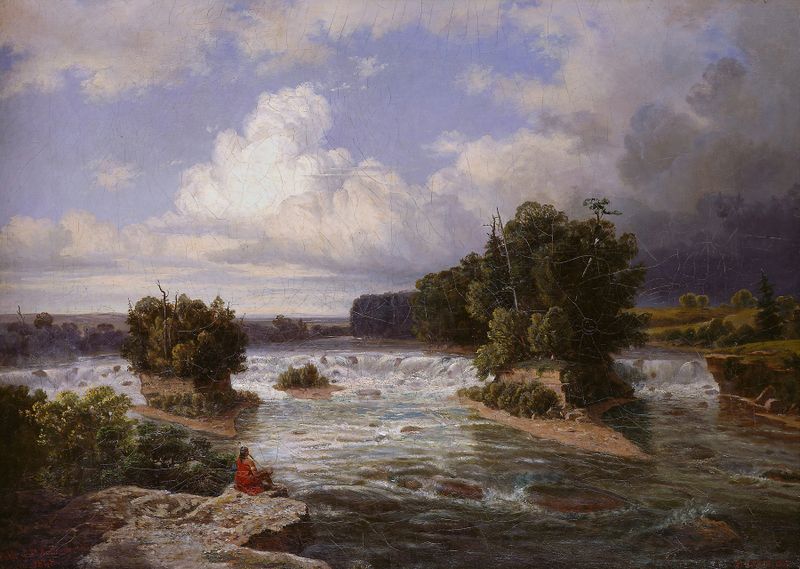
What if beauty was never meant to be finished? In Vicksburg, the unfinished landscapes whisper of melancholy, evoking a sense of time suspended, urging us to contemplate the narratives left untold. Look to the sweeping horizon where the muted greens and browns of the terrain blend with the soft grays of the sky, establishing a poignant backdrop. Notice how the brushstrokes vary — some vibrant and bold, while others fade into obscurity, suggesting a struggle between creation and erasure. The composition draws the eye alongside the river, guiding us through the natural beauty that frames the scene, yet hints at an underlying tension, as if the landscape itself is caught in a moment of restless anticipation. Delve deeper into the contrasts within this artwork: the tension between the vibrant life of the flora and the stillness of the setting, the rawness of an unfinished work that speaks to the artist's fraught relationship with the subject matter.
Each stroke invites reflection on the passage of time and the impermanence of beauty, as the landscape remains a testament to both creation and desolation. The unfinished quality evokes a bittersweet longing, leaving viewers to ponder what could have been. Henry Lewis painted Vicksburg between 1854 and 1858 while residing in the United States, amidst the unfolding complexities of a nation on the brink of civil war. During this period, the world of art was shifting, influenced by movements such as Romanticism, which embraced the sublime and the emotional depths of human experience.
Lewis’s choice to leave the landscape raw and incomplete mirrors the tumult of his times, ultimately reflecting the broader human condition and the beauty found within imperfection.