
Saint Louis in 1846 — History & Facts
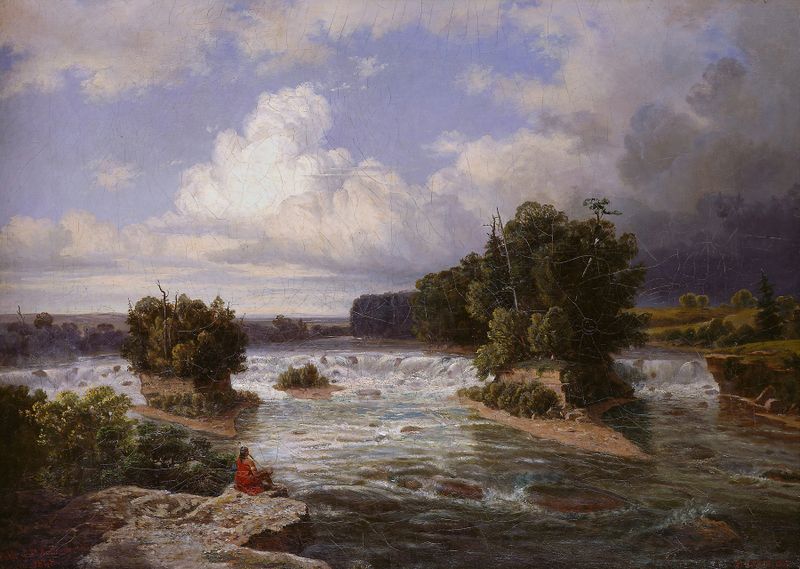
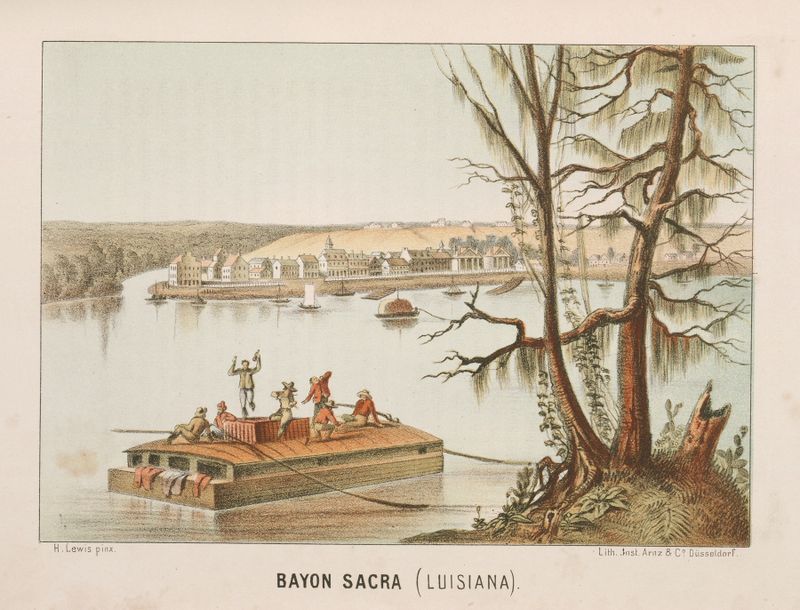
Could a single brushstroke hold eternity? In Saint Louis in 1846, chaos and order collide, capturing a moment that resonates with history's broader strokes. Look to the center of the canvas, where the tumult of life is evident in the figures bustling through the streets. The artist employs a vibrant palette of reds and yellows, interspersed with deep blues, to create a sense of movement and energy. Notice how the diagonal lines of the buildings draw the eye upwards, suggesting both growth and the push against the confines of society.
The chiaroscuro effect highlights the faces of the townsfolk, their expressions a tapestry of hope and struggle, inviting the viewer to engage with their stories. Within this lively scene lies a deeper tension between the vibrancy of progress and the underlying chaos of change. The juxtaposition of the orderly architecture against the frenetic activity in the streets symbolizes the struggle between civilization and the inevitable shifts that accompany it. Small details, like the tattered flags and the weary faces of passersby, add layers of meaning, reflecting the complexities of a society on the verge of transformation. In 1846, Henry Lewis created this work amidst a burgeoning American landscape, where urban centers were expanding and the dream of progress was palpable.
It was a period of tremendous upheaval and opportunity, reflecting the nation's growth and the challenges that accompanied it. This piece serves as a historical snapshot, capturing not just a location but an essence of the time, a moment etched in both color and emotion.
More Artworks by Henry Lewis
Browse all →



More Historical Art
Browse all →
The Night Watch Militia Company of District II under the Command of Captain Frans Banninck Cocq
Rembrandt van Rijn

Lincoln Memorial
Henry Bacon

The Third of May 1808
Francisco de Goya

Isaac and Rebecca, Known as ‘The Jewish Bride’
Rembrandt van Rijn

The Charge of the Mamelukes (1814)
Francisco de Goya

De vier ruiters van de apocalyps
Albrecht Dürer