Gorge of the St. Croix — History & Facts
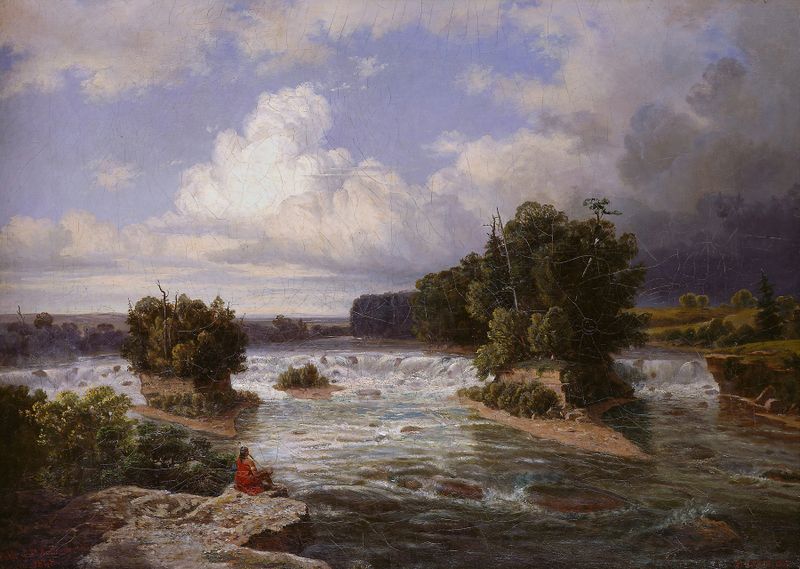
Where does light end, and longing begin? In the interplay of shadow and illumination, we find a haunting dialogue that stirs the soul. Look to the vast expanse of the canvas, where the soft hues of twilight gently embrace the rugged cliffs of the gorge. Observe the interplay between light and dark; the warm glow of the setting sun casts elongated shadows that seem to stretch endlessly across the landscape. The delicate brushstrokes reveal textures in the rocks, while the nuanced blues of the water contrast with the earthy tones, grounding the ethereal beauty of the scene. Hidden within this serenity are whispers of tumult.
The shadows evoke a sense of foreboding, suggesting the depths of the gorge hold secrets yet to be uncovered. The vibrant sky, bursting with warmth, stands in stark contrast to the cool, dark waters below, symbolizing the tension between hope and despair. Each detail, from the trees clinging to the cliffs to the distant horizon, invites a deeper reflection on the balance between nature's beauty and its inherent dangers. In 1847, during a time of artistic exploration in the United States, the artist captured this scene while living in the East.
As a member of the Hudson River School, he sought to convey the sublime beauty of American landscapes, a movement that emphasized both the majesty of nature and the emotional response it evokes. Amidst the burgeoning interest in romanticism, this work reflects a pivotal moment in art history, merging technique with the emotional resonance of the natural world.