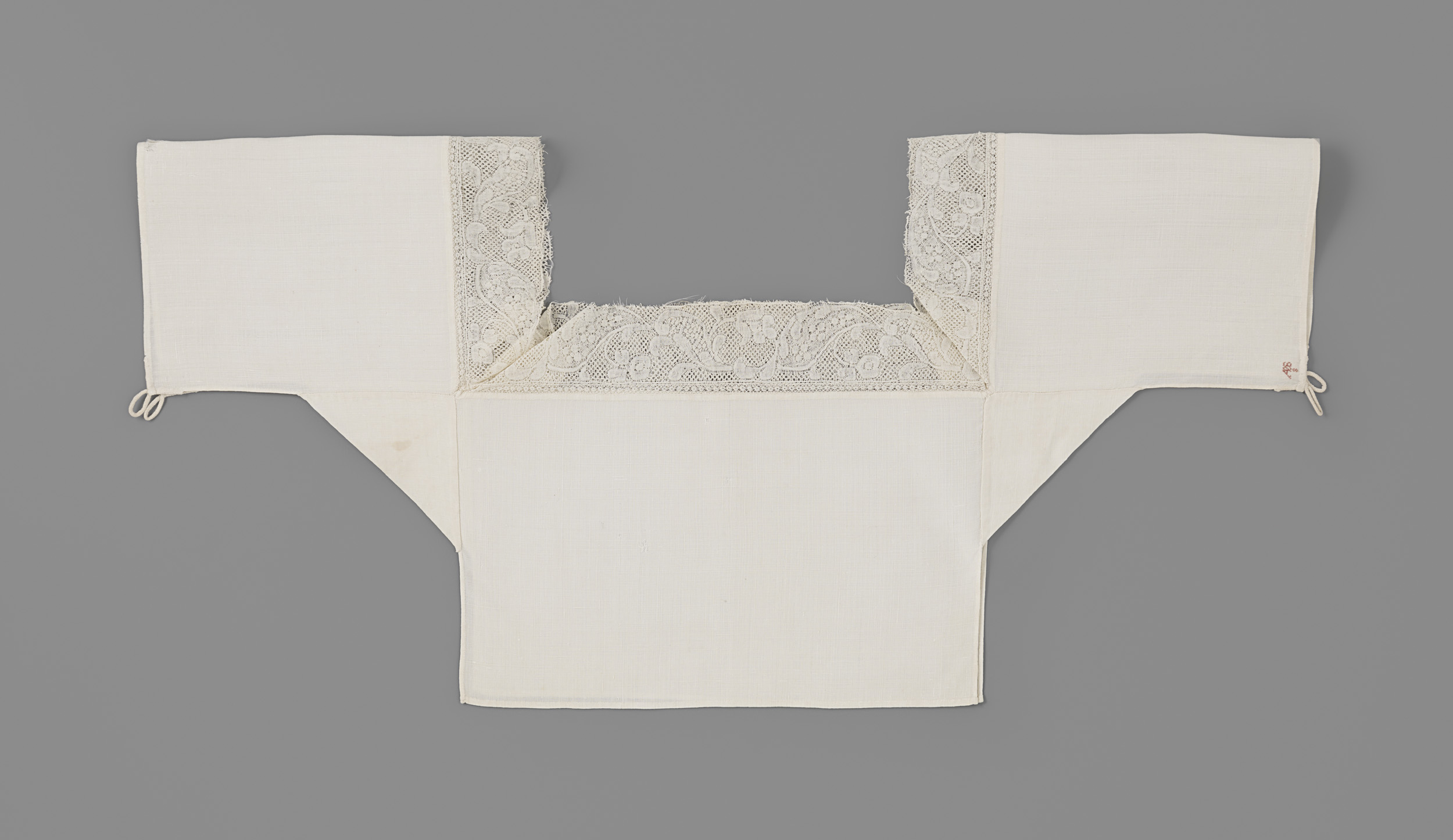
Chemisette met strook Binchekant, versierd met lopende bloemrank met gelobd blad — History & Analysis
Can paint confess what words never could? In this exquisite textile painting, the delicate intricacies of a garment speak volumes about loss and remembrance. Look closely at the lush floral motifs that twist and weave across the fabric, each bloom an echo of life now faded. Notice how the vibrant greens and soft pastels contrast with the muted backdrop, creating a visual tension that invites contemplation.
The meticulous detailing of the leaves, with their subtle ribbing, draws the eye to the craftsmanship, while the fluidity of the flowers evokes a gentle, nostalgic sway, as if whispering secrets of days gone by. Beneath its decorative surface, this work resonates with layers of emotional depth. The choice of flowers, often symbols of transience, hints at the bittersweet nature of beauty, celebrating what once was while mourning its inevitable decay. The delicate play of light and shadow across the fabric mirrors the complexities of memory—how it can illuminate joy yet cast long shadows of sorrow.
Each stitch and flourish embodies a narrative of grief, anchoring the viewer in a shared human experience that words often fail to capture. Created around 1720-1730, this piece emerged during a period of refined artistic exploration in Europe, where textile arts began to embrace an identity paralleling painting. The artist, though unknown, contributed to a tradition that celebrated domestic beauty while reflecting larger themes of loss and legacy in a changing world, allowing viewers to connect with the emotional resonance of this intricate artwork.