
Christ Taking Leave of his Mother — History & Facts
What first seizes the eye in Christ Taking Leave of his Mother is the charged stillness between the figures, as if the air itself is thick with words unsaid. The moment is tense but quiet: Christ, robed in deep rose, stands barefoot at the center, his hands extended in a gesture that is both blessing and farewell. The women gathered to the left, their faces pale and anguished, seem to collapse into one another, their gestures a tangle of grief and pleading.
The architecture behind them, half-ruined and overgrown, gives way to a wild tangle of trees and a sky that feels impossibly vast—nature and history both bearing silent witness. The palette is cool and clear, with the blues and greens of the landscape setting off the reds and whites of the figures’ garments, guiding the viewer’s gaze from the intimate foreground to the distant, receding world. Painted in 1520, this work stands at the crossroads of late Gothic and the dawn of the Northern Renaissance, a time when artists like Albrecht Altdorfer were exploring new ways to fuse landscape and narrative. Such paintings were often commissioned for private devotion, intended to draw the viewer into the emotional core of the Passion story.
The figures’ elaborate dress and the careful rendering of the natural world reflect the era’s fascination with detail and the sacred made tangible. While history has kept few traces of this specific panel’s journey, its presence in a modern collection invites us to linger over the way a single moment—grief, farewell, hope—can be made visible, as urgent now as it was five centuries ago.
More Artworks by Albrecht Altdorfer

Landscape with Two Pines
Albrecht Altdorfer
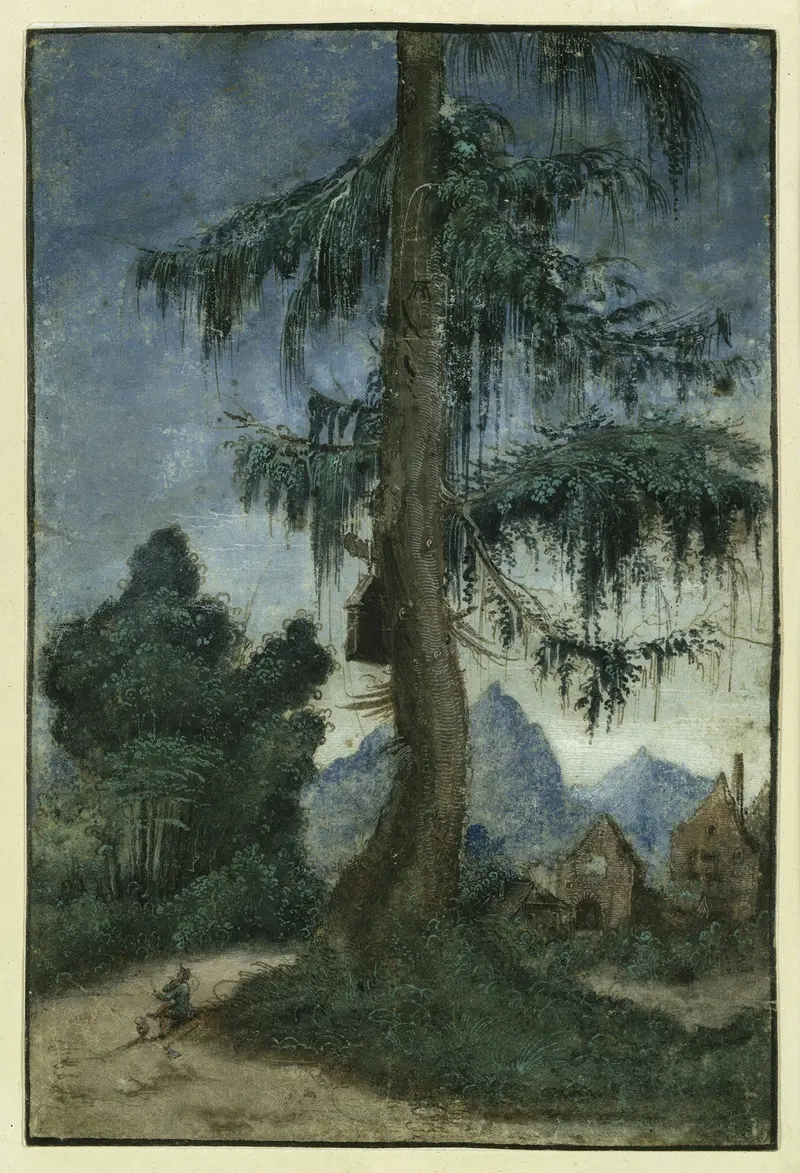
Landscape with spruce
Albrecht Altdorfer
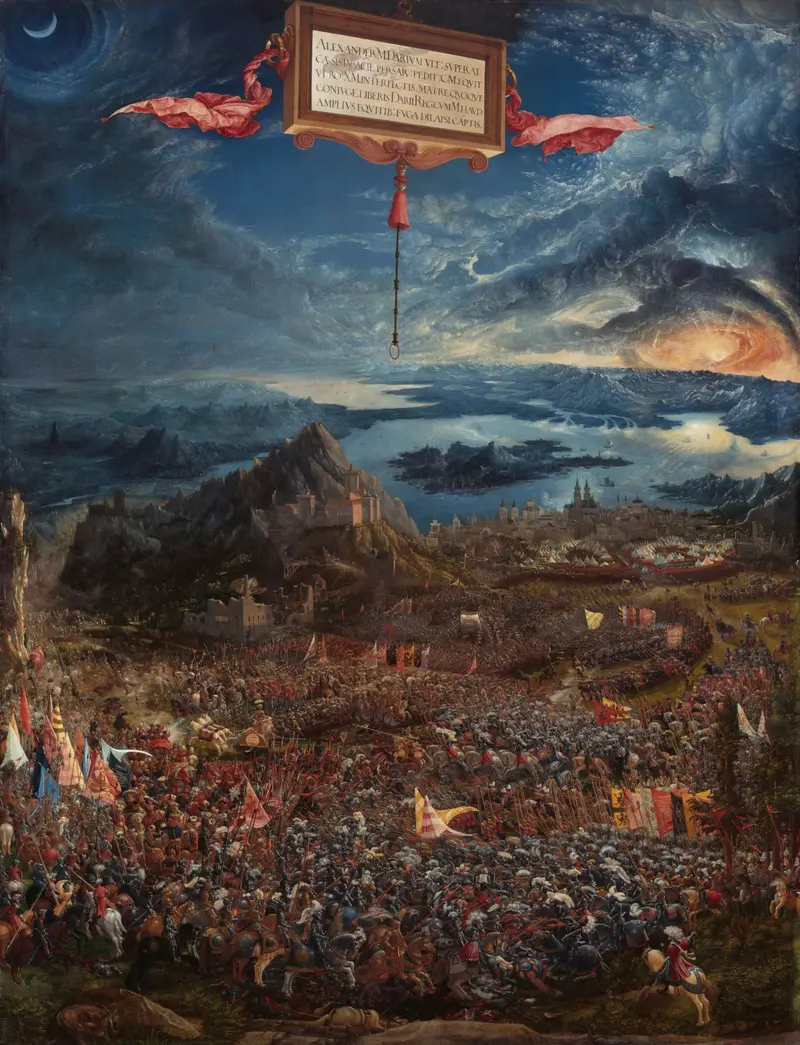
The Battle of Alexander at Issus
Albrecht Altdorfer
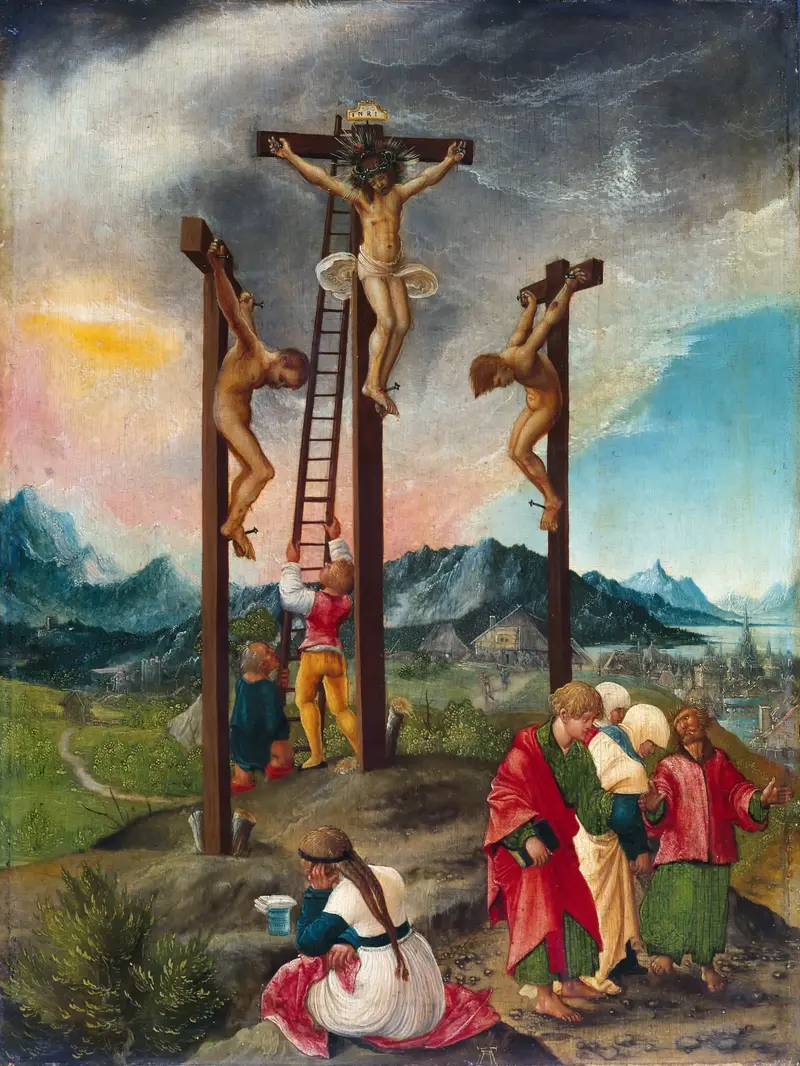
Christ on the Cross between the Two Thieves
Albrecht Altdorfer
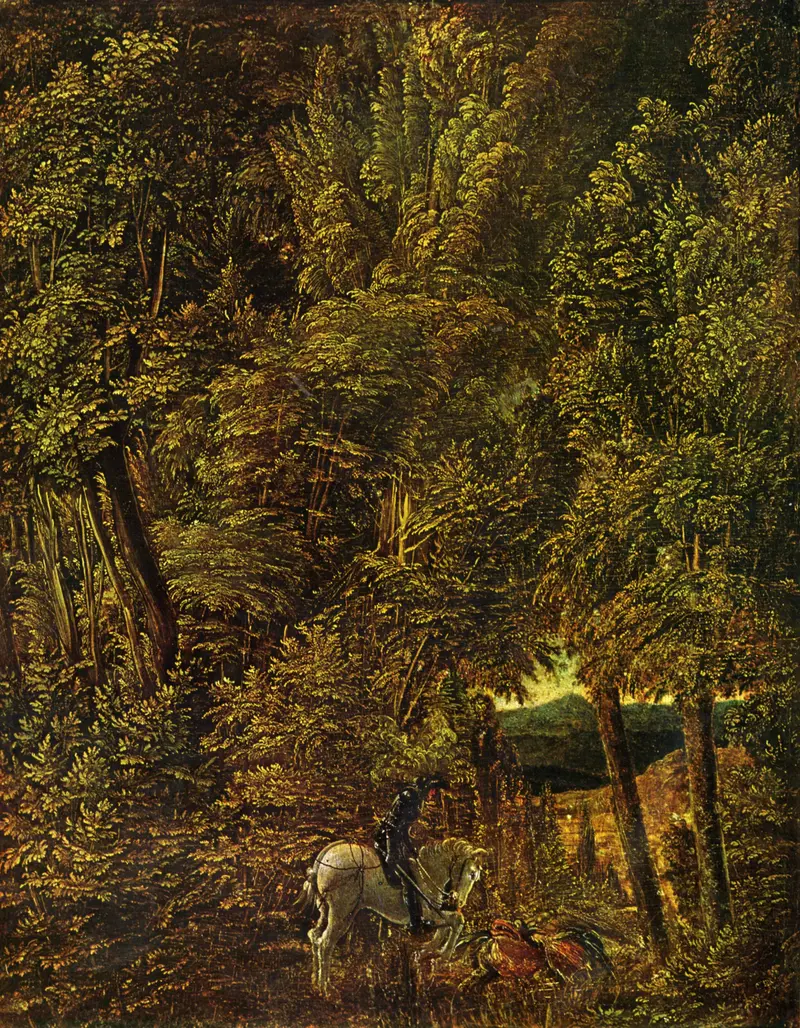
Countryside of Wood With Saint George Fighting the Dragon
Albrecht Altdorfer
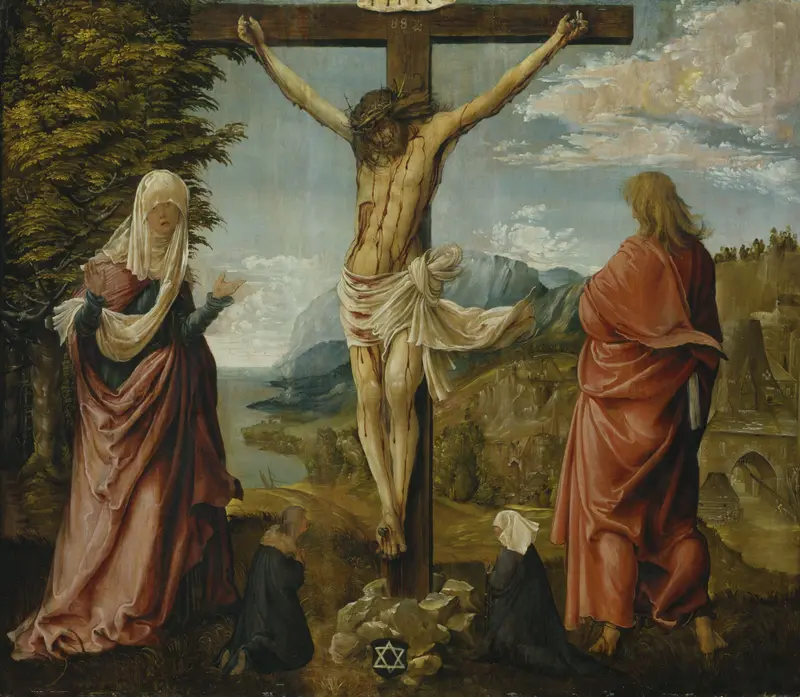
Crucifixion with Mary and John
Albrecht Altdorfer
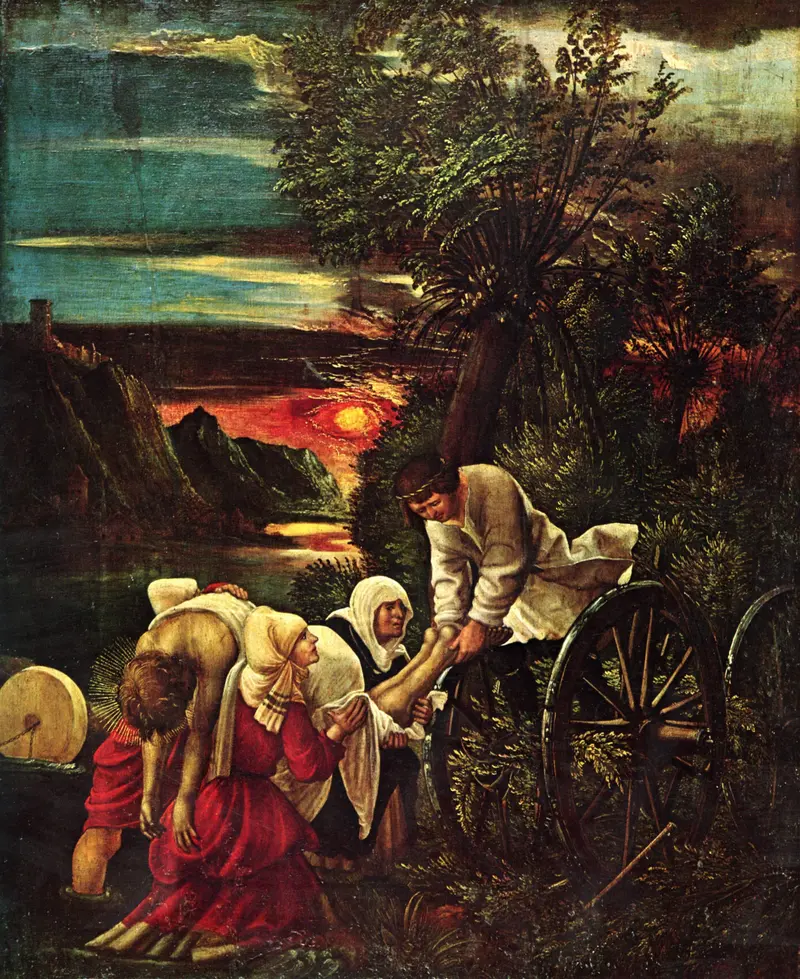
Finding of the Body of Saint Florian
Albrecht Altdorfer
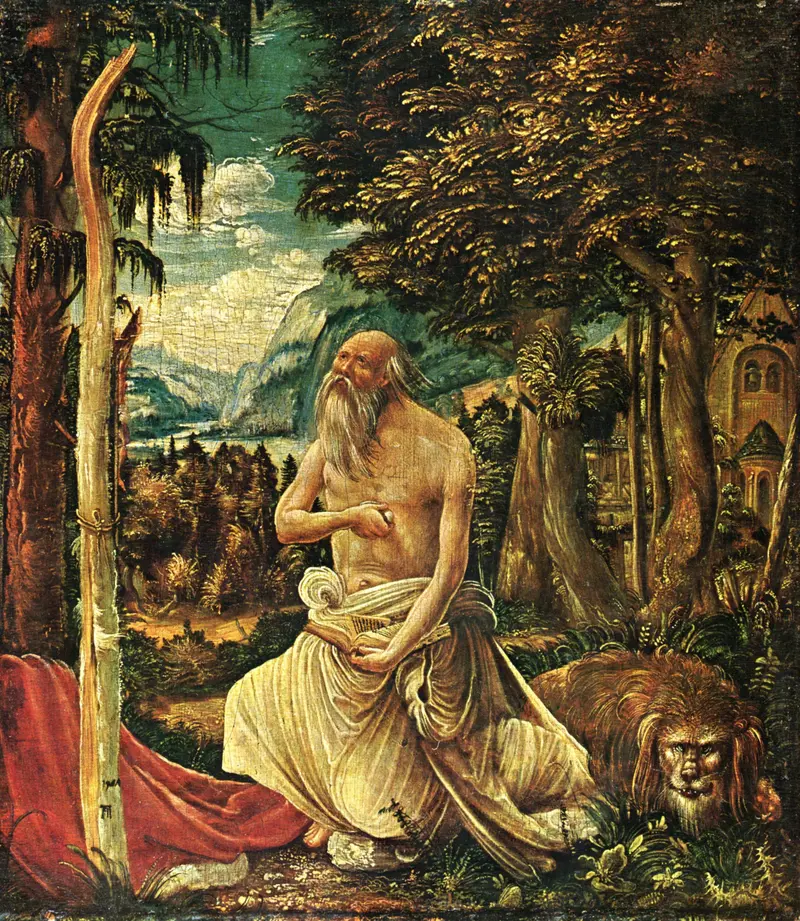
Penitent Hieronymus
Albrecht Altdorfer
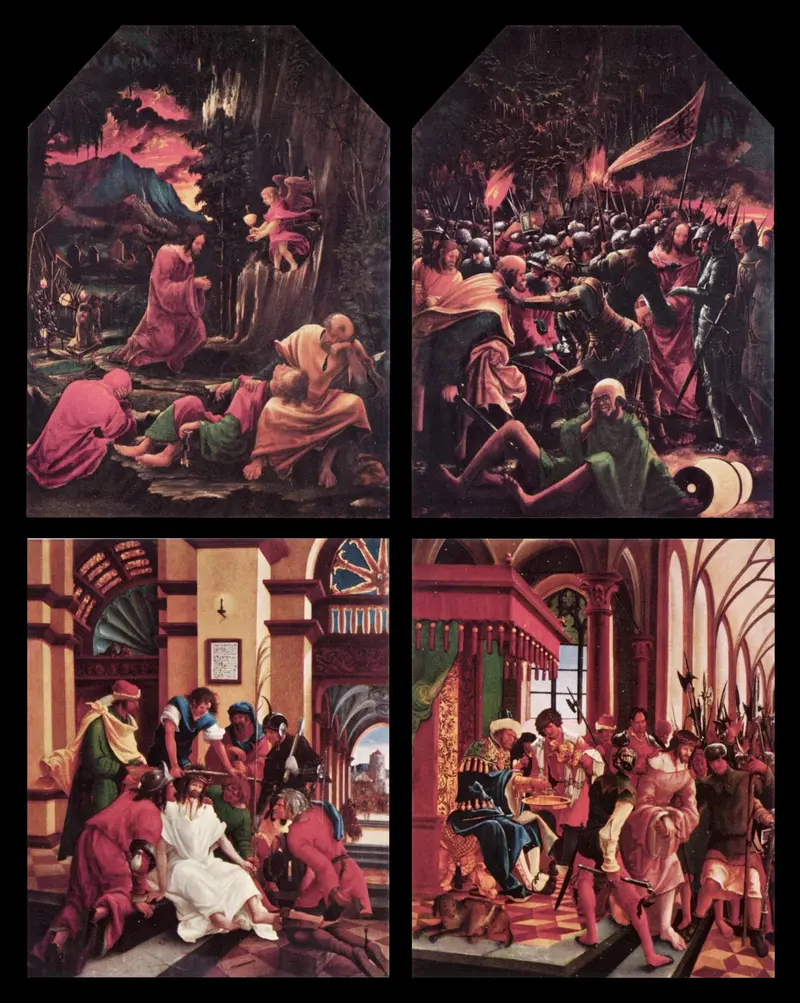
Pilate Washing His Hands by Altdorfer
Albrecht Altdorfer
Portrait of a young Woman
Albrecht Altdorfer





