
Crucifixion with Mary and John — History & Facts
The first thing that seizes the eye in Crucifixion with Mary and John is not the suffering at the center, but the sweep of landscape behind it—an entire world rolling away beneath the cross. Albrecht Altdorfer sets the drama of the Crucifixion against a vast, light-filled vista, where mountains tumble into a distant lake and villages nestle under a restless sky. The cross rises like a stark signpost between earth and heaven, while the figures of Mary and John anchor the scene in human grief.
Mary’s open hands and parted lips are caught mid-gesture, as if pleading for understanding, while John, robed in red, turns his back to the viewer, drawing us into the circle of witnesses. The palette is rich but never garish; the blood that runs down Christ’s body is echoed in the folds of Mary’s robe, binding the figures together in a silent conversation of color. Painted in 1512, this work belongs to a moment when artists of the German Renaissance were reimagining sacred stories with a new attention to the world around them. Altdorfer, known for his pioneering landscapes, here weaves the Crucifixion into the fabric of everyday life, letting the drama unfold not in a void but in a living, breathing countryside.
Such paintings were often commissioned for private devotion or as altarpieces, intended to draw the viewer into meditation by making the holy story immediate and tangible. The Yorck Project’s collection preserves this example, though history has kept few traces of its original journey or patron. What remains is the invitation to linger: to let the eye wander from the wounds at the center to the horizon beyond, and to wonder at the world that continues, even in the shadow of the cross.
More Artworks by Albrecht Altdorfer

Landscape with Two Pines
Albrecht Altdorfer
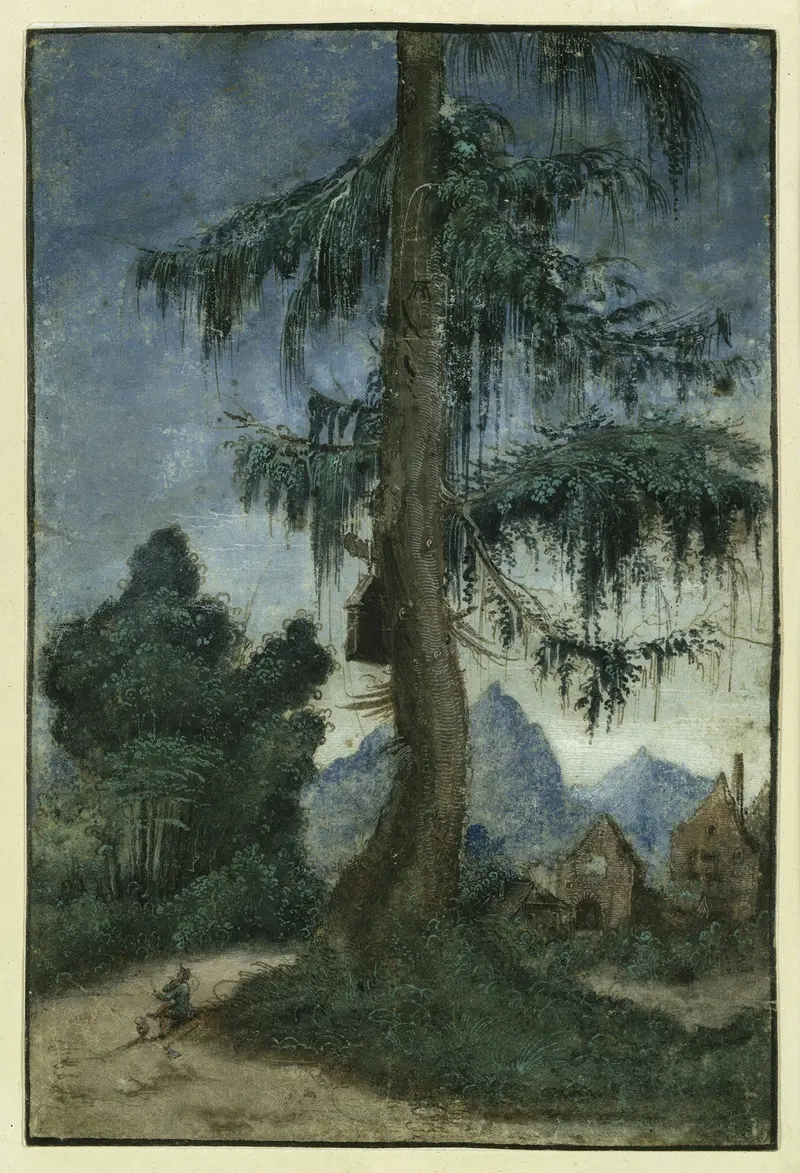
Landscape with spruce
Albrecht Altdorfer
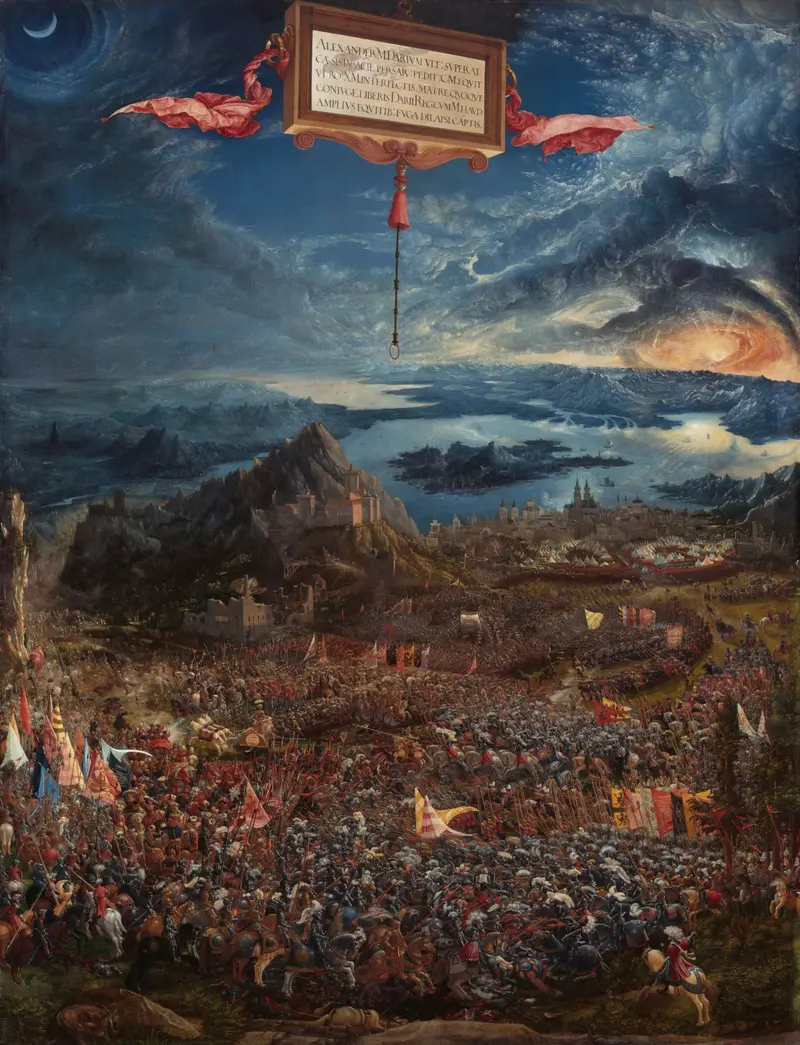
The Battle of Alexander at Issus
Albrecht Altdorfer
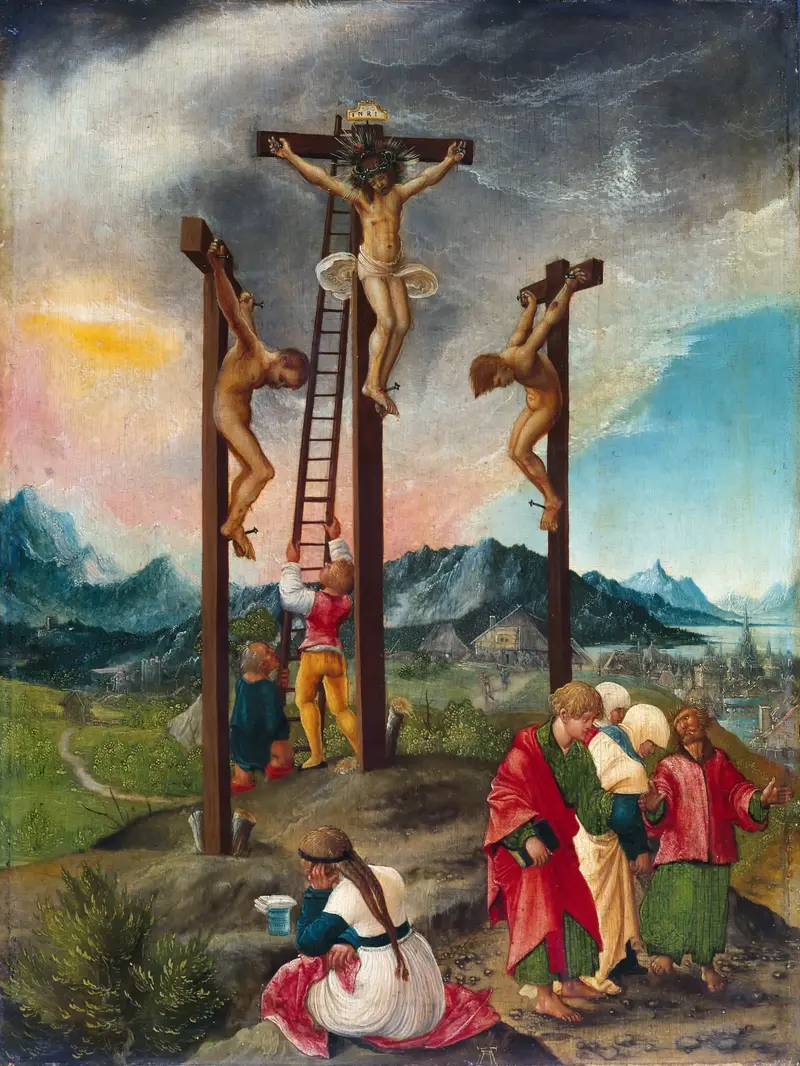
Christ on the Cross between the Two Thieves
Albrecht Altdorfer
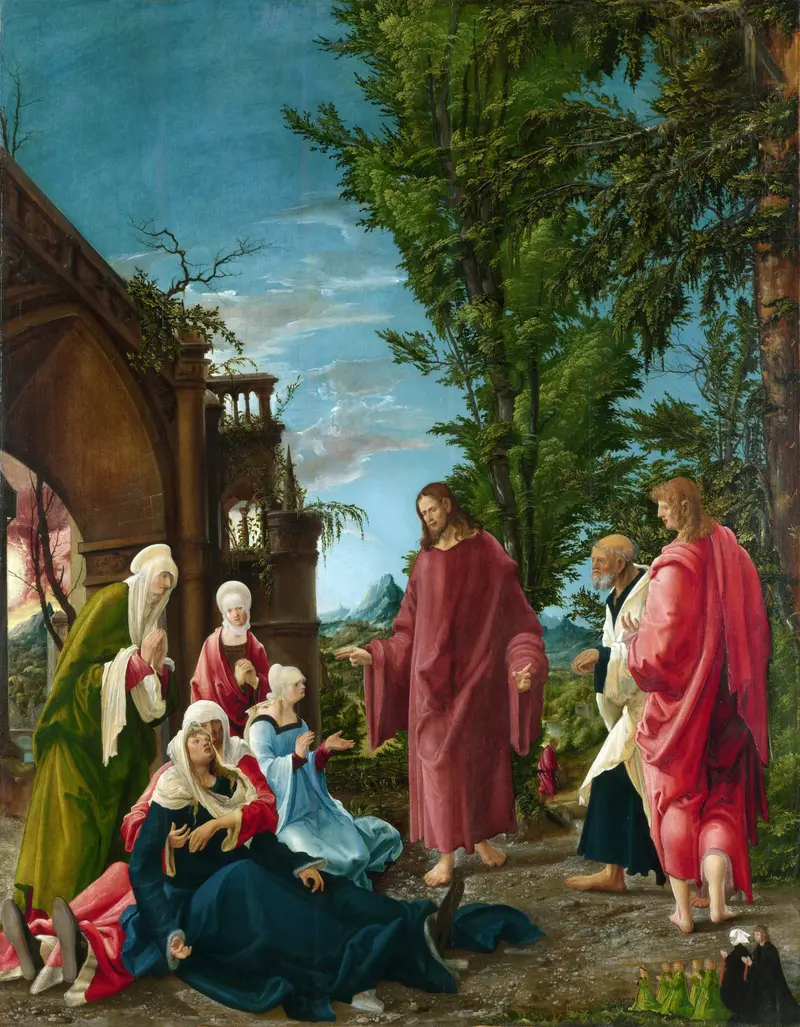
Christ Taking Leave of his Mother
Albrecht Altdorfer
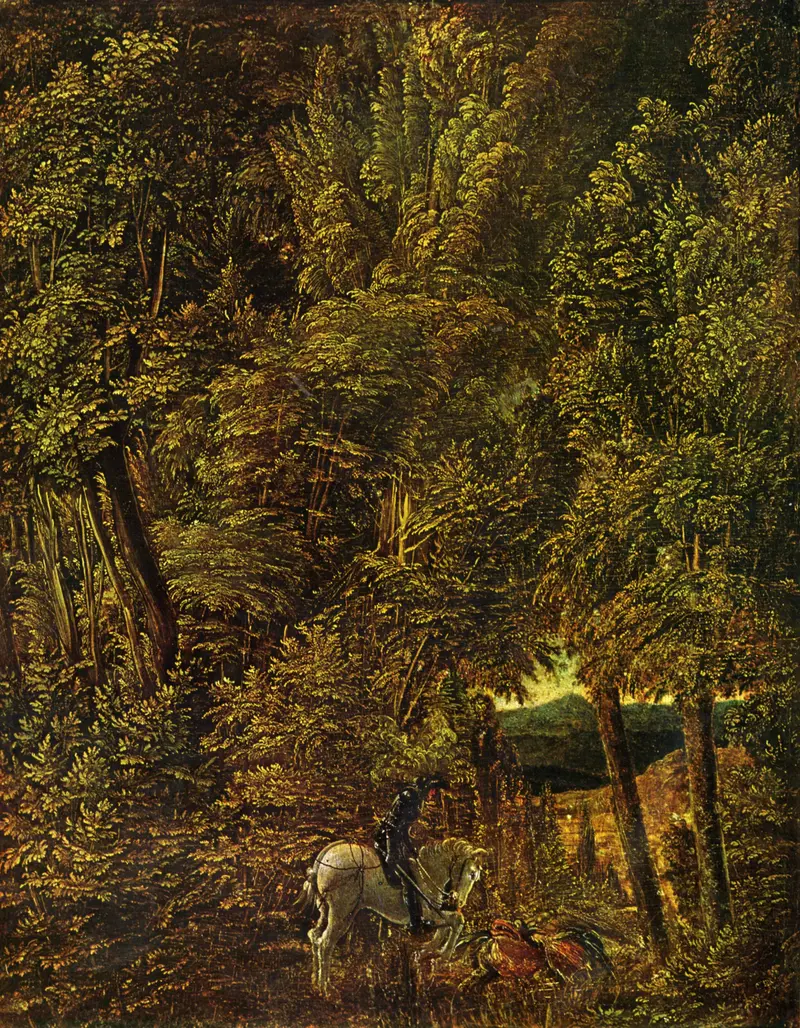
Countryside of Wood With Saint George Fighting the Dragon
Albrecht Altdorfer
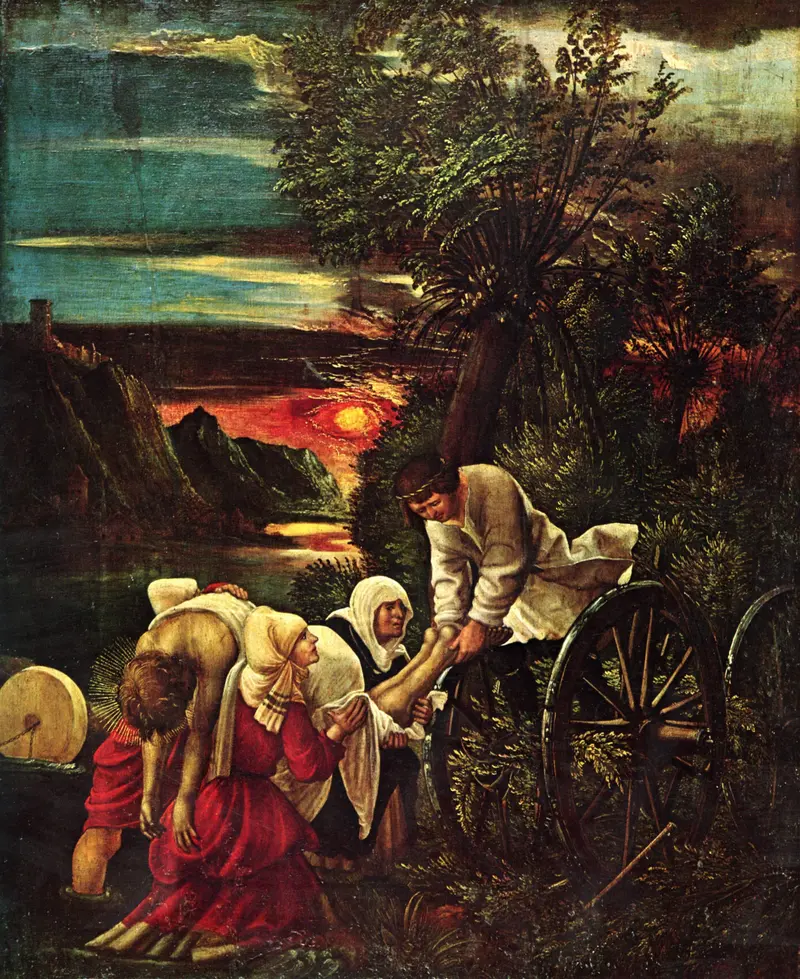
Finding of the Body of Saint Florian
Albrecht Altdorfer
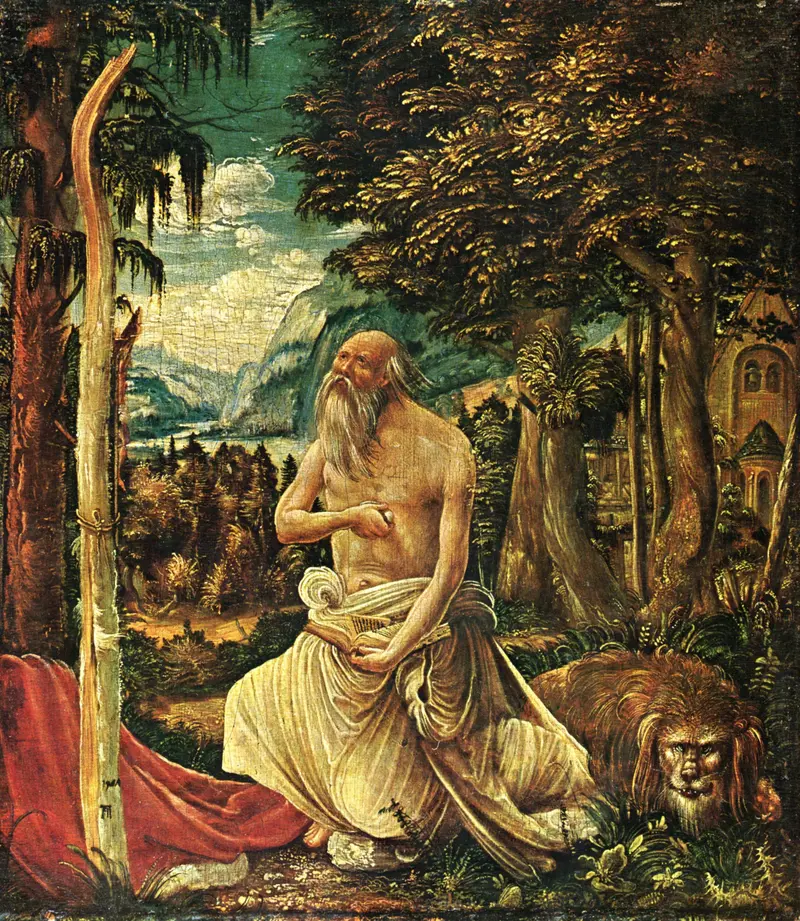
Penitent Hieronymus
Albrecht Altdorfer
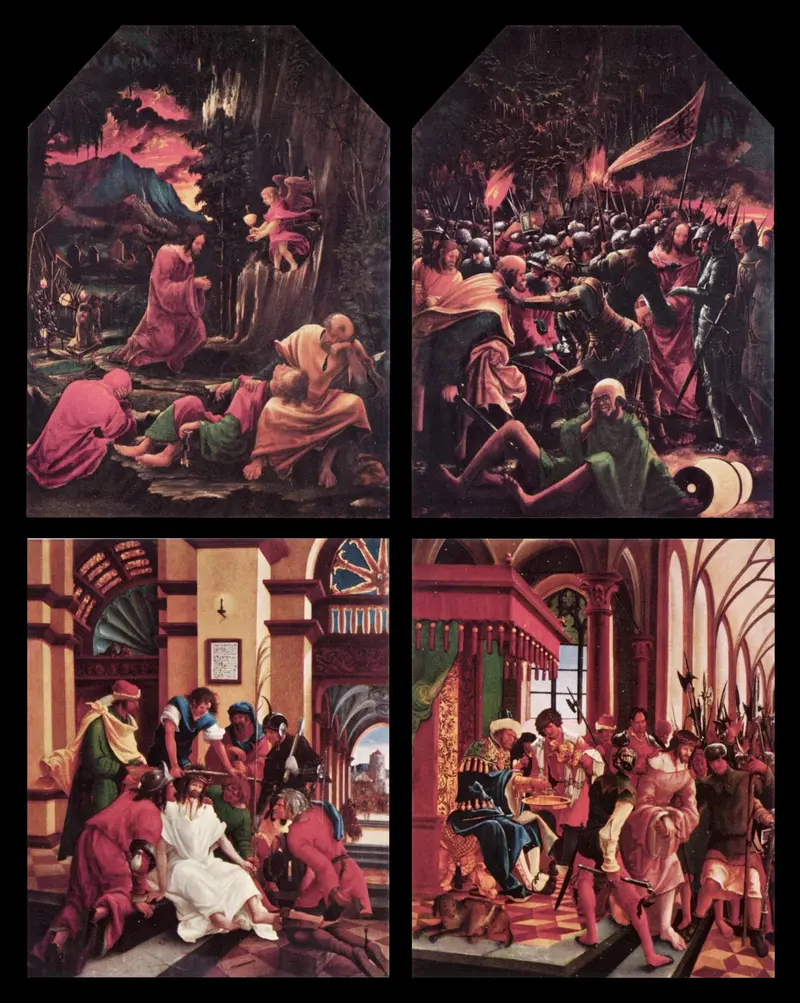
Pilate Washing His Hands by Altdorfer
Albrecht Altdorfer
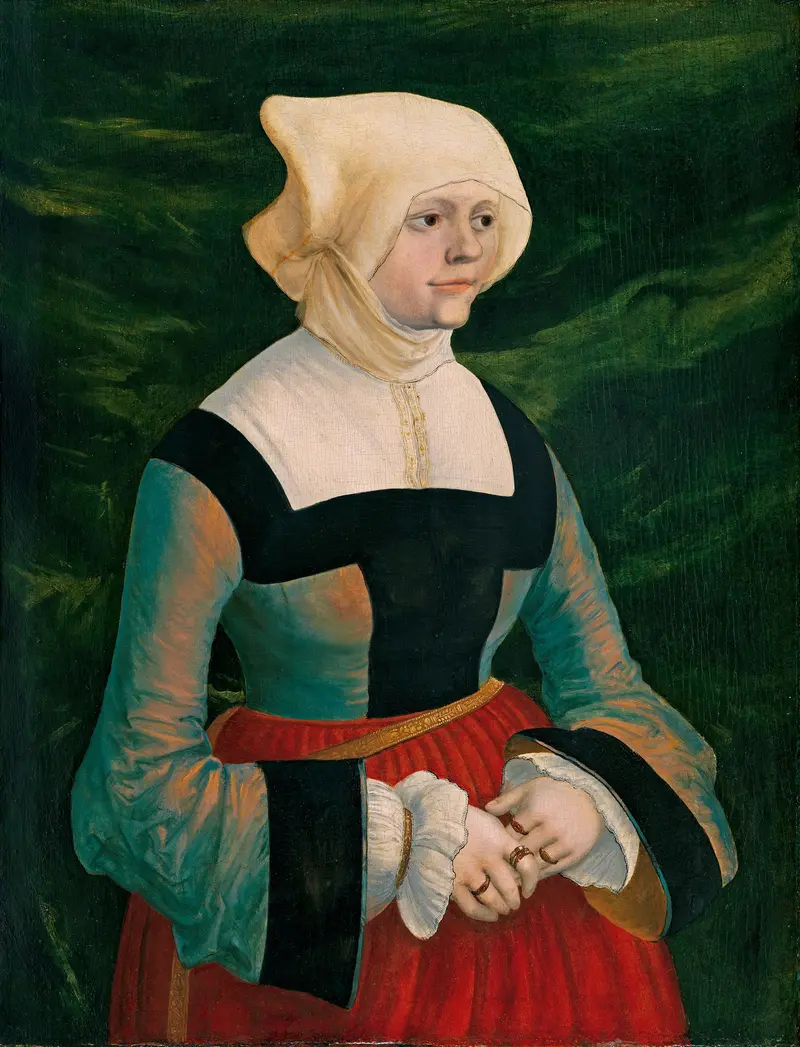
Portrait of a young Woman
Albrecht Altdorfer





