
Christus als Man van Smarten bij de zuil — History & Facts
When did color learn to lie? In Christus als Man van Smarten bij de zuil, Albrecht Dürer delves into the raw truth of mortality, unmasking the profound depths of human suffering. Look to the left at the anguished figure of Christ, his face a canvas of pain and resignation. The way Dürer renders the wounds on His body, with meticulous detail and somber hues, invites an unsettling intimacy. Notice the vibrant crimson of the blood, stark against the pallor of His skin, a clash that heightens the visual tension.
As shadows envelop the edges, the light cascades softly onto His figure, illuminating this moment of despair, while the cold stone of the pillar looms ominously in the background, grounding the scene in both physicality and emotional weight. The juxtaposition of color and form reveals a deeper commentary on the fragility of life. The intricate details in the drapery, heavy yet ethereal, suggest a struggle between earthly existence and spiritual transcendence. The gaze of Christ, deeply reflective, invites viewers to confront their own mortality, casting a haunting question: is suffering an inherent part of the human condition? This tension between divinity and humanity resonates profoundly, reflecting the artist's own cultural moment steeped in religious fervor and existential inquiry. In 1509, Dürer was immersed in the complexities of the Northern Renaissance, a period marked by a burgeoning exploration of realism and emotional depth in art.
Living in Nuremberg, he was influenced by both humanist ideals and religious themes, seeking to bridge the sacred with the personal. Christus als Man van Smarten bij de zuil stands as a testament to this transformative era, where the artist’s exploration of suffering laid bare the heart’s darkest corners.
More Artworks by Albrecht Dürer
Browse all →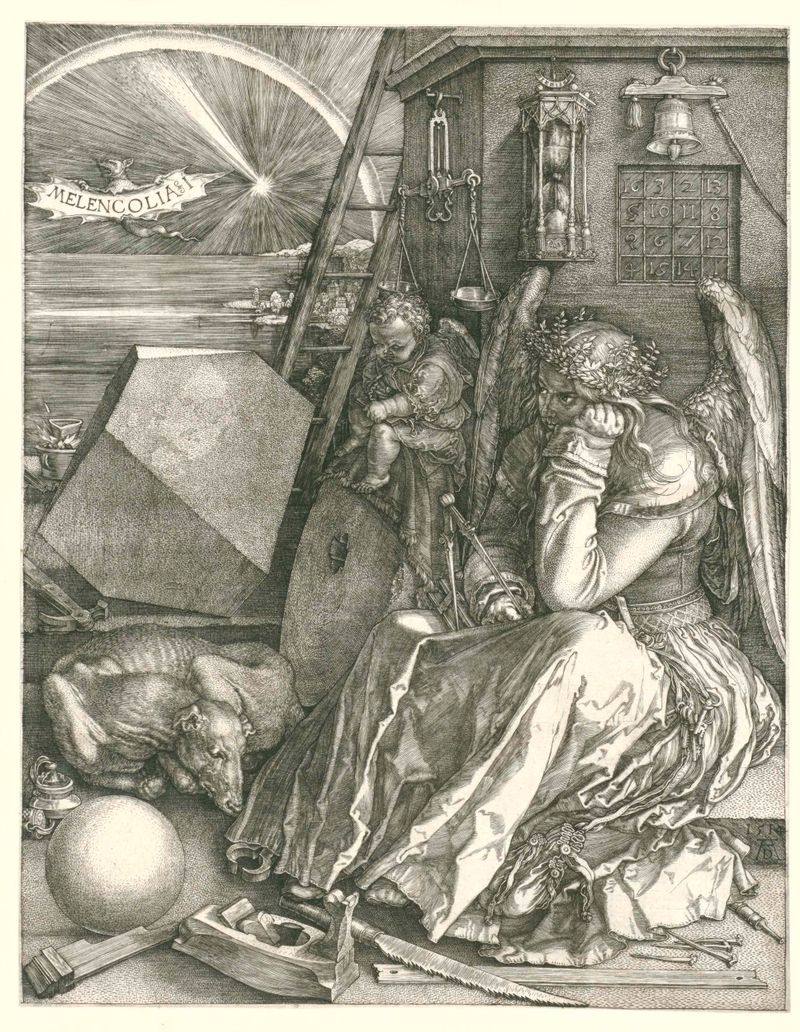
Melancholia
Albrecht Dürer
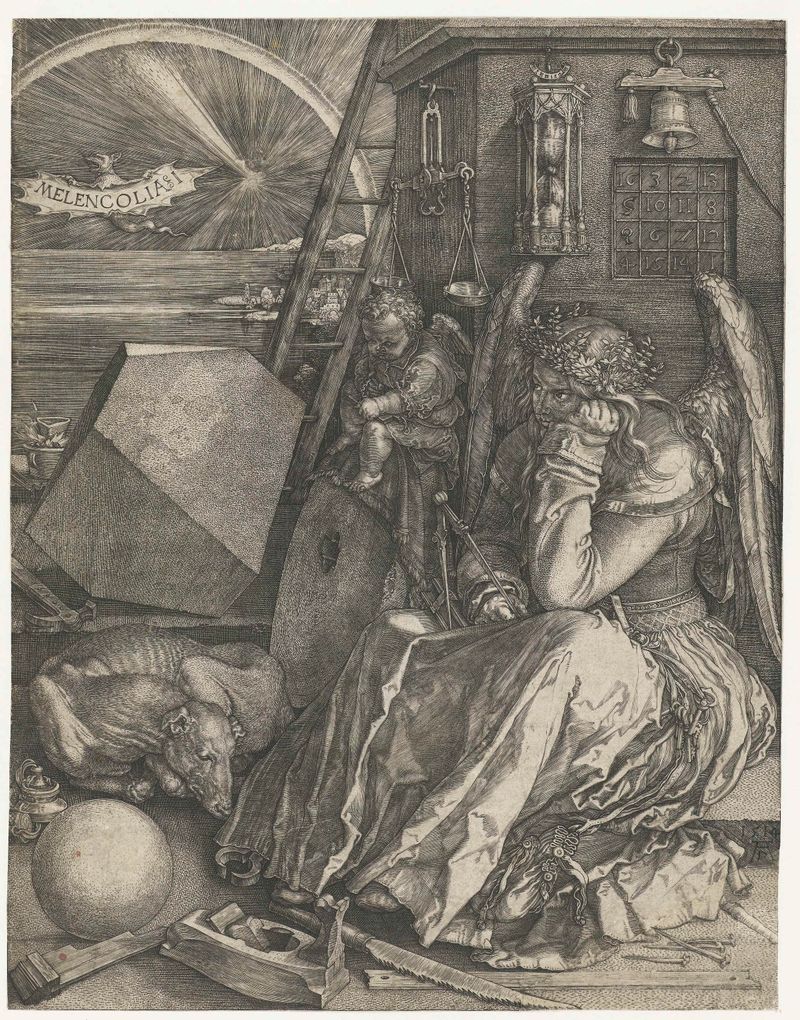
Melancholie
Albrecht Dürer
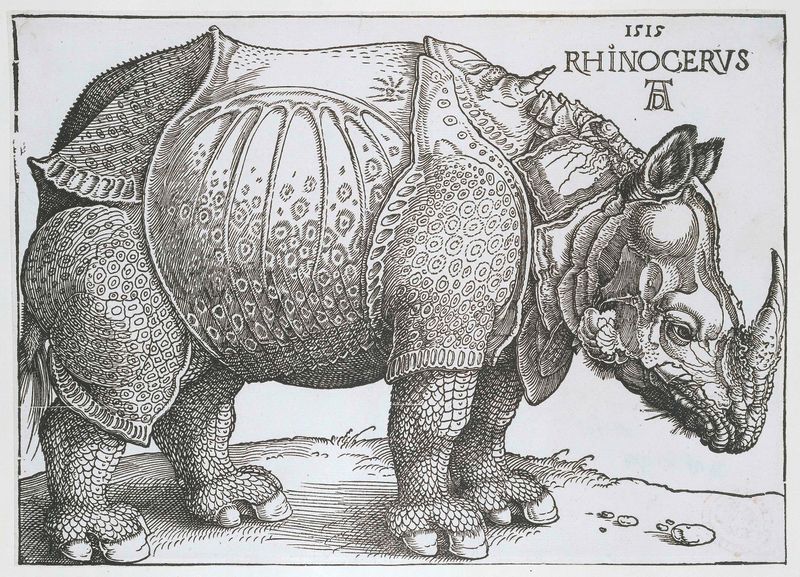
Neushoorn
Albrecht Dürer
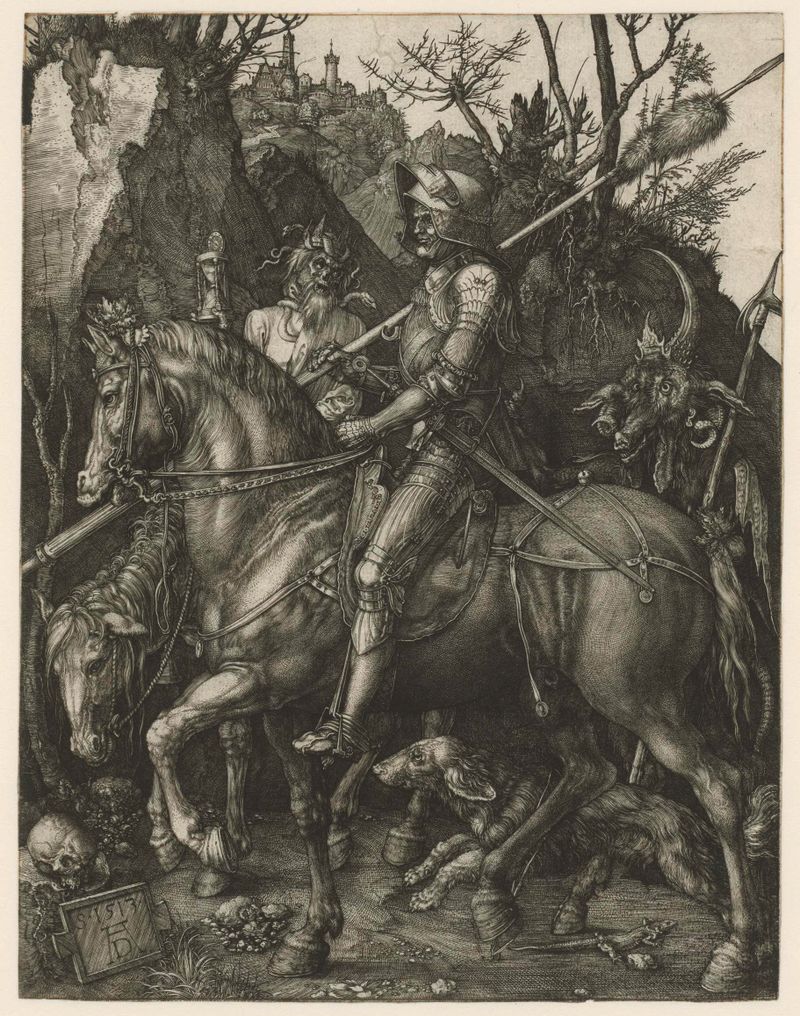
Knight, Death, and the Devil
Albrecht Dürer

De vier ruiters van de apocalyps
Albrecht Dürer

De vier ruiters van de apocalyps
Albrecht Dürer
De Heilige Hiëronymus in zijn studeervertrek
Albrecht Dürer
De Heilige Hiëronymus in zijn studeervertrek
Albrecht Dürer
De apocalyptische vrouw en de zevenkoppige draak
Albrecht Dürer
Adam en Eva
Albrecht Dürer
More Religious Art
Browse all →
The Return of the Prodigal Son
Rembrandt van Rijn

The Garden of Earthly Delights
El Bosco

Count Orgaz’ funeral
El Greco

The Hundred Guilder Print: the central piece with Christ preaching, the plate arched
Rembrandt van Rijn

The Descent from the Cross
Rogier van der Weyden

The return of the prodigal son
Rembrandt van Rijn