
Christus in de rozenkrans — History & Facts
In the delicate dance of movement captured within the confines of a still image, we catch a glimpse of a profound spiritual dialogue. This moment, steeped in reverence, invites the viewer to ponder the intersection where faith and artistry converge. Look to the center, where the figure of Christ reigns, illuminated by a soft, ethereal glow that bathes his visage in divine light. The intricate detailing of his robes, skillfully rendered in shades of blue and gold, beckons your gaze, while the subtle play of shadows emphasizes the folds, creating a sense of depth and dimension.
Framed by the surrounding figures, each person appears to be engaged in silent prayer, their hands clasped, their expressions a mixture of devotion and awe, inviting the viewer to share in this intimate communion. Yet, beyond the serene faces lies a tension between the ephemeral and the eternal. The interlocking of figures suggests a web of emotional connection—between the devout and the divine—that transcends mere observation. The contrast between the lush colors of the roses in the foreground and the muted tones of the background emphasizes this duality, urging us to consider the fragility of faith amidst the chaos of the world. In 1515, during a period of immense transformation in art and culture, Albrecht Dürer created Christus in de rozenkrans while working in Nuremberg, where he was increasingly recognized for his mastery of printmaking and painting.
This piece reflects the spiritual fervor of the time, as Europe grappled with the shifting tides of the Reformation and the growing emphasis on individual piety, placing Dürer at the intersection of innovation and tradition in the art world.
More Artworks by Albrecht Dürer
Browse all →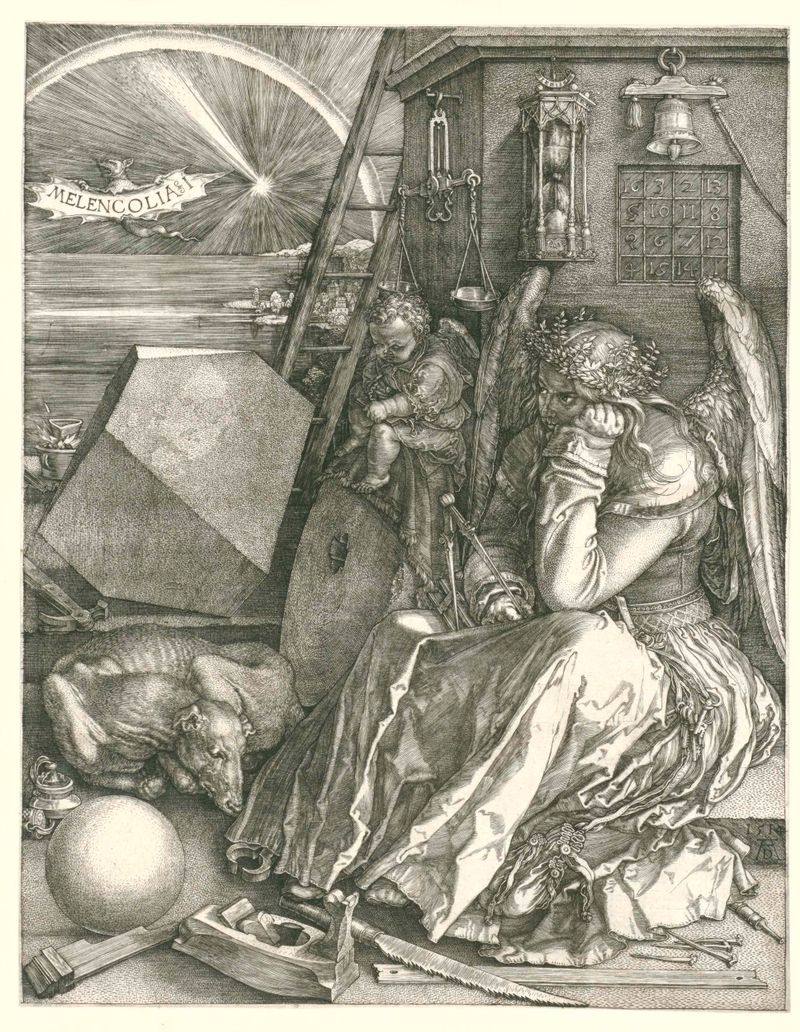
Melancholia
Albrecht Dürer
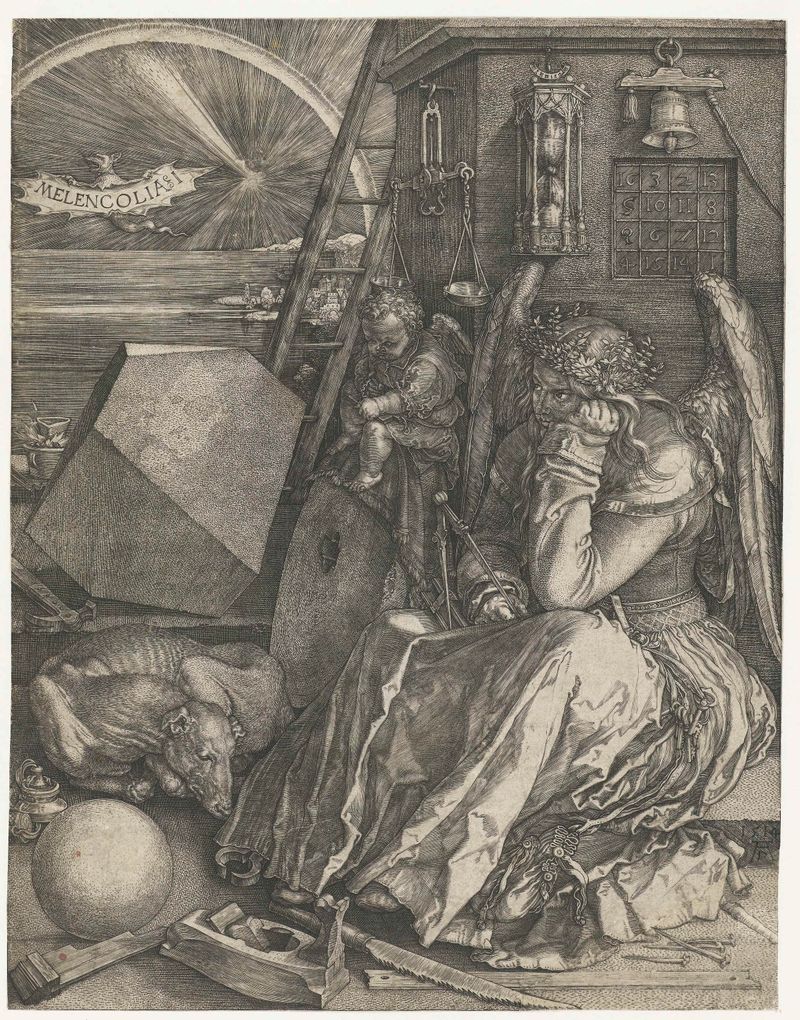
Melancholie
Albrecht Dürer
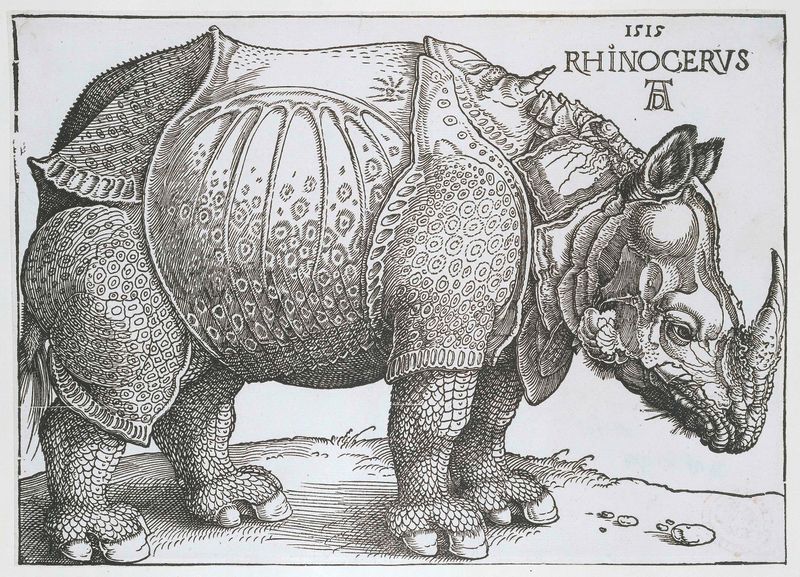
Neushoorn
Albrecht Dürer
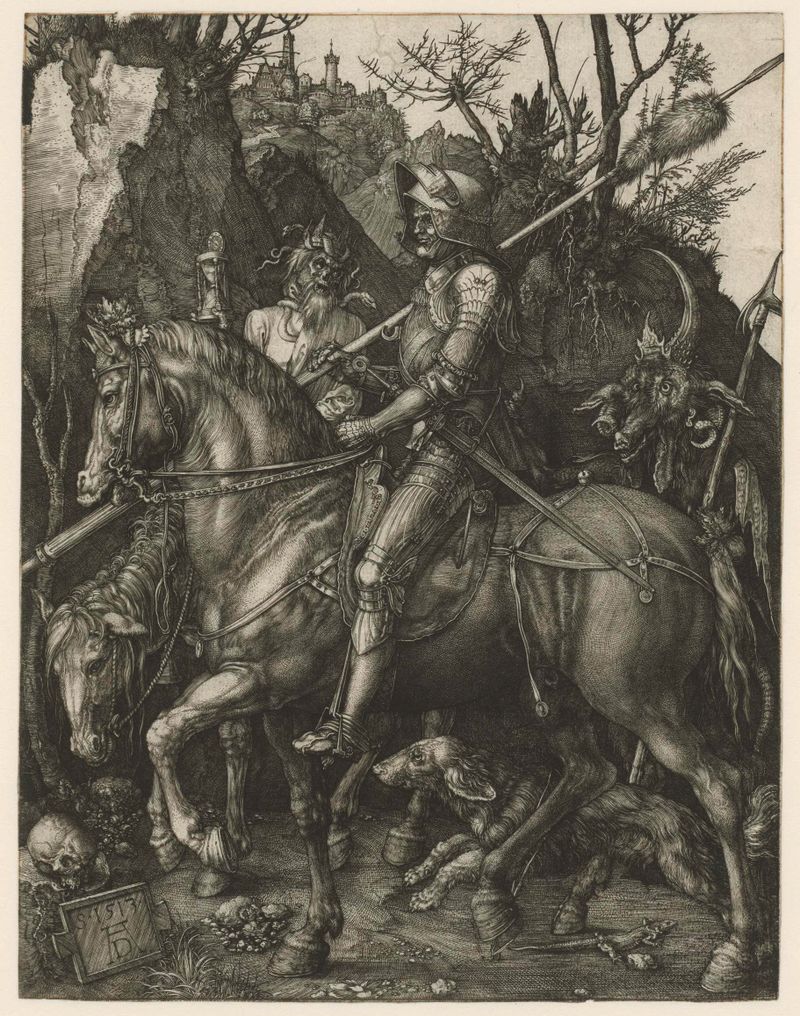
Knight, Death, and the Devil
Albrecht Dürer

De vier ruiters van de apocalyps
Albrecht Dürer

De vier ruiters van de apocalyps
Albrecht Dürer
De Heilige Hiëronymus in zijn studeervertrek
Albrecht Dürer
De Heilige Hiëronymus in zijn studeervertrek
Albrecht Dürer
De apocalyptische vrouw en de zevenkoppige draak
Albrecht Dürer
Adam en Eva
Albrecht Dürer
More Religious Art
Browse all →
The Return of the Prodigal Son
Rembrandt van Rijn

The Garden of Earthly Delights
El Bosco

Count Orgaz’ funeral
El Greco

The Hundred Guilder Print: the central piece with Christ preaching, the plate arched
Rembrandt van Rijn

The Descent from the Cross
Rogier van der Weyden

The return of the prodigal son
Rembrandt van Rijn