
Chumaks leisure — History & Facts
The first thing that catches the eye in Chumaks leisure is not the figures or the wagons, but the vast, luminous sky that fills nearly three-quarters of the canvas. The moon, veiled in a haze of clouds, casts a gentle, silvery glow that mingles with the warm flicker of a campfire below. Around the fire, a group of travelers—chumaks, the salt traders of the Ukrainian steppes—pause in their journey, their wagons huddled together like a small village in the wilderness.
The careful arrangement of light leads the viewer from the intimate orange of the fire, through the quiet labor of tending cattle at the water’s edge, and finally upward into the cool, endless blue. Every gesture is purposeful: the relaxed postures, the animals at rest, the solitary figure perched atop a wagon, all speak of a moment suspended between toil and tranquility. Painted in 1885, this work belongs to a world where the open steppe was both workplace and home for countless itinerant traders. Ivan Konstantinovich Aivazovsky was famed for his seascapes, but here he turns his gaze inland, capturing the rhythms of rural life with the same attention to atmosphere and light.
Such paintings were often commissioned or collected by those who wished to celebrate or memorialize the landscapes and labors of the Russian Empire’s vast territories. The chumaks themselves were already fading from the scene by the late nineteenth century, their way of life threatened by railways and modern commerce. Little is recorded about the specific journey of this canvas, now found in an online collection, but its date and subject place it at a crossroads—between tradition and change, between night and the promise of another day’s road.
Look again at the moonlit clouds and the quiet figures below: the painting invites you to linger in this pause, to imagine the stories carried along the steppe.
More Artworks by Ivan Konstantinovich Aivazovsky
Among the Waves
Ivan Konstantinovich Aivazovsky
Brig Mercury Attacked by Two Turkish Ships
Ivan Konstantinovich Aivazovsky
The Battle of Chesma
Ivan Konstantinovich Aivazovsky
The Black Sea
Ivan Konstantinovich Aivazovsky
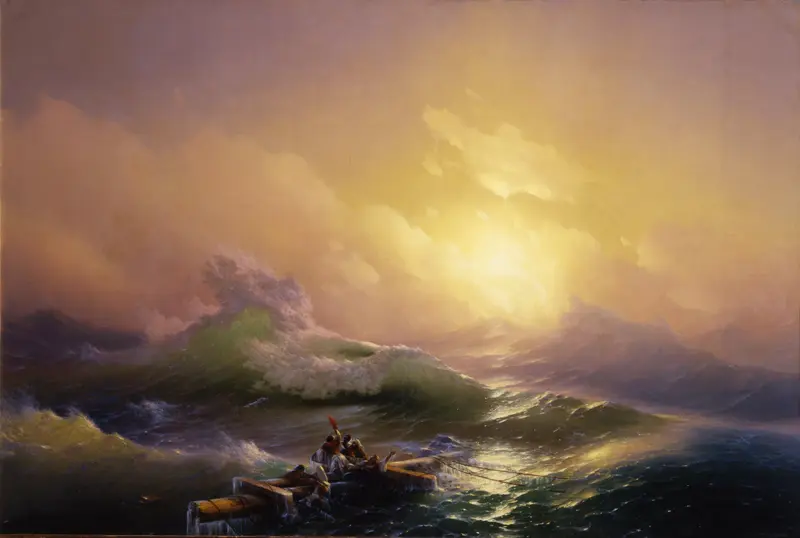
The Ninth Wave
Ivan Konstantinovich Aivazovsky

Gathering Storm
Ivan Konstantinovich Aivazovsky
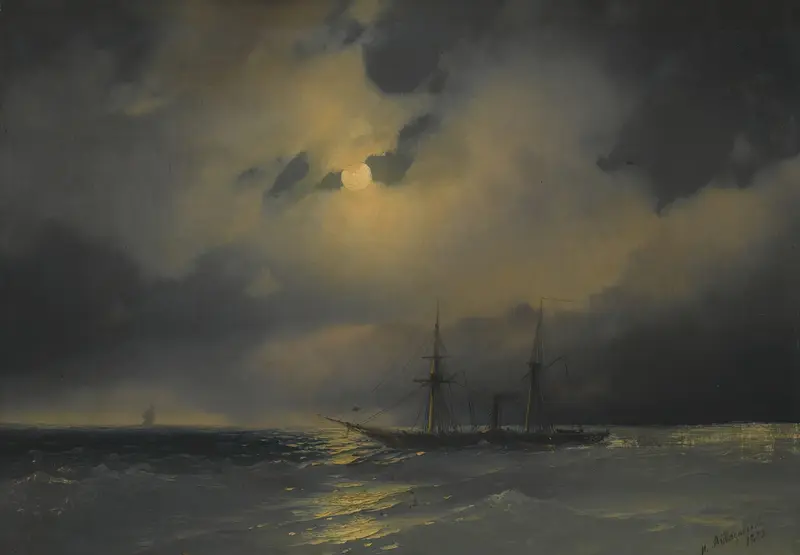
Shipping In Moonlight
Ivan Konstantinovich Aivazovsky

Shipwreck
Ivan Konstantinovich Aivazovsky
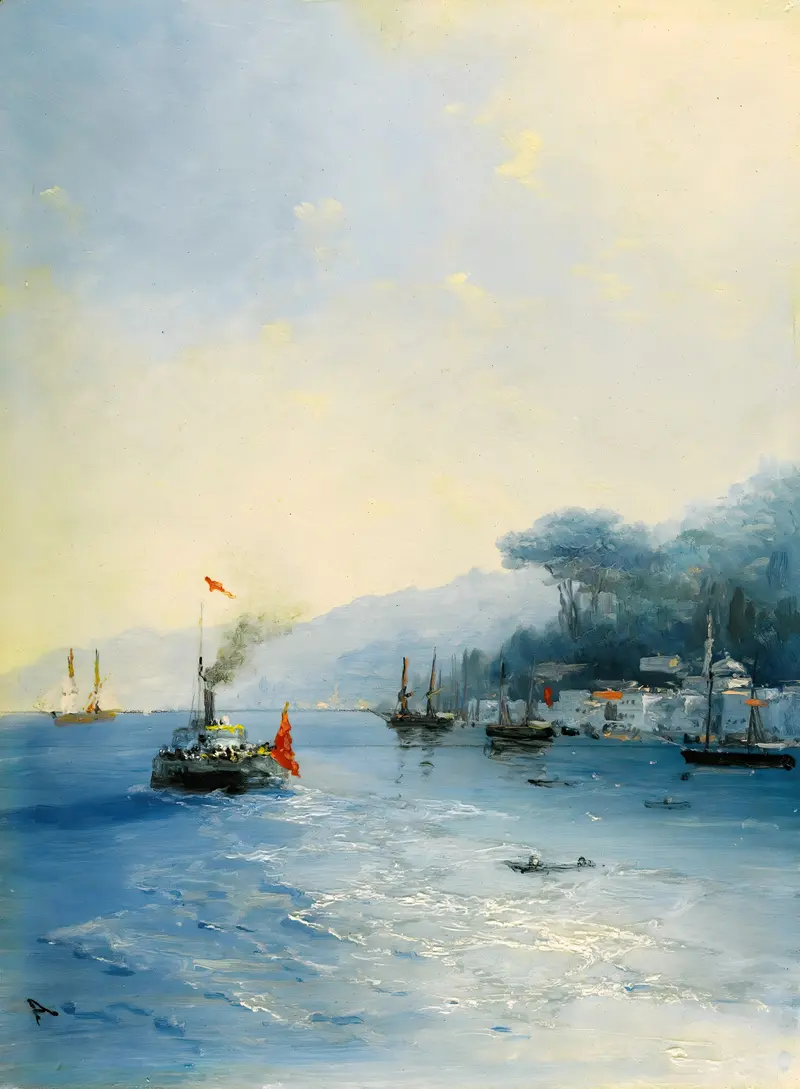
Shipping On The Bosphorus, Constantinople
Ivan Konstantinovich Aivazovsky
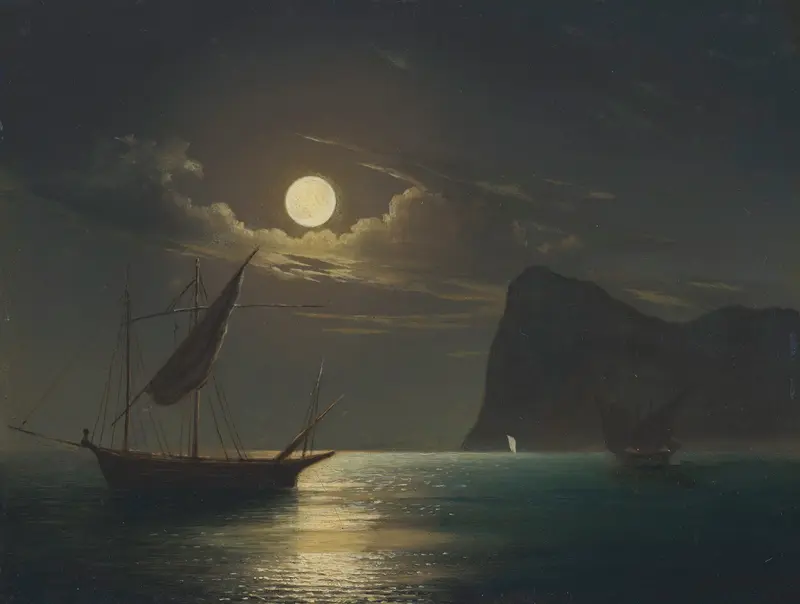
Moonlight
Ivan Konstantinovich Aivazovsky
More Landscape Art

The Starry Night
Vincent van Gogh

View of Delft
Johannes Vermeer

Water Lilies
Claude Monet

The Grand Canal, Venice, looking north-west from the Ca' Corner to the Ca' Contarini degli Scrigni, with the campanile of Santa Maria della Carità
Canaletto

Windsor Castle
Canaletto

The Grand Canal looking North-East from the Palazzo Dolfin-Manin to the Rialto Bridge
Canaletto