
Church of St. Peter & St. Paul — History & Facts
Art reveals the soul when the world turns away. In moments of stillness, we find clarity beyond the chaos, where light dances softly upon the surfaces of the sacred. Look to the center of the canvas, where the Church of St. Peter & St.
Paul stands as a solemn sentinel against the backdrop of a muted sky. The intricate details of the structure, rendered with precise brushwork, draw the eye to its soaring spires and the gentle curves of its archways. Notice how the light falls upon the stone facade, illuminating the warm hues of ochre and cream, suggesting a sense of tranquility that envelops the scene. Yet, beneath this serene exterior lies a juxtaposition of human experience.
The surrounding landscape, with its gentle undulations, contrasts sharply with the rigid geometry of the church, symbolizing the balance between nature and the spiritual. The quietude of the scene invites reflection, prompting viewers to explore their own inner landscapes in search of peace and solace, as if the church itself becomes a vessel for contemplation and connection. In 1855, Simpson painted this work during a time when the public's interest in architectural and topographical subjects was burgeoning. He found himself amidst a transformative era in art, marked by the Romantic movement’s embrace of emotion and the sublime.
As he captured this sacred space, he was not only documenting a place but also contributing to the broader narrative of faith and belonging during a time of significant change in societal values.
More Artworks by William Simpson
Browse all →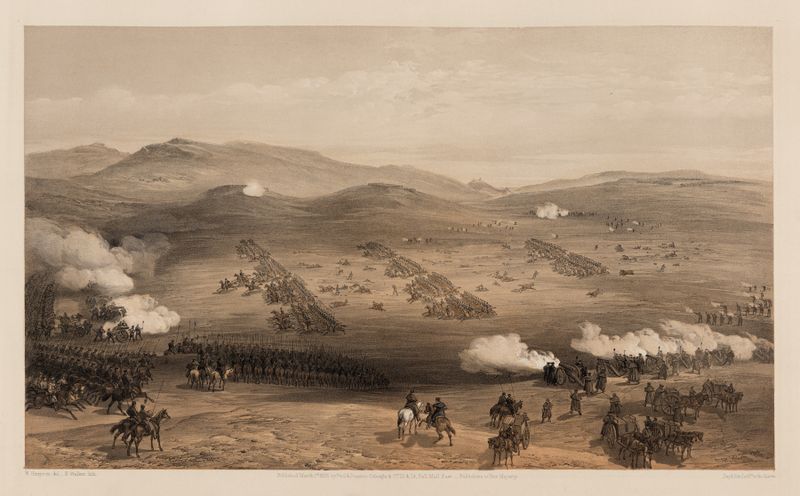
Charge of the light cavalry brigade, 25th Oct. 1854, under Major General the Earl of Cardigan
William Simpson

Charge of the heavy cavalry brigade, 25th Octr. 1854
William Simpson
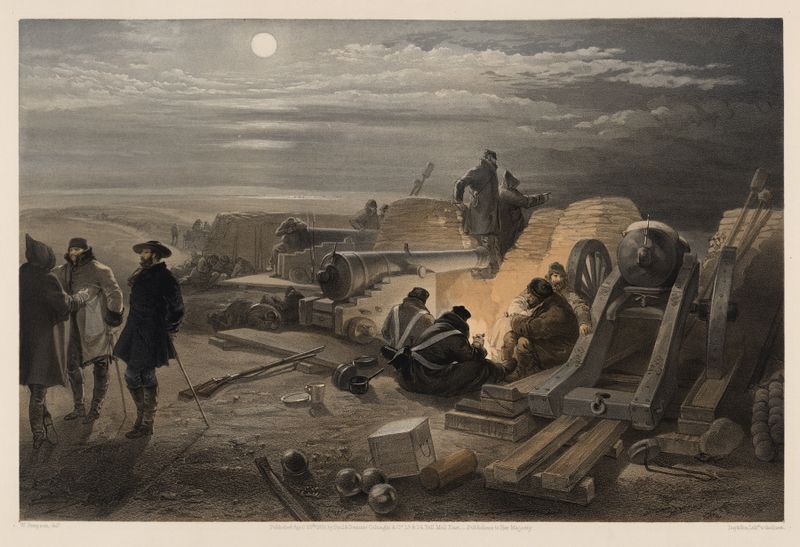
A quiet night in the batteries – a sketch in the Greenhill battery (Major Chapman’s), 29th Jany. 1855
William Simpson

The Great Wall of China
William Simpson
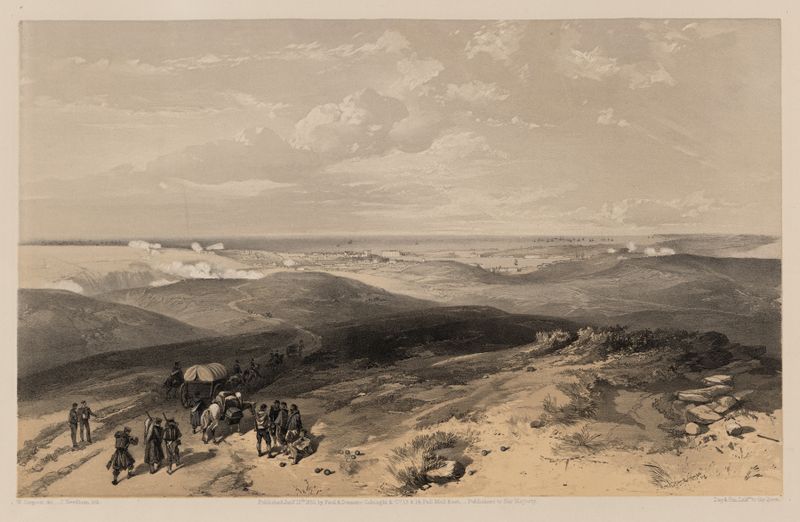
Sebastopol from the rear of the English batteries
William Simpson
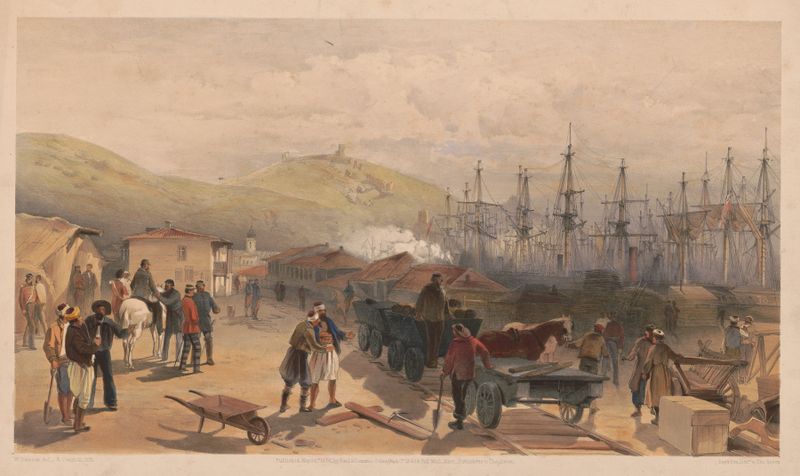
The railway at Balaklava, looking south
William Simpson

The Governor-General’s and Commander-in-Chief’s Camp at Jalandhar, 1 Febuary 1860
William Simpson
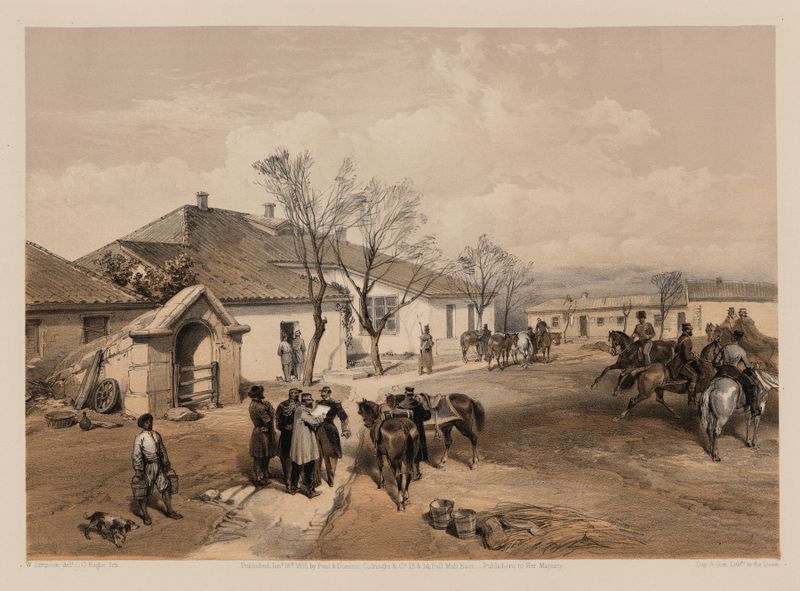
Lord Raglan’s head quarters at Khutor-Karagatch
William Simpson
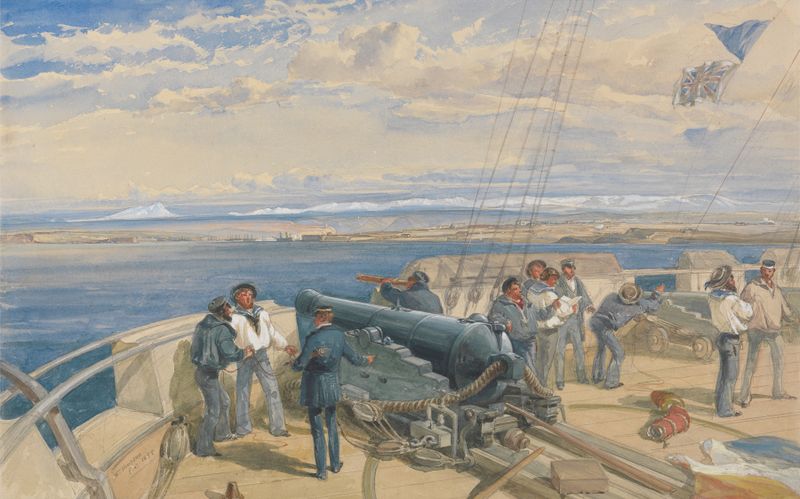
Sebastopol from the Sea, Sketched from the Deck of H. M. S. Sidon, Feb. 1855
William Simpson
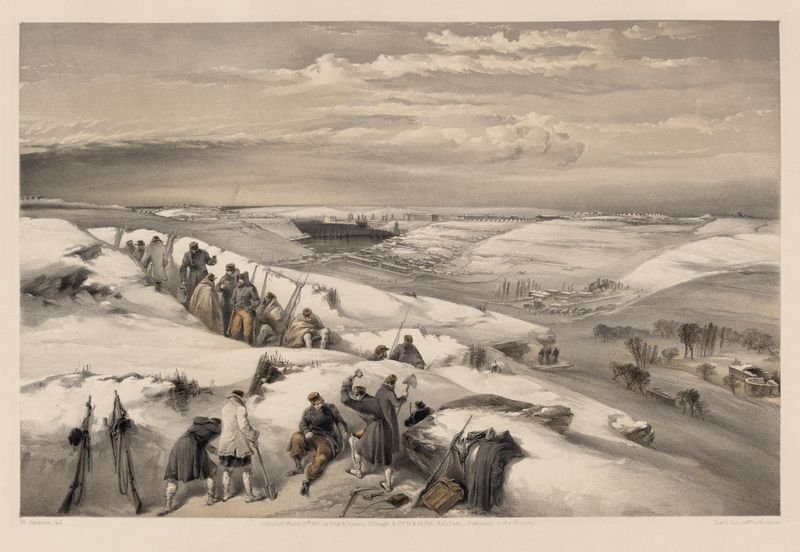
Sebastobol from the 26 gun battery on the extreme right of French attack
William Simpson
More Architecture Art
Browse all →
The statue of Liberty
Frédéric Auguste Bartholdi

View of Houses in Delft, Known as ‘The Little Street’
Johannes Vermeer

View of Houses in Delft, Known as ‘The Little Street’
Johannes Vermeer

The Cathedral in Rouen. The portal, Grey Weather
Claude Monet

The yellow house
Vincent van Gogh

The Church in Auvers-sur-Oise, View from the Chevet
Vincent van Gogh