
Church of the Intercession in Pereslavl — History & Facts
When Taras Shevchenko painted Church of the Intercession in Pereslavl in 1838, he was still a serf, only a year away from gaining his freedom. This work stands as a rare window into his early artistic journey, created during a period when he was copying and sketching historic Russian architecture as part of his studies at the Imperial Academy of Arts in St. Petersburg.
The church itself, a medieval structure built in the twelfth century, had survived centuries of war and change, its silhouette familiar to generations. The painting is one of the earliest visual records of this monument, capturing its appearance before later restorations altered its form. Shevchenko chooses a quiet, contemplative moment, rendering the church as it sits amid the gentle landscape of Pereslavl. The low, rounded domes and sturdy white walls stand against a soft sky, their solidity contrasting with the delicate play of light and shadow across the grass and path.
A lone figure in the foreground, perhaps a pilgrim or local villager, draws the viewer’s eye toward the entrance, suggesting the church’s ongoing role as a place of gathering and memory. The composition’s restraint and clarity recall the architectural studies of Alexei Venetsianov, yet Shevchenko’s treatment is more intimate, focusing on the church’s relationship to its setting and community rather than monumental grandeur. The exact medium of Church of the Intercession in Pereslavl remains uncertain, though Shevchenko frequently worked in watercolor and sepia during this period. The painting’s provenance is not fully documented, but it is believed to have remained in private hands for much of the nineteenth century before entering a Ukrainian museum collection.
Today, it is valued not only as an early work by Shevchenko but also as a rare document of Russian ecclesiastical architecture before the transformations of the modern era. For Shevchenko, soon to become a leading figure in Ukrainian art and literature, this painting marks a formative step in his lifelong engagement with history, landscape, and national identity.
More Artworks by Taras Shevchenko
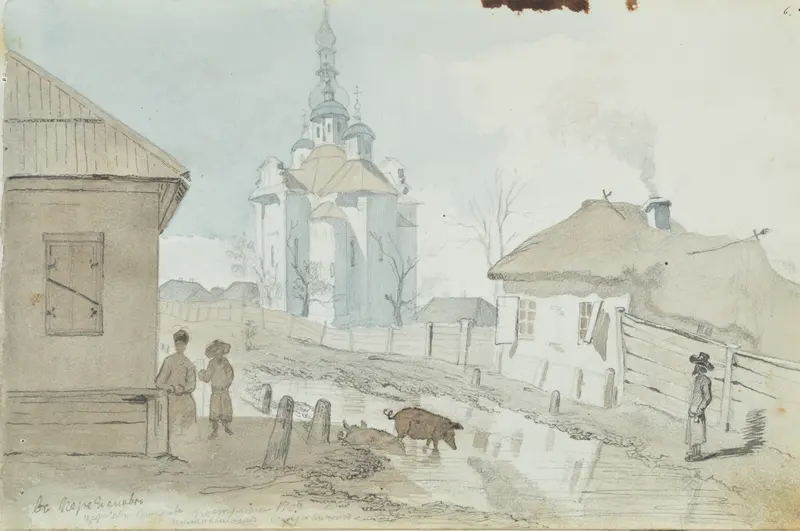
1845 Sh Sketchbook f.06r
Taras Shevchenko

1845 Sh Sketchbook f.04r
Taras Shevchenko

1848 Bilia vohnu
Taras Shevchenko
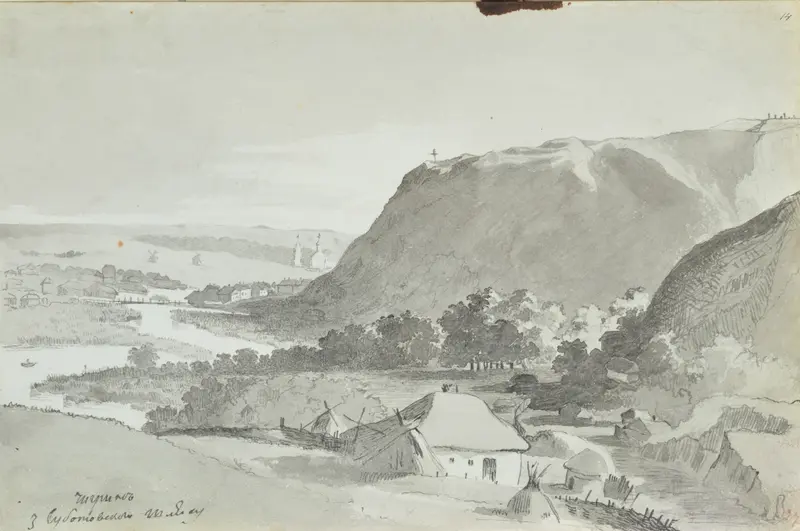
1845 Sh Sketchbook f.14r
Taras Shevchenko
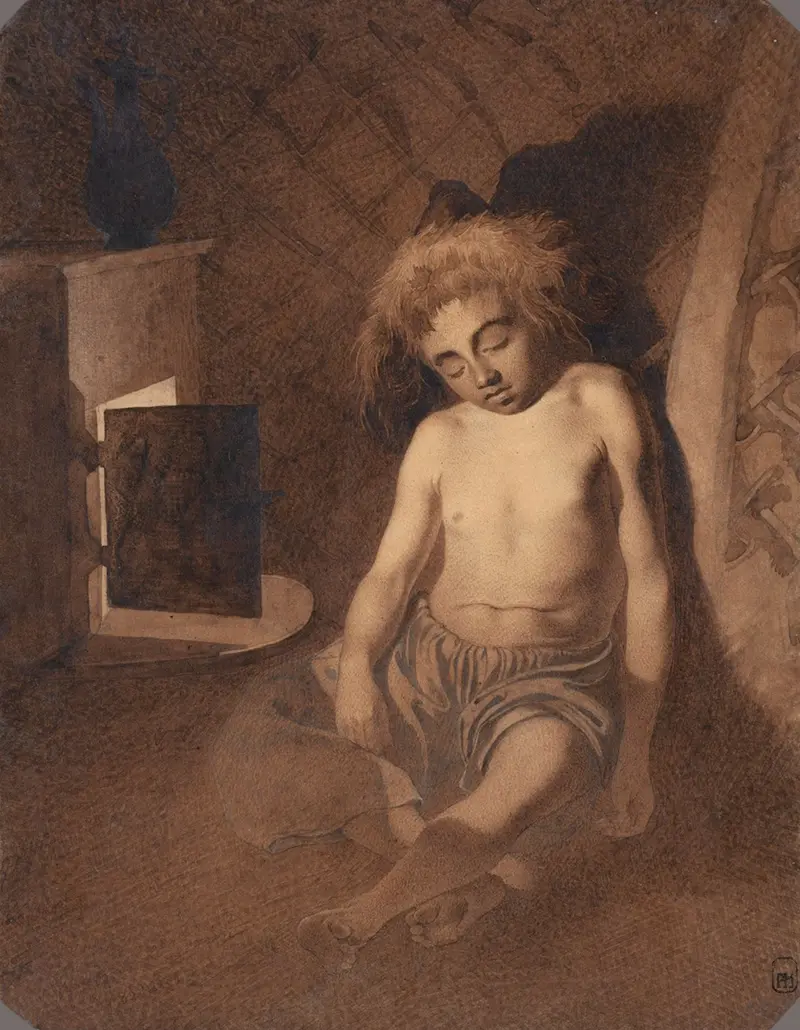
1848 Hlopcyk zasnuv
Taras Shevchenko
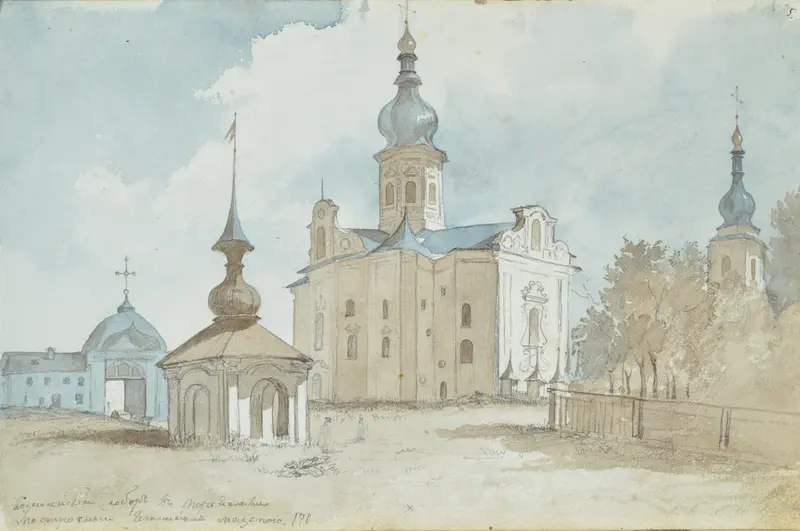
1845 Sh Sketchbook f.05r
Taras Shevchenko
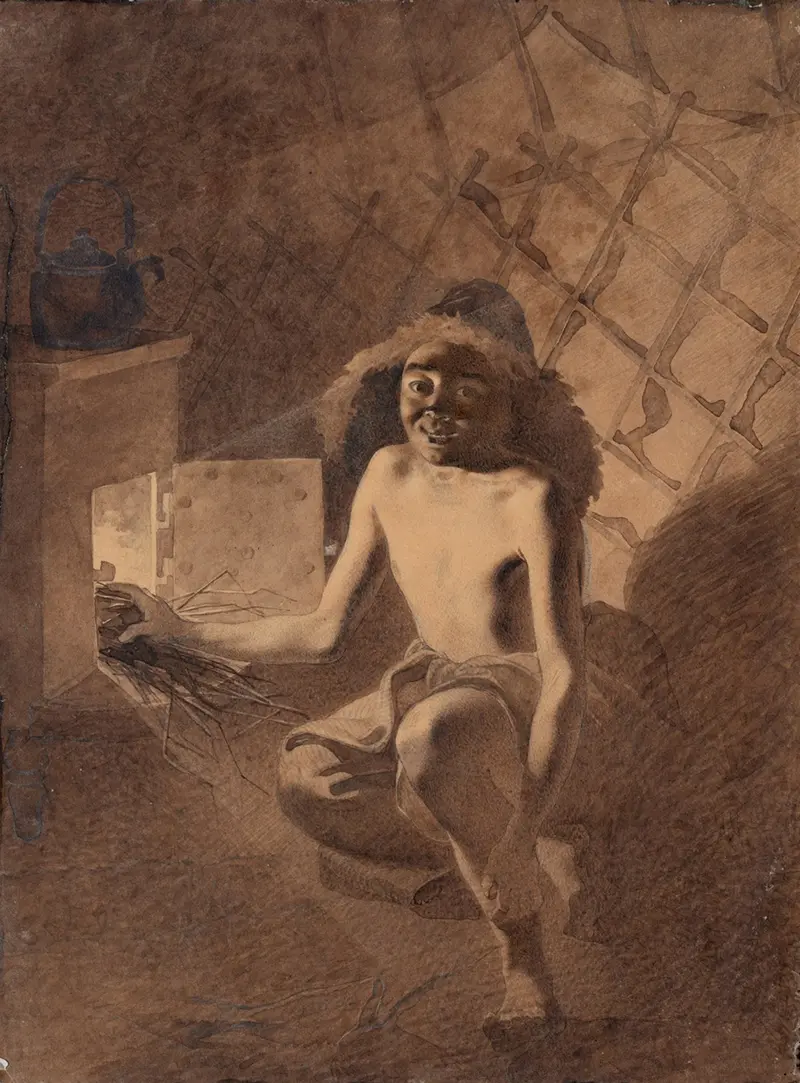
1848 Hlopcyk rozpalije
Taras Shevchenko
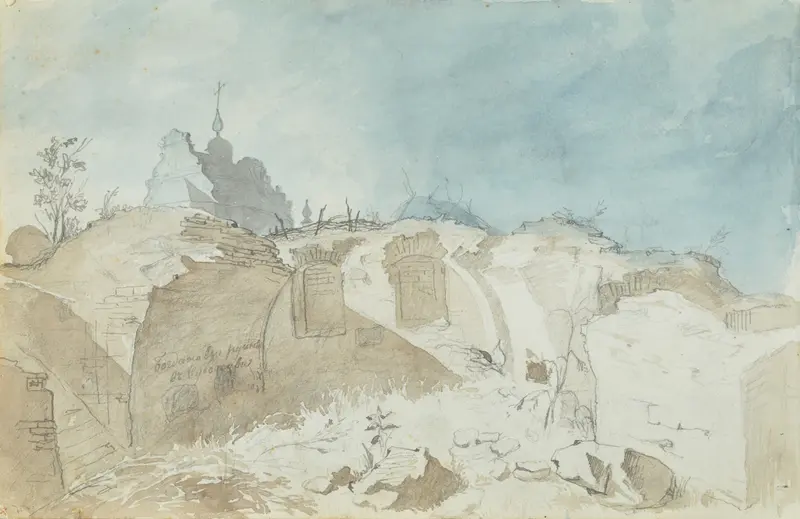
1845 Sh Sketchbook f.12v
Taras Shevchenko
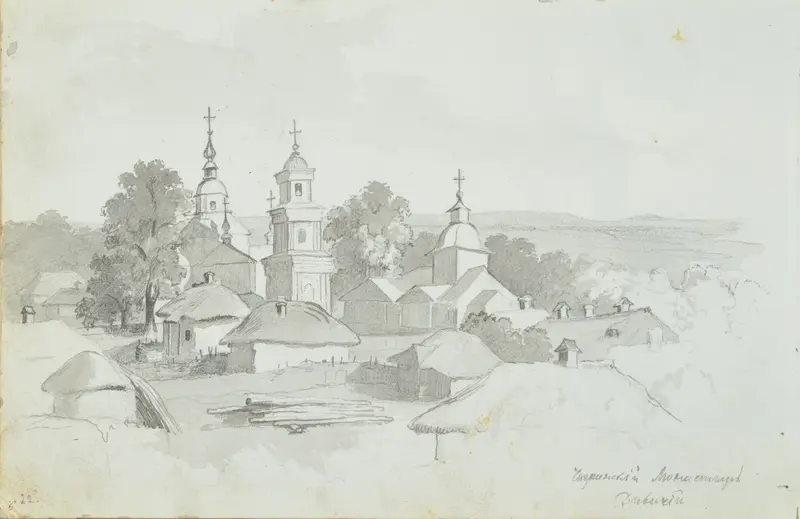
1845 Sh Sketchbook zz f.11v
Taras Shevchenko
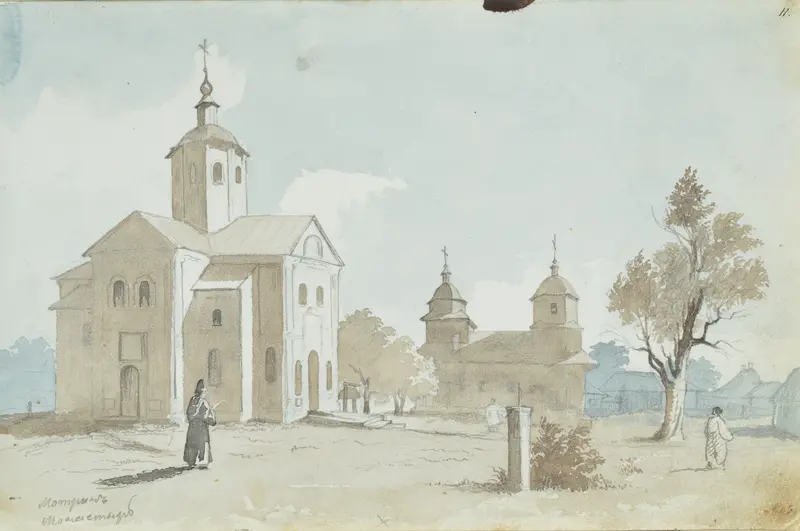
1845 Sh Sketchbook f.11r
Taras Shevchenko





