Circular Mill, King Street, New York — History & Facts
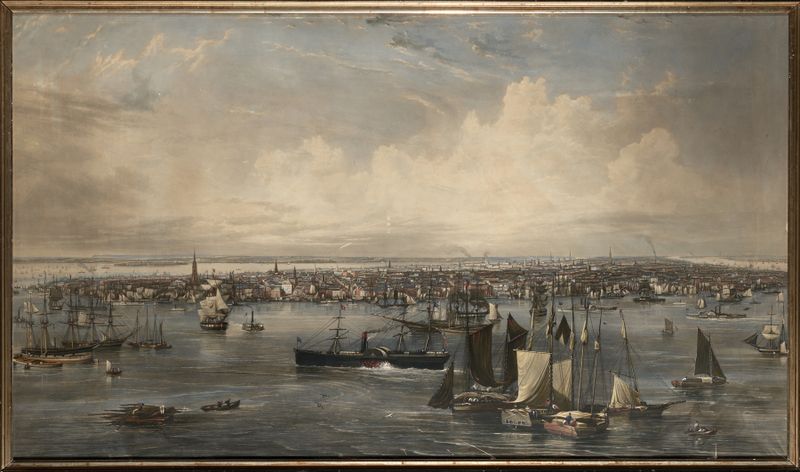
Could a single brushstroke hold eternity? In Circular Mill, King Street, New York, John William Hill presents a world where chaos and beauty coexist, inviting viewers to ponder the intricate dance of urban life. Look closely at the lower right corner; it’s here that the rushing waters of the mill swirl with a frenzied energy, contrasting sharply with the calm, ordered buildings that rise along the street. The palette of muted greens and browns gives a sense of earthiness, while dashes of white and blue in the water reflect the sky, creating a vibrant tension. Hill’s meticulous attention to architectural details is evident; observe the way he captures the sunlight glancing off the building façades, casting elongated shadows that stretch towards the river, pulling our gaze deeper into the scene. Within this bustling composition lies a deeper narrative—an interplay of industrial progress and nature’s relentless force.
The juxtaposition of the man-made mill against the fluidity of the water suggests a commentary on the fragility of human endeavors in the face of nature’s power. Additionally, the way figures are scattered throughout the scene evokes a sense of individuality within the collective chaos, each person a testimony to the life pulse of the city, yet almost lost amidst the overwhelming movement. In 1830, while painting this work, Hill was immersed in the early days of the American Romantic movement, which sought to explore the tension between humanity and nature. Living in New York, amidst a rapidly industrializing society, he captured a moment of transformation—a reflection of the changing world around him and his own artistic evolution during this vibrant period in American art history.