The Palisades — History & Facts
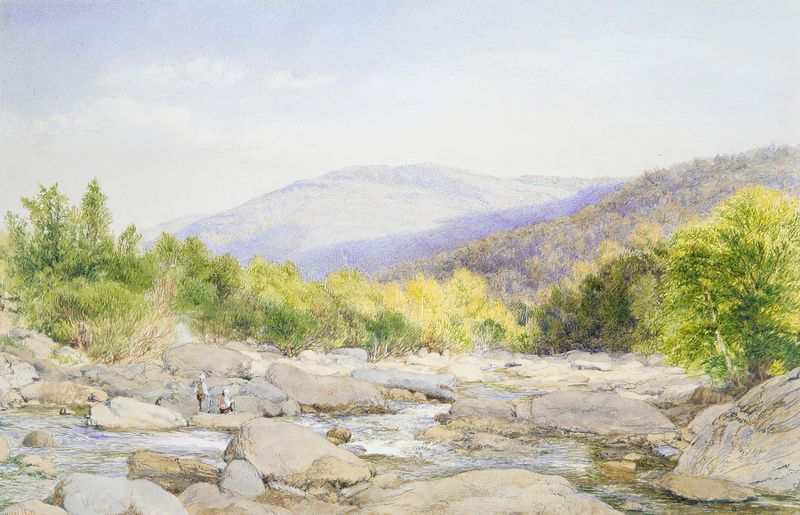
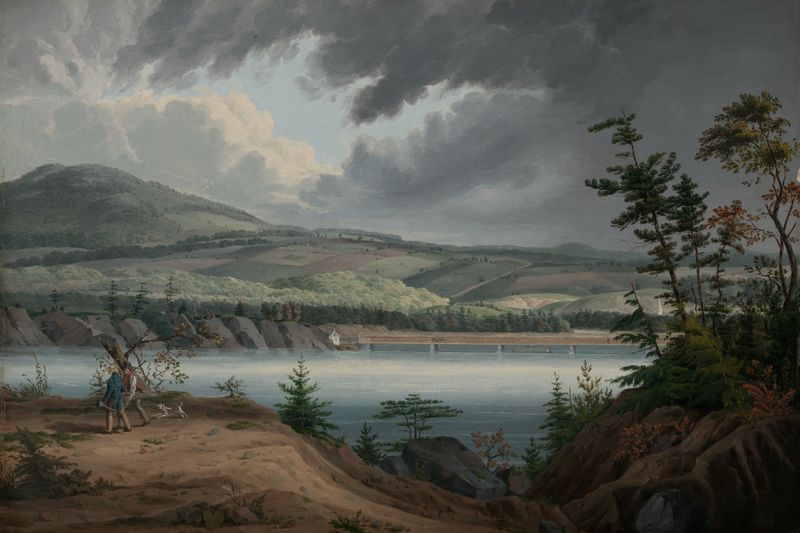
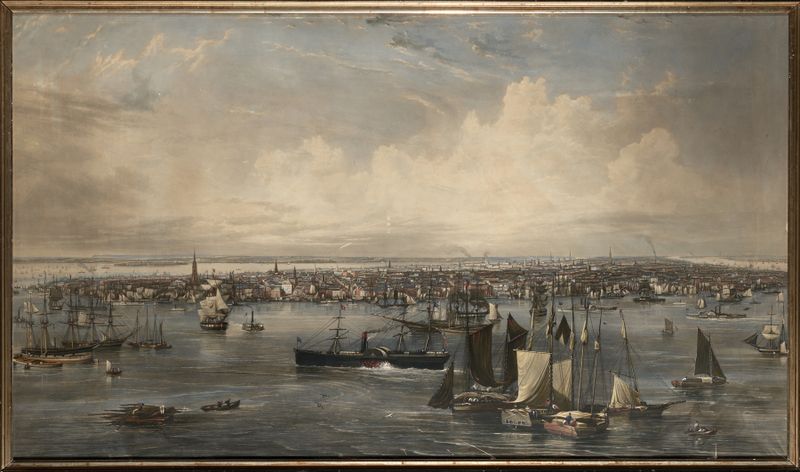
In the quietude of stillness, we find the essence of fate captured on canvas. Here, the horizon holds a story, one that whispers of journeys taken and paths not chosen, reflecting the inexorable march of destiny. Look to the left at the majestic cliffs, their rugged texture rendered with delicate brushwork that hints at both strength and vulnerability. The vibrant greens and earthy browns merge seamlessly, as light dances over the landscape and illuminates the distant river, a silver ribbon that leads the eye into the depths of the scene.
The careful composition, with its layering of foreground and background, invites contemplation, suggesting the passage of time where nature reigns supreme. Beneath the serene facade lies an emotional tension—between the permanence of the cliffs and the transience of the river's flow. The juxtaposition of the solid, unyielding stones against the ephemeral reflections in the water speaks to the dualities of life. Each detail, from the delicate foliage to the muted sky, resonates with the weight of existence, hinting at the destinies intertwined within this natural landscape. In 1870, John William Hill created The Palisades during a period marked by a growing appreciation for the American landscape.
After moving to New York, he became fascinated with the scenery around the Hudson River, capturing its beauty in a way that reflected both romanticism and realism. Amidst a burgeoning art scene that valued nature’s majesty, he embraced his role as a chronicler of the American experience, immortalizing the land as a testament to the lives that intersect with it.