View of Cohoes — History & Facts
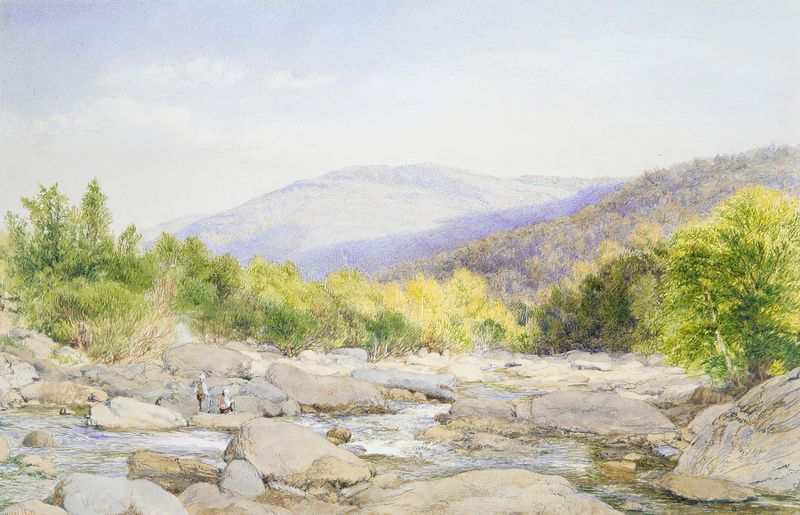
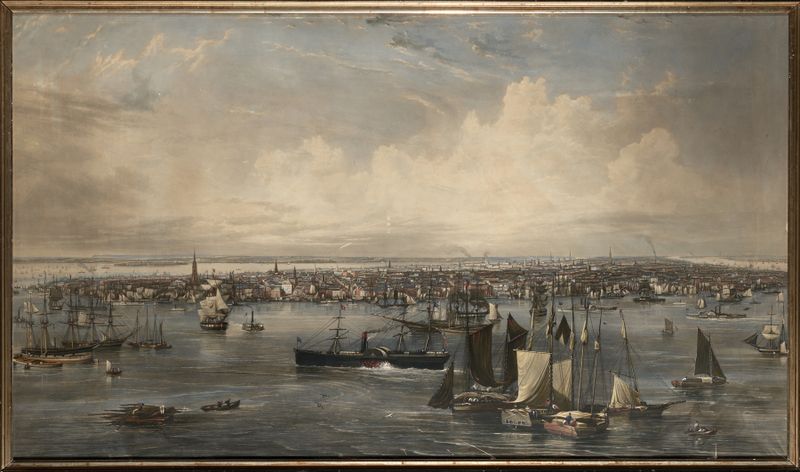
In the stillness of nature, transformation breathes life into landscapes that often go unnoticed. Focus on the gentle cascade of the Cohoes Falls, which dominates the canvas with its dramatic spectacle. The viewer's gaze is drawn first to the velvety blues and greens that envelop the scene, contrasting sharply with the frothy white water tumbling down the rocks. Notice how Hill's meticulous brushwork captures the sunlight dancing on the surface of the water, creating an ethereal quality that invites contemplation.
Each stroke seems to echo the raw power of nature, yet it is marred by the quiet encroachment of human settlement in the background. Delve deeper, and you unearth the tension between nature and civilization. The lush vegetation symbolizes the vibrancy of life, while the distant buildings hint at the conflicts of progress and its impact on the landscape. The duality of serenity and disruption pulses throughout the composition, evoking a sense of nostalgia for a time when nature reigned supreme.
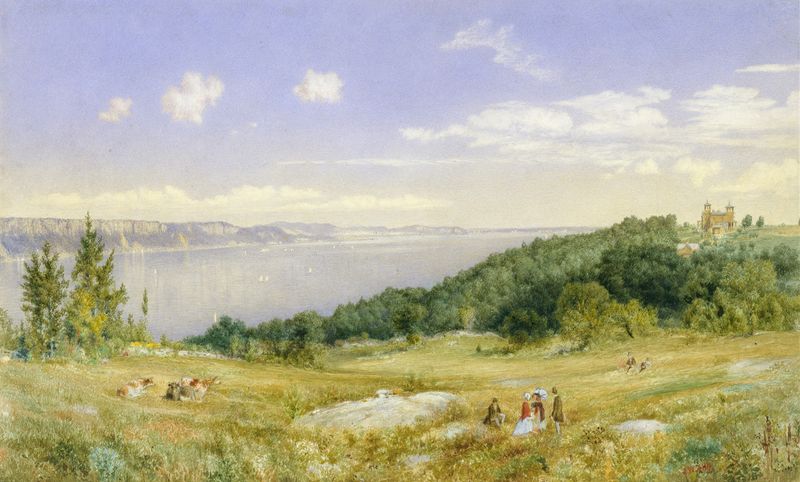
Hill’s ability to blend realism with subtle emotional undertones reveals a yearning for balance in the face of inevitable transformation. Created in 1820, this artwork reflects John William Hill's experience in a rapidly changing America, where industrialization began to reshape the landscape. Living in New York City, Hill found inspiration in the surrounding regions, particularly the majestic beauty of the Hudson River Valley. This period marked an artistic shift towards the appreciation of natural beauty, even as modernity loomed on the horizon, making his work both a celebration and a lament for the world he witnessed transforming.