Landscape; View on Catskill Creek — History & Facts
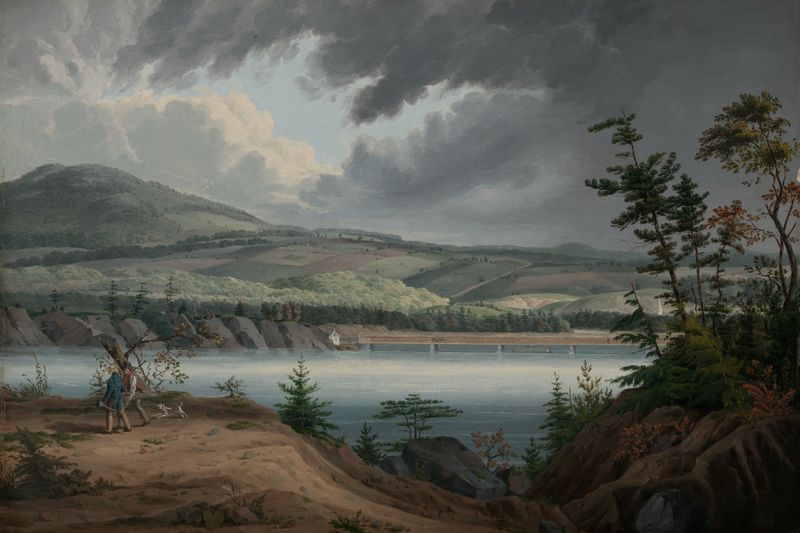
Could a single brushstroke hold eternity? In John William Hill's Landscape; View on Catskill Creek, the canvas captures not just a place, but the very essence of movement that defines the natural world. Each element seems alive, whispering stories of time and change, inviting the viewer to ponder the transient beauty of nature. Look to the left at the gentle curve of the creek, where the water's surface reflects the soft hues of a fading sky. There, the dappled light dances upon the waves, creating a shimmer that beckons your eye deeper into the composition.
Notice how the trees frame the scene, their rich greens and browns contrasting with the soft blues and golds of the sky. The delicate brushwork creates a sense of depth and fluidity, evoking the ebb and flow of the creek, while the overall harmony of color draws you in, promising serenity amidst the ever-changing landscape. The subtle juxtaposition of light and shadow reveals an emotional tension within the work. The vibrant foliage suggests life, yet the stillness of the water hints at the passage of time, a reminder of nature’s unrelenting cycle.
In the distance, the softly rolling hills hold the promise of adventure, while the foreground remains grounded in tranquility, capturing the duality of existence. Each detail, from the ripples on the surface to the whispering leaves, resonates with a pulse of movement that speaks to the viewer’s own journey. Created in 1867, this piece reflects Hill's dedication to naturalism during a transformative period in American art. At this time, the Hudson River School was gaining prominence, emphasizing the majesty of the American landscape.
Hill, influenced by this movement, sought to depict the beauty of the Catskills with meticulous attention, showcasing both the personal and collective narrative of the era's appreciation for the American wilderness.