
City Hall of Brooklyn — History & Facts
What if silence could speak through light? In the stillness of a dream, the grand architecture of a city whispers secrets through the interplay of shadow and brilliance. Look to the left at the stately columns that rise like sentinels, their detailed carvings illuminated by the soft, golden light. The composition leads your gaze upward, inviting you to explore the intricate patterns that define this masterpiece. Notice how the subtle gradation of colors breathes life into the stone, merging the starkness of reality with the ethereal quality of an idealized vision of governance. Beneath the surface of this monumental structure lies a tension between the solidity of the building and the ephemeral quality of the light that bathes it.
The juxtaposition of hard edges and soft illumination evokes a sense of both permanence and transience. Each window reflects a world both outside and within, suggesting a duality of purpose—this is not just a place of politics, but a monument to the dreams and hopes of its people. In 1850, Charles Autenrieth painted this vision of Brooklyn's City Hall during a period of transformation in American art—a time where the romanticized elegance of neoclassicism began to merge with the emerging realism of the mid-19th century. He stood at a crossroads of burgeoning urban identity, capturing a pivotal moment when the city itself was awakening to its potential and significance in the American landscape.
More Artworks by Charles Autenrieth
Browse all →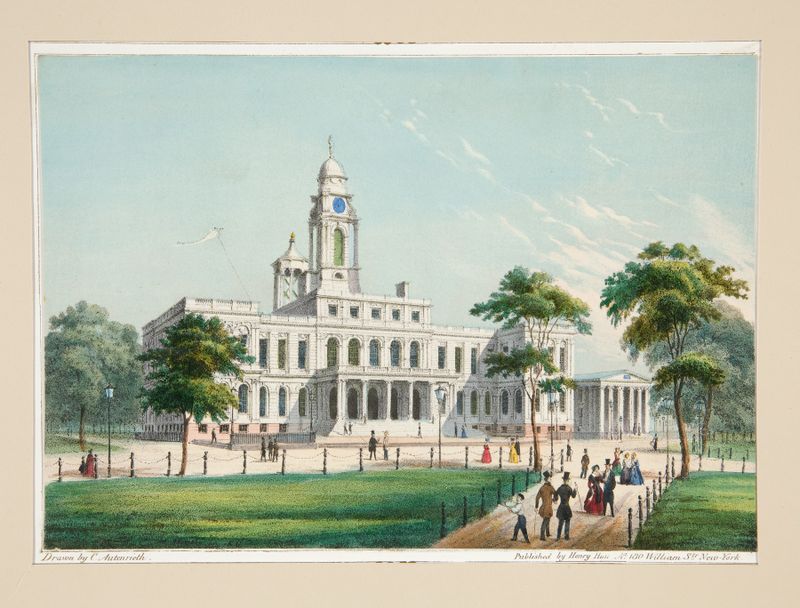


More Architecture Art
Browse all →
The statue of Liberty
Frédéric Auguste Bartholdi

View of Houses in Delft, Known as ‘The Little Street’
Johannes Vermeer

View of Houses in Delft, Known as ‘The Little Street’
Johannes Vermeer

The Cathedral in Rouen. The portal, Grey Weather
Claude Monet

The yellow house
Vincent van Gogh

The Church in Auvers-sur-Oise, View from the Chevet
Vincent van Gogh