
City Walls of Ariccia — History & Facts
Is this a mirror — or a memory? In City Walls of Ariccia, the boundary between reality and nostalgia blurs, inviting viewers to reflect on their own pasts with a sense of hope. Look to the left at the towering walls, their rugged surfaces catching the soft, golden light of a late afternoon sun. Notice the palette of earthy ochres and rich greens, which harmonize to create both a sense of permanence and a fleeting moment in time. The composition draws your eye upward along the walls, guiding you towards the serene sky that hovers above, while the shadows hint at the stories embedded within the stone. Within this scene lies a tension between the enduring strength of the city’s ancient architecture and the ephemeral nature of human experience.
The vibrant foliage in the foreground represents life and renewal, contrasting sharply with the solid, immovable walls that speak of history and resilience. It evokes a feeling of hope — a reminder that while structures may stand firm against the passage of time, the human spirit is forever in motion, striving toward the light. Arthur Blaschnik painted City Walls of Ariccia in 1857, during a period marked by a growing appreciation for plein air painting and the natural world. Living in a time when Europe was undergoing rapid changes, Blaschnik sought to capture the essence of his surroundings and evoke emotional connections to places steeped in history.
His work reflects both the desire to preserve the past and the artist's yearning for a hopeful future amidst the shifting tides of the landscape.
More Artworks by Arthur Blaschnik
Browse all →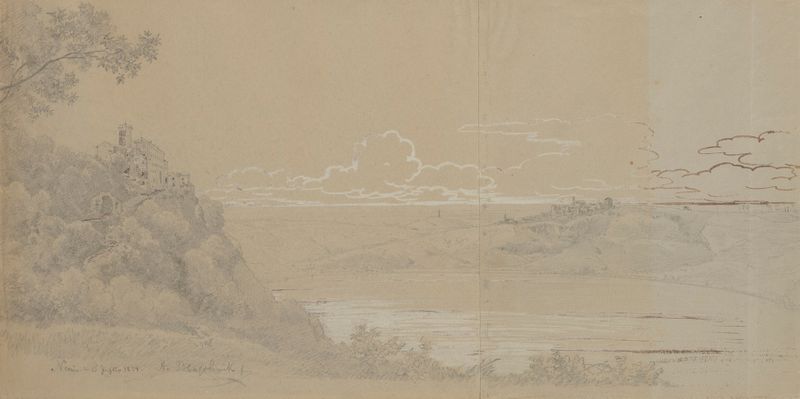
Palazzo Ruspoli by Lake Nemi, in the Distance the Town of Genzano di Roma
Arthur Blaschnik
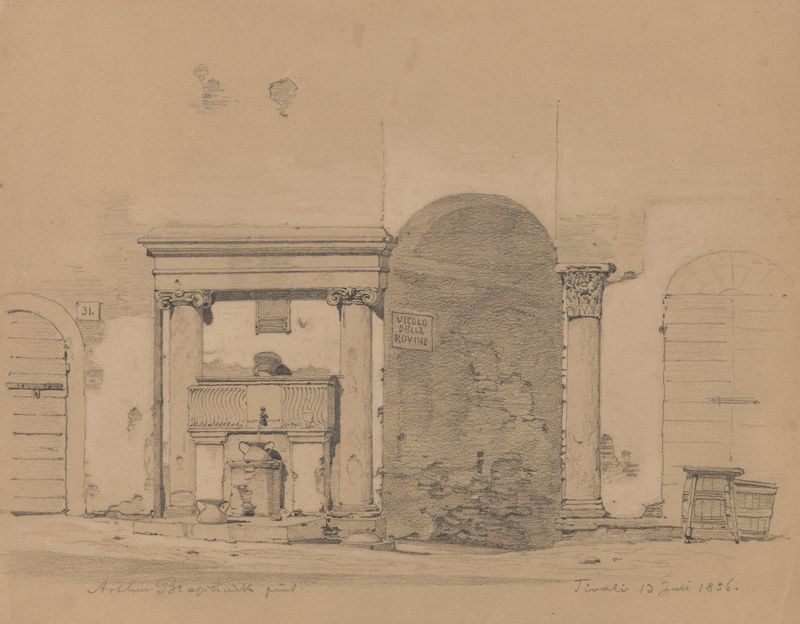
Gate Leading to Vicoli dei Grana near Piazza Palatina in Tivoli
Arthur Blaschnik
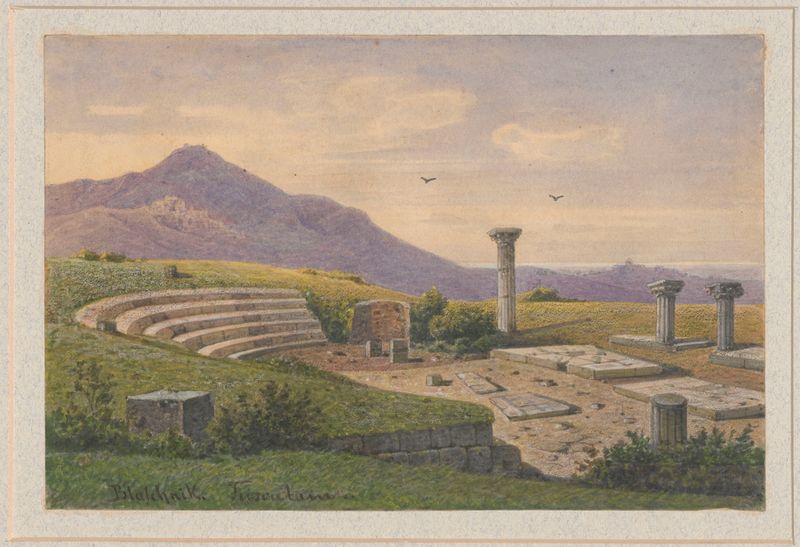
Amphitheatre in Tusculum
Arthur Blaschnik
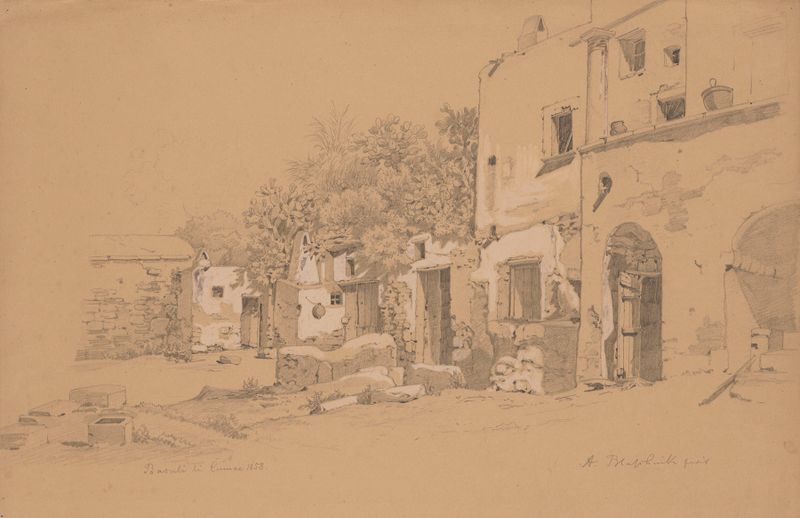
House and Outbuildings in Bacoli
Arthur Blaschnik
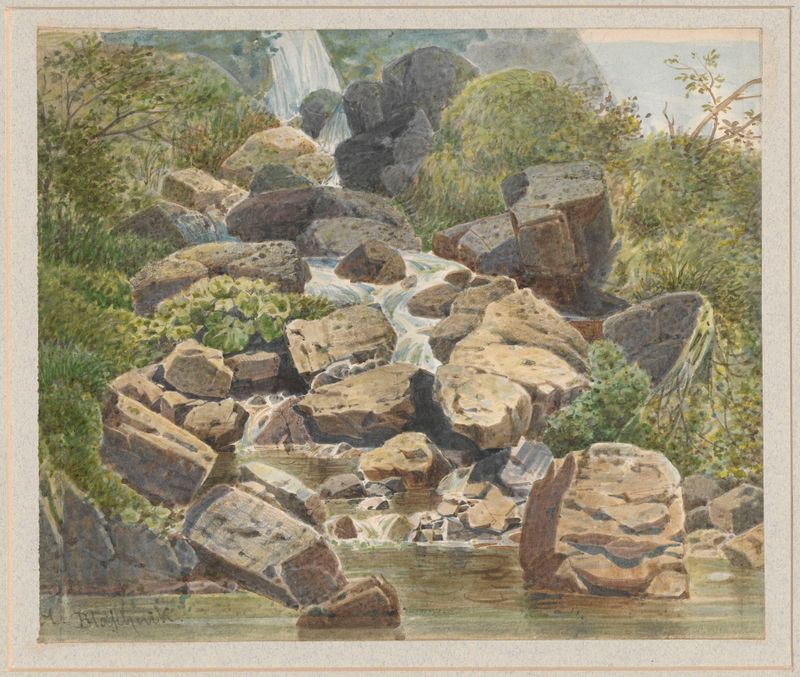
View of a small waterfall near Covigliaio, Tuscany
Arthur Blaschnik
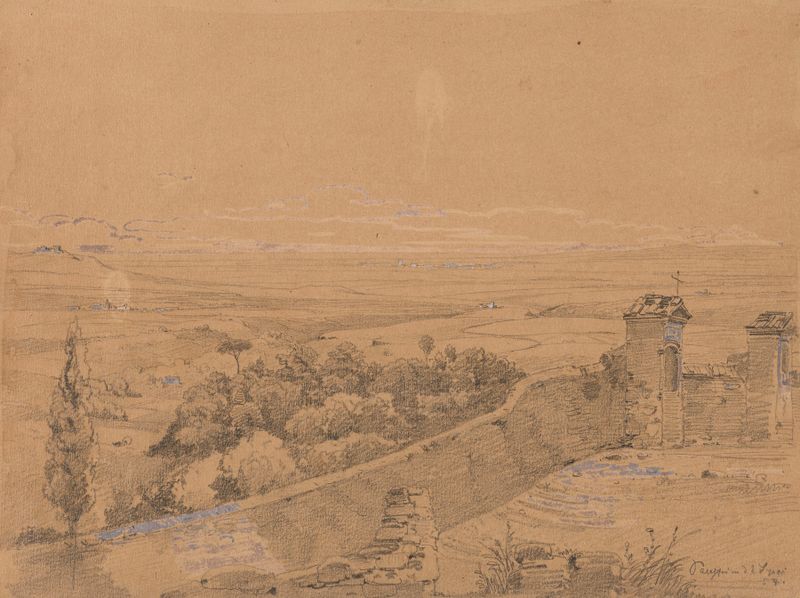
Landscape from the Vicinity of Palestrina
Arthur Blaschnik
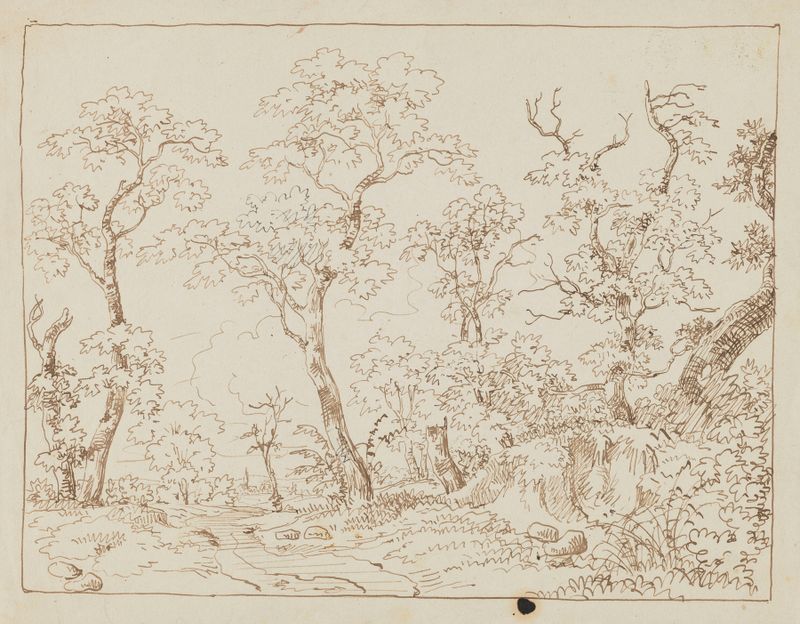
Studies of Trees, Landscape
Arthur Blaschnik
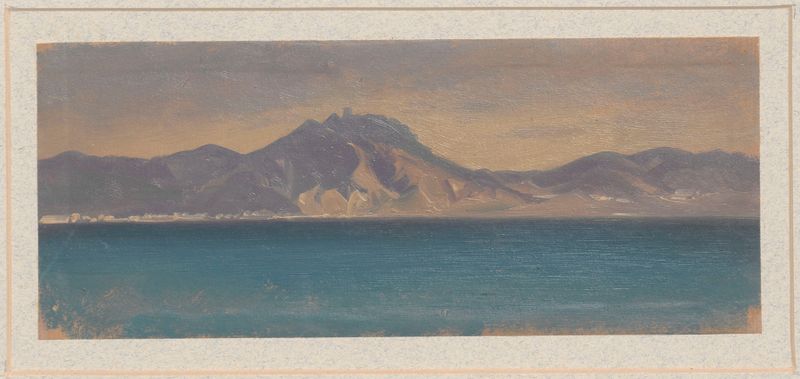
View of the Island of Capri
Arthur Blaschnik
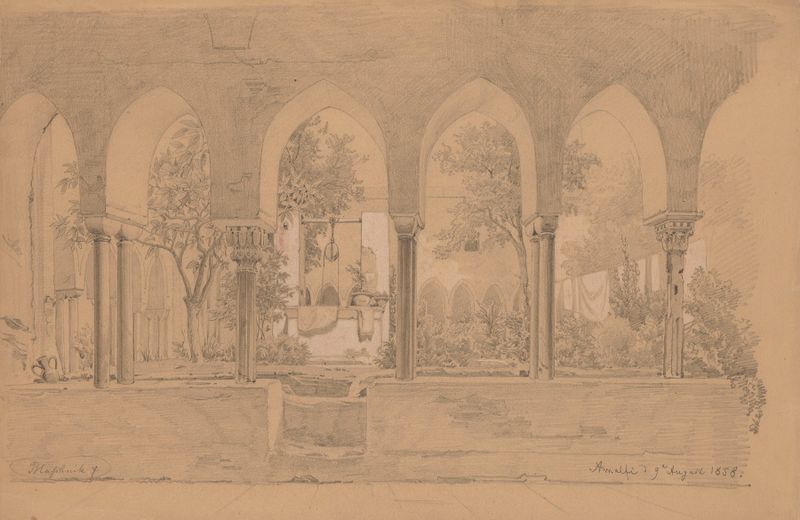
Cloister with Arcade Gallery in Amalfi
Arthur Blaschnik
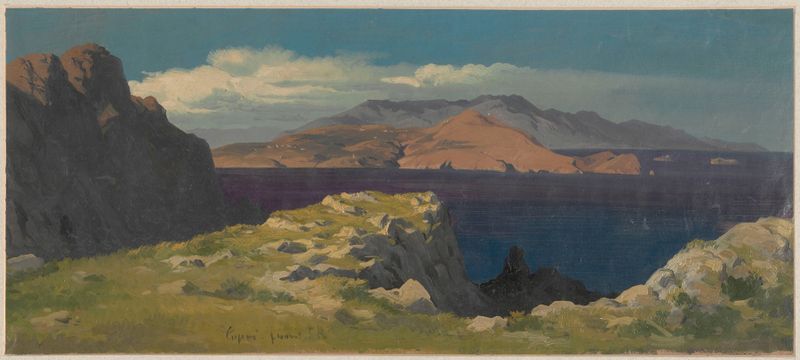
View of Capri
Arthur Blaschnik





