
Classical Composition — History & Facts
The eye is drawn first to the serene order that reigns across this imagined landscape, where every element seems to have found its perfect place. Light pours in from the left, illuminating the open meadow and the pond at the center, before guiding the viewer’s gaze along winding paths toward distant temples and a sunlit bridge. Figures move quietly through the scene: a woman bends at a fountain in the foreground, while goats graze and classical statues stand sentinel, their presence a reminder that this is a world shaped by both nature and human aspiration.
The palette is gentle, suffused with the golden haze of late afternoon, inviting the viewer to linger over each carefully rendered detail. Painted around 1850, Classical Composition by Asher Brown Durand belongs to a moment when American artists looked to the landscapes of Europe—and to the ideals of antiquity—for inspiration. Such works were often created for patrons eager to display both taste and learning, evoking the harmony of ancient civilizations at a time when the young United States was searching for its own cultural identity. Durand, known for his role in the Hudson River School, here adopts the compositional strategies of European masters, blending real observation with a vision of Arcadian peace.
Today, the painting resides in the Brauer Museum of Art, its quiet grandeur inviting viewers to imagine themselves wandering its sunlit paths.
More Artworks by Asher Brown Durand

A Sycamore Tree, Plaaterkill Clove (The Sycamore, Kaaterskill Clove)
Asher Brown Durand
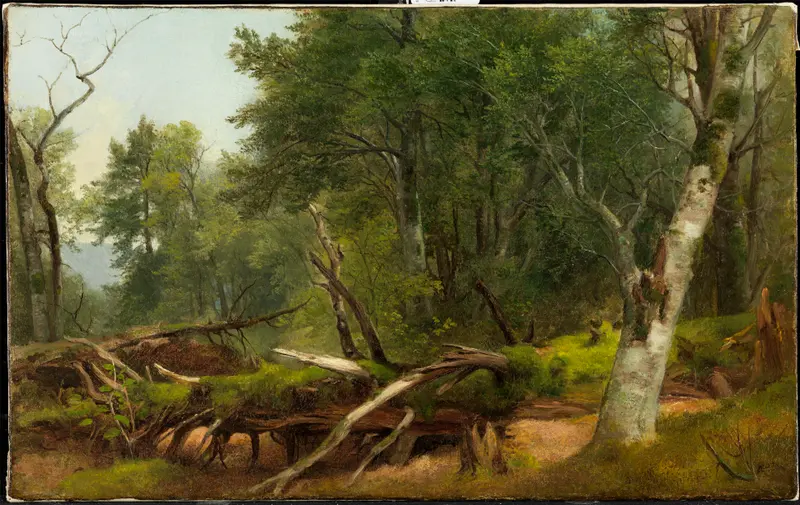
Forest Scene in the Catskills
Asher Brown Durand
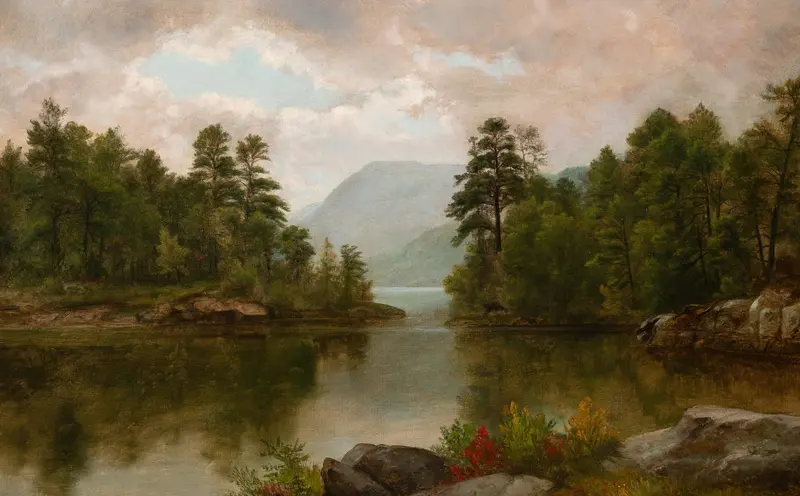
The Narrows, Lake George
Asher Brown Durand
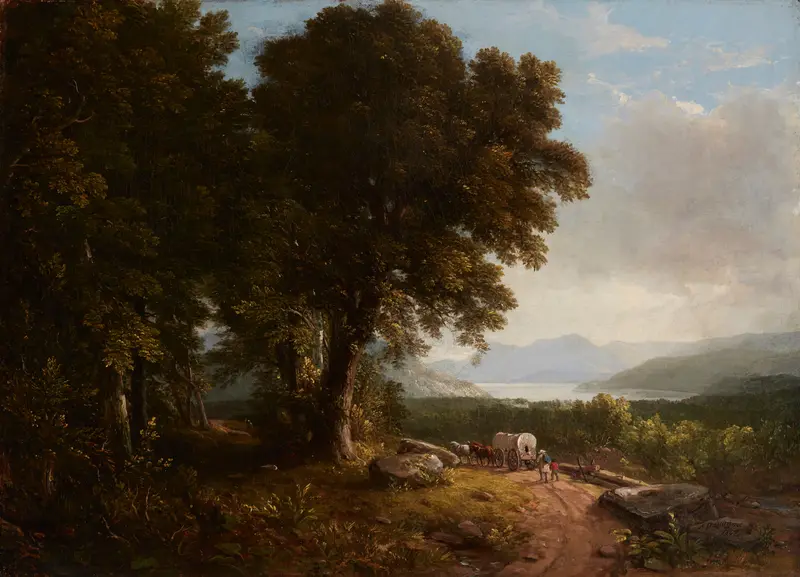
Landscape with Covered Wagon
Asher Brown Durand
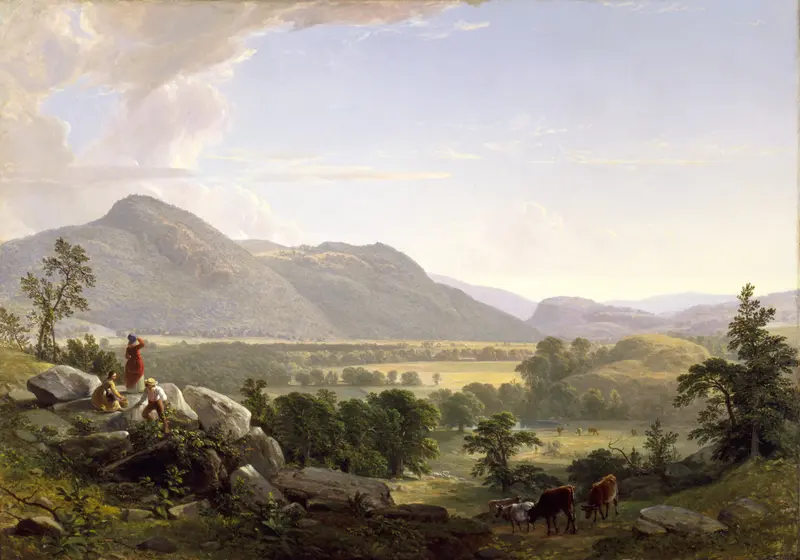
Dover Plains, Dutchess County, New York
Asher Brown Durand
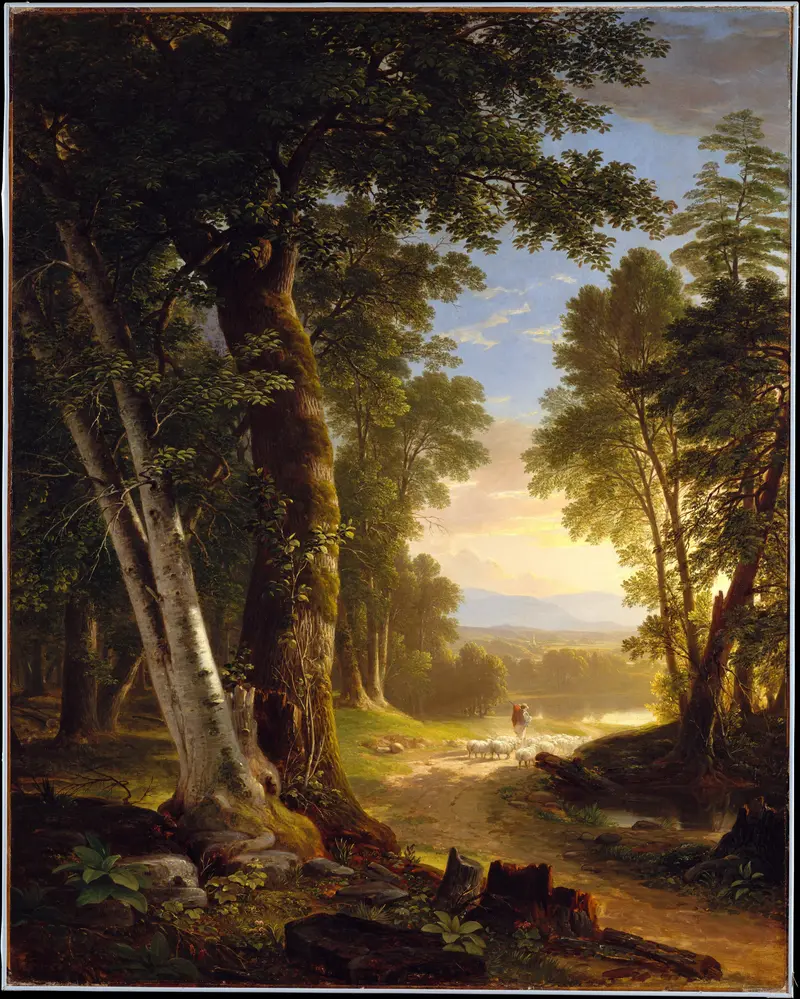
The Beeches
Asher Brown Durand

Kaaterskill Landscape
Asher Brown Durand
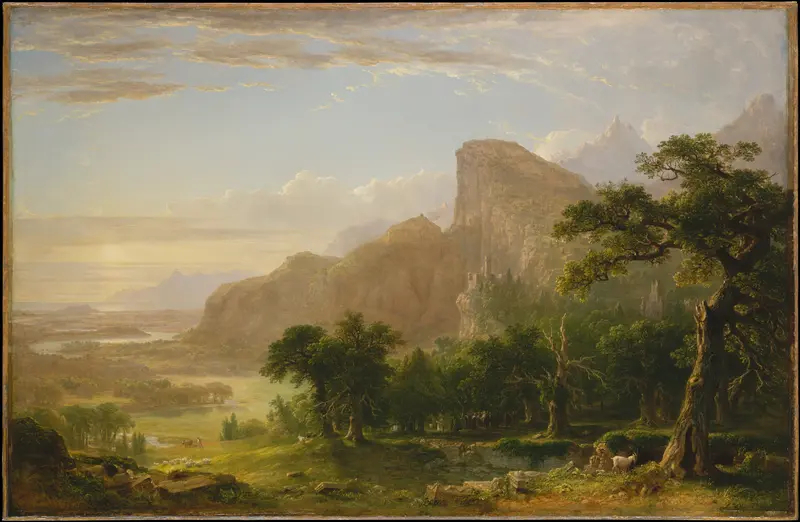
Landscape—Scene from ‘Thanatopsis’
Asher Brown Durand
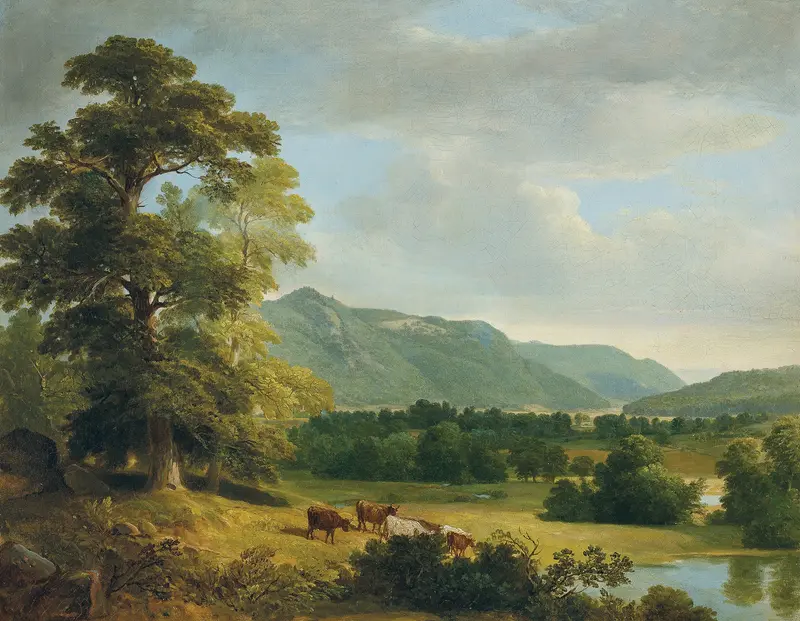
Landscape Study, Dover Plains, New York
Asher Brown Durand
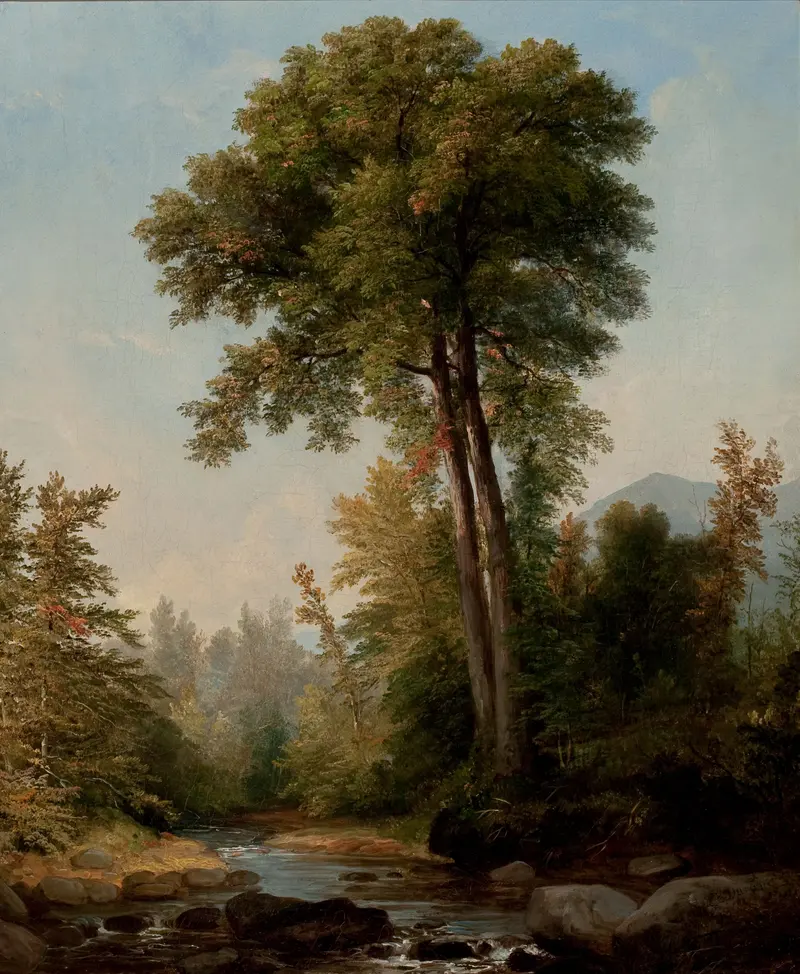
A Natural Monarch
Asher Brown Durand
More Landscape Art

The Starry Night
Vincent van Gogh

View of Delft
Johannes Vermeer

Water Lilies
Claude Monet

The Grand Canal, Venice, looking north-west from the Ca' Corner to the Ca' Contarini degli Scrigni, with the campanile of Santa Maria della Carità
Canaletto

Windsor Castle
Canaletto

The Grand Canal looking North-East from the Palazzo Dolfin-Manin to the Rialto Bridge
Canaletto