
Clifton House & Niagara, Monday, July 22d, 1846, from above the Stair – Table Rock — History & Facts
In the stillness of Clifton House & Niagara, Monday, July 22d, 1846, from above the Stair – Table Rock, we are invited to witness an awakening—a moment suspended in time where nature and humanity converge. Look to the left, where the intricate details of Clifton House demand your attention. The structure, rendered in warm hues, contrasts sharply with the cool blues of the cascading waters beyond. Notice how the sunlight spills over the landscape, illuminating the lush greenery and casting gentle shadows that convey a sense of tranquility.
The composition draws the eye toward the roaring falls, symbolizing both beauty and ferocity, while the delicate brushwork imbues the scene with a sense of immediacy. As you delve deeper, the painting reveals a tapestry of contrasts. The serene architecture of Clifton House stands in relief against the tumultuous energy of Niagara Falls, highlighting the delicate balance between human ingenuity and nature's raw power. The foreground teems with life, yet the distant horizon remains shrouded in mist, embodying uncharted possibilities and the eternal quest for understanding.
Each brushstroke resonates with the tension between the known and the unknown, inviting introspection. In 1846, Michael Seymour created this work while living in a time marked by burgeoning Romanticism and the exploration of the American landscape. He sought to capture the awe-inspiring nature of Niagara Falls, a symbol of both beauty and adventure, as the world of art was shifting towards embracing emotional and sublime experiences. This piece stands as a testament to that era's fascination with nature's grandeur and the intimate interactions of humanity within it.
More Artworks by Michael Seymour
Browse all →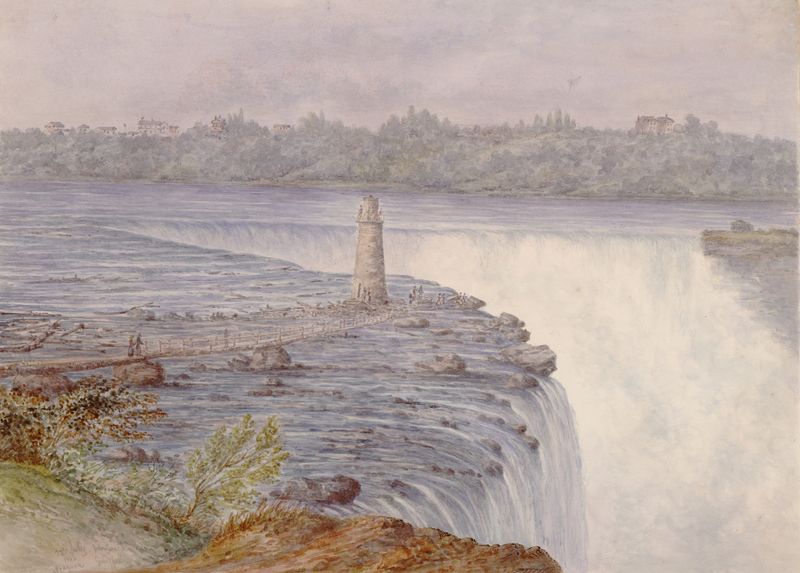
Grand Falls at Niagara from near the observatory, Goat Island, July 22, 1846
Michael Seymour
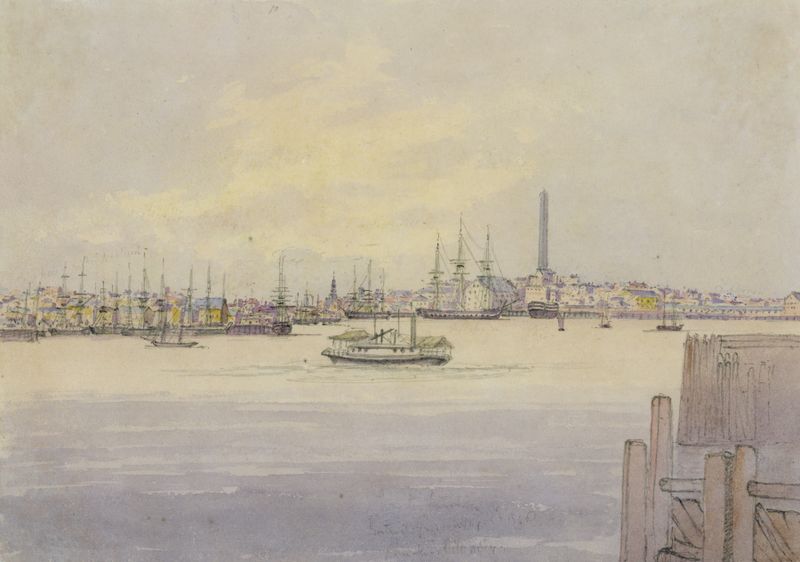
From the Cambria steamer, starting from Boston, U.S. Bunker’s Hill Monument
Michael Seymour

The Highlands from Newburgh and Butter Hill, Hudson River
Michael Seymour
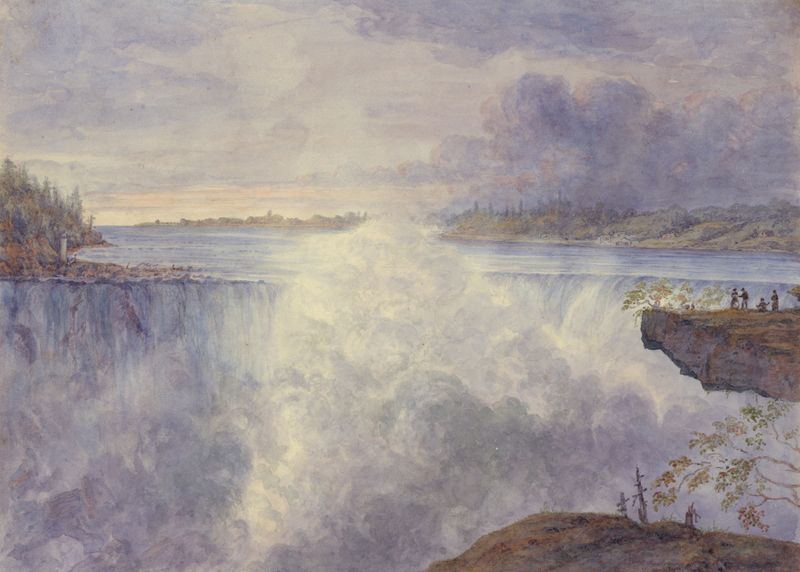
Grand Falls at Niagara from near the Table Rock, Canada side, July 22, 1846
Michael Seymour
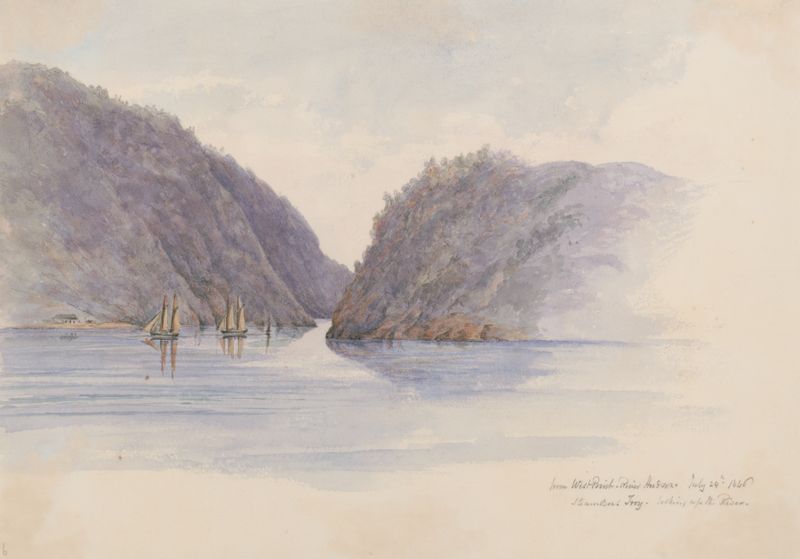
Looking up the Hudson from West Point U.S. July 24th 1846
Michael Seymour
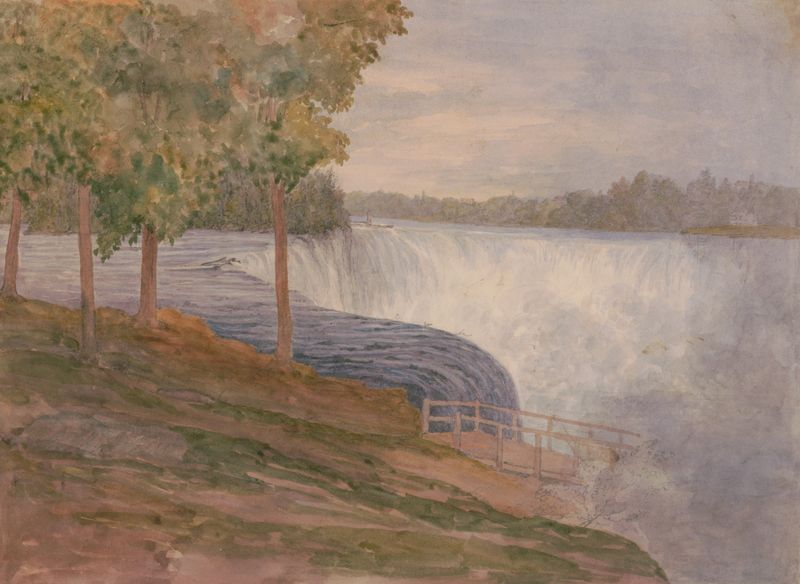
First sight of falls of Niagara before descending the ferry stairs, Wednesday July 22nd 1846
Michael Seymour

Approaching West Point, going down the Hudson, July 24, 1846
Michael Seymour
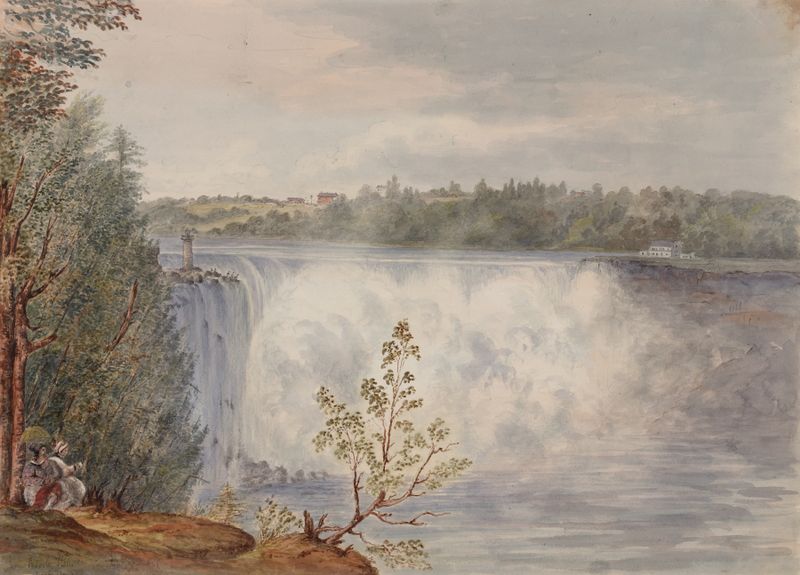
Biddle Stair, Goat Island, July 22, 1846
Michael Seymour
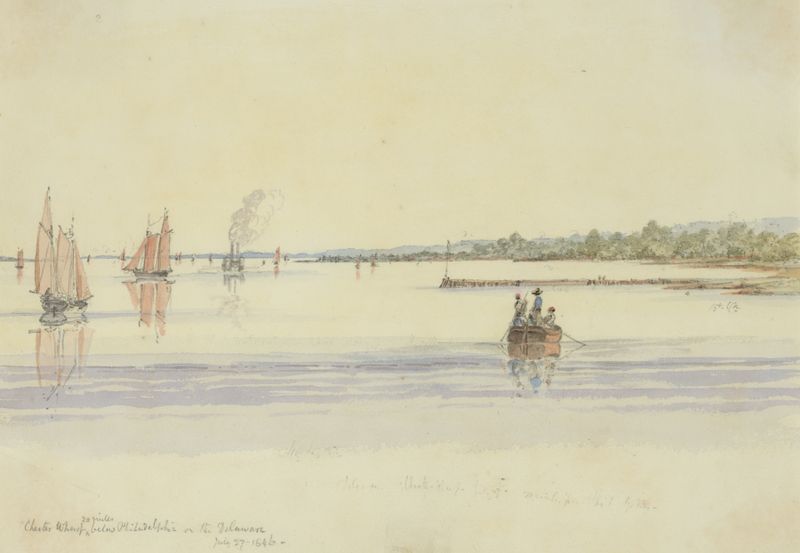
Chester Wharf 20 miles below Philadelphia on the Delaware, July 27, 1846
Michael Seymour

Stony Point, near Gibraltar, on the Hudson River, U.S. July 24th 1846
Michael Seymour





