
Grand Falls at Niagara from near the Table Rock, Canada side, July 22, 1846 — History & Facts
The essence of ecstasy lingers in the air, suggesting an unspoken dialogue between nature and the observer. It is a reminder that beauty can evoke profound emotions, both transcending and illuminating the human experience. Look to the foreground, where the rushing waters of the Niagara River cascade with ferocity, their white froth contrasting sharply against the deep greens and blues of the surrounding landscape. The artist skillfully employs a palette that embraces the vibrancy of the scene, while the play of light upon the tumbling water creates a sense of dynamic movement.
Focus on the rugged cliffs that frame the falls, their textures etched with meticulous brushwork, inviting the viewer to explore each detail as it captures the raw power of nature. Delve deeper into the painting's interplay of elements. The juxtaposition of the serene sky above and the tumultuous waters below signifies the duality of tranquility and turbulence, inviting contemplation on humanity's relationship with the sublime. The lush foliage surrounding the falls serves not only as a backdrop but as a testament to life’s resilience amid chaos, hinting at hidden narratives of growth and renewal.
Each brushstroke tells a story, echoing the delicate balance between ecstasy and despair. In 1846, the artist was drawn to the monumental beauty of Niagara Falls, a site that captivated many of his contemporaries. Living in Canada at the time, Seymour was part of a burgeoning movement that sought to depict the grandeur of the natural world, reflecting a growing interest in Romanticism. This work emerged during an era of exploration and discovery, where nature was both a muse and a mirror for the human spirit, encapsulating the awe and wonder of its time.
More Artworks by Michael Seymour
Browse all →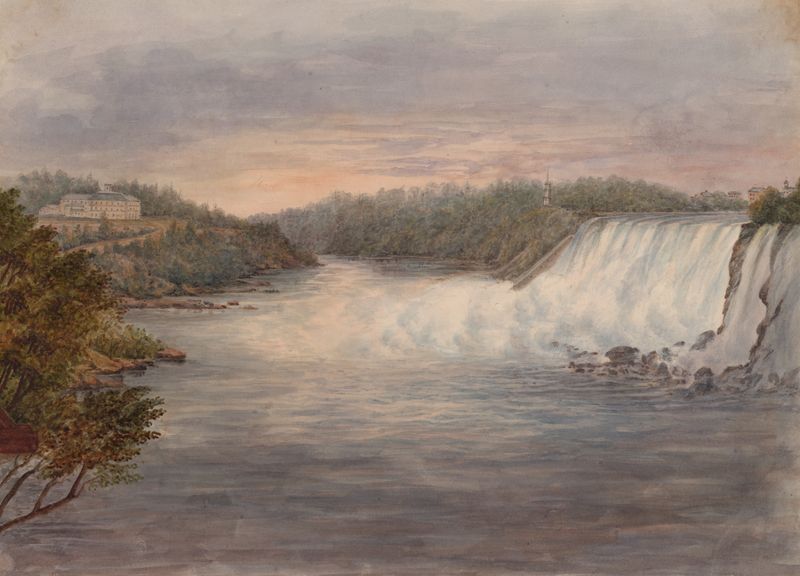
Clifton House & Niagara, Monday, July 22d, 1846, from above the Stair – Table Rock
Michael Seymour
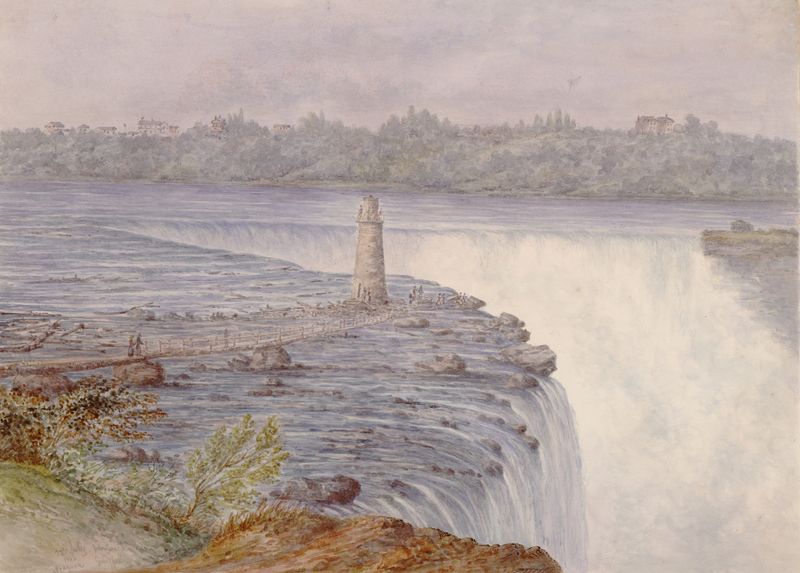
Grand Falls at Niagara from near the observatory, Goat Island, July 22, 1846
Michael Seymour
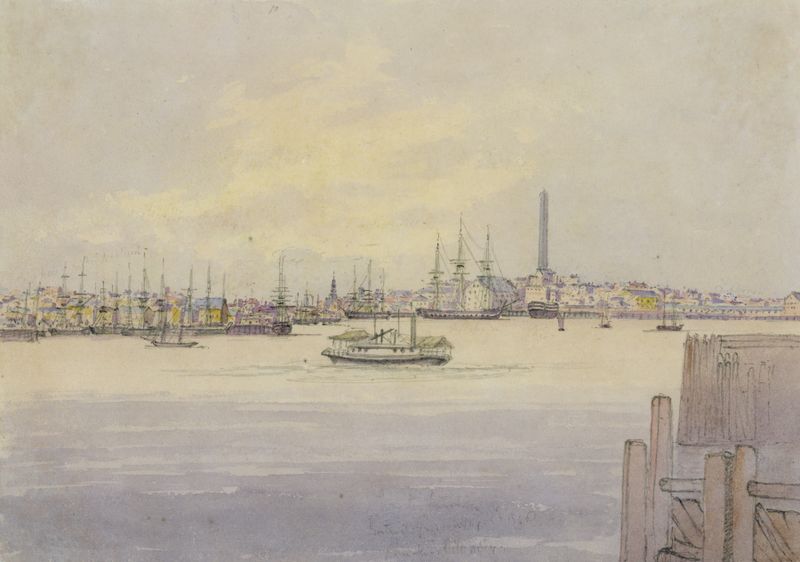
From the Cambria steamer, starting from Boston, U.S. Bunker’s Hill Monument
Michael Seymour

The Highlands from Newburgh and Butter Hill, Hudson River
Michael Seymour
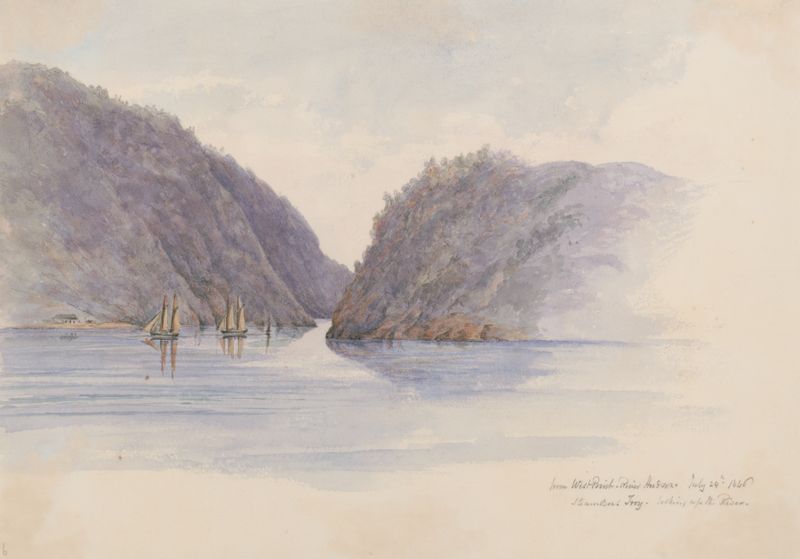
Looking up the Hudson from West Point U.S. July 24th 1846
Michael Seymour
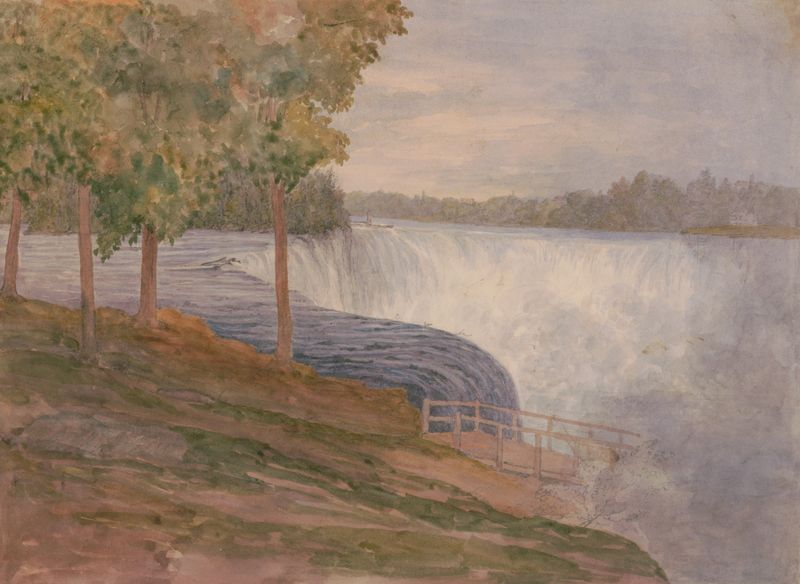
First sight of falls of Niagara before descending the ferry stairs, Wednesday July 22nd 1846
Michael Seymour

Approaching West Point, going down the Hudson, July 24, 1846
Michael Seymour
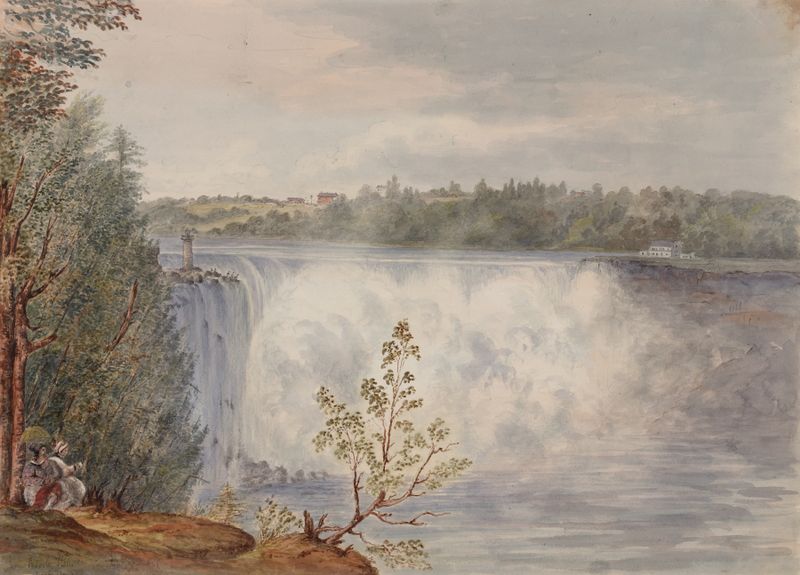
Biddle Stair, Goat Island, July 22, 1846
Michael Seymour
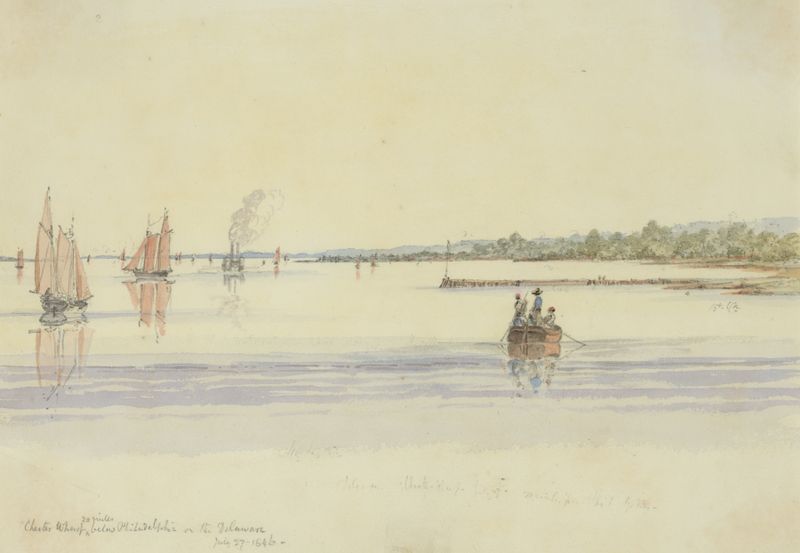
Chester Wharf 20 miles below Philadelphia on the Delaware, July 27, 1846
Michael Seymour

Stony Point, near Gibraltar, on the Hudson River, U.S. July 24th 1846
Michael Seymour





