
Close-up Suika-zu — History & Facts
When Katsushika Hokusai created Close-up Suika-zu in 1839, he was in the final year of his life, still inventing and experimenting at the age of eighty. This work belongs to a rare group of late paintings in which Hokusai, famed for his sweeping landscapes and iconic waves, turned his gaze to the humble watermelon—a fruit that had only recently become popular in Japan. The painting stands out for its radical focus: instead of a conventional still life, Hokusai presents a magnified, intimate view, as if inviting the viewer to peer directly into the fruit’s world.
Scholars have long debated whether this close-up was intended as a study for a larger work or as a meditation on nature’s hidden patterns. At the heart of Close-up Suika-zu is a single, sliced watermelon, its ruby flesh and black seeds rendered with an immediacy that feels almost tactile. The composition is cropped so tightly that the rind curves out of the frame, and the seeds seem to glisten with moisture. Hokusai’s brushwork captures not only the texture of the fruit but also the play of light across its surface, suggesting freshness and the fleeting moment before it is eaten.
Unlike the more formal fruit studies by Western contemporaries, such as those by Jean-Baptiste-Siméon Chardin, Hokusai’s approach is informal and direct, emphasizing the beauty found in everyday objects. The painting’s minimal background draws the eye to the watermelon’s vibrant interior, perhaps hinting at the artist’s fascination with the cycles of life and decay. The precise provenance of Close-up Suika-zu is uncertain, as is often the case with Hokusai’s late works, many of which were created for private patrons or as gifts. While the medium remains unidentified—possibly ink and color on silk or paper—the painting’s bold style and subject matter have led some to speculate it was made for a connoisseur of natural curiosities.
After Hokusai’s death in 1849, many of his lesser-known works dispersed through family collections and small auctions, only to be rediscovered by collectors in the twentieth century. Today, Close-up Suika-zu is celebrated as a testament to Hokusai’s restless creativity and his ability to find wonder in the most ordinary of things, even at the very end of his prolific career.
More Artworks by Katsushika Hokusai

The Great Wave off Kanagawa
Katsushika Hokusai
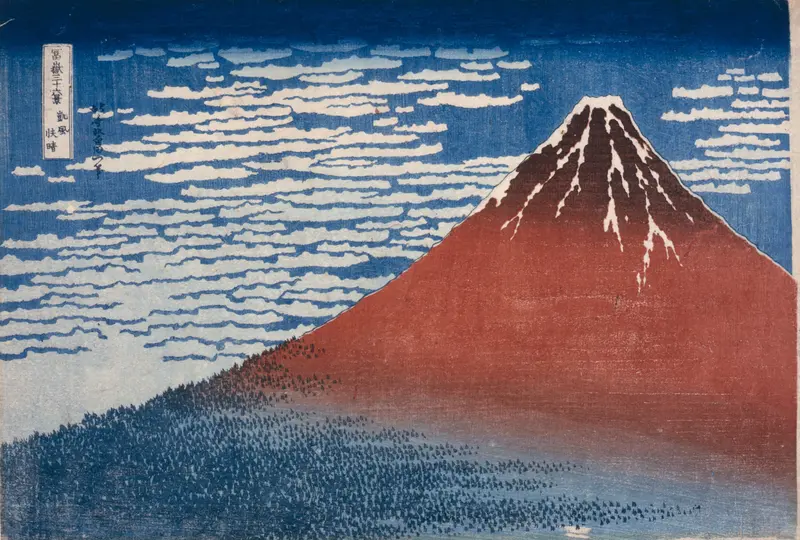
Fine Wind, Clear Morning (Red Fuji)
Katsushika Hokusai
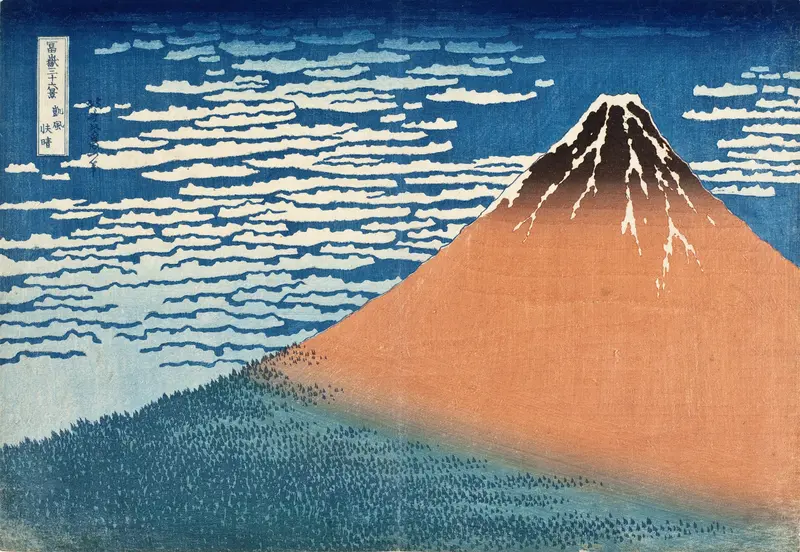
South Wind, Clear Dawn
Katsushika Hokusai
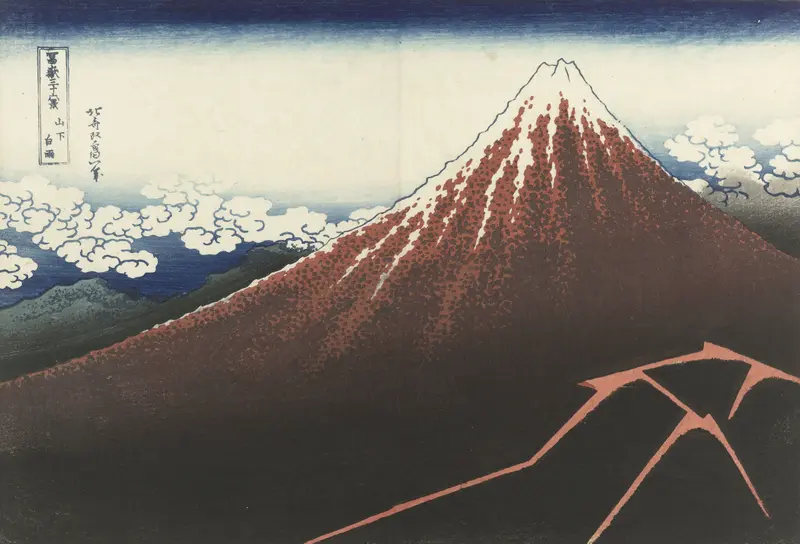
Rainstorm Beneath the Summit
Katsushika Hokusai
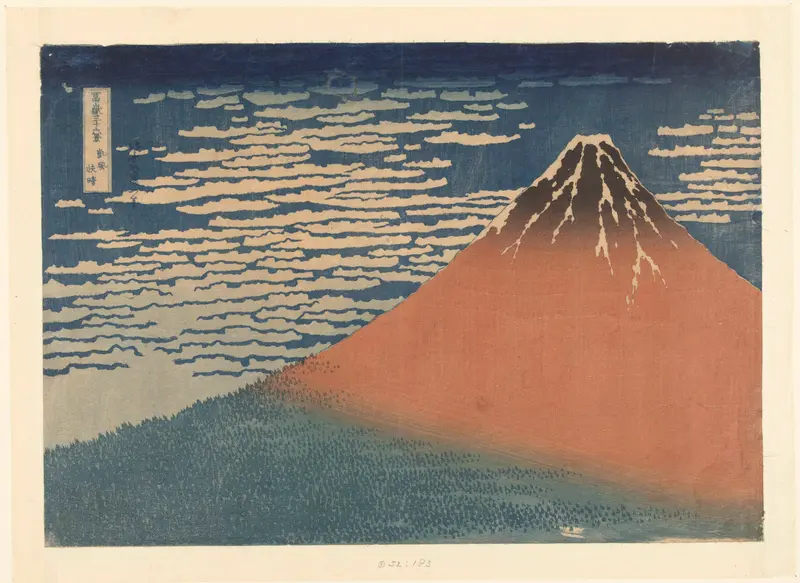
Clear Weather with a Southerly Wind
Katsushika Hokusai
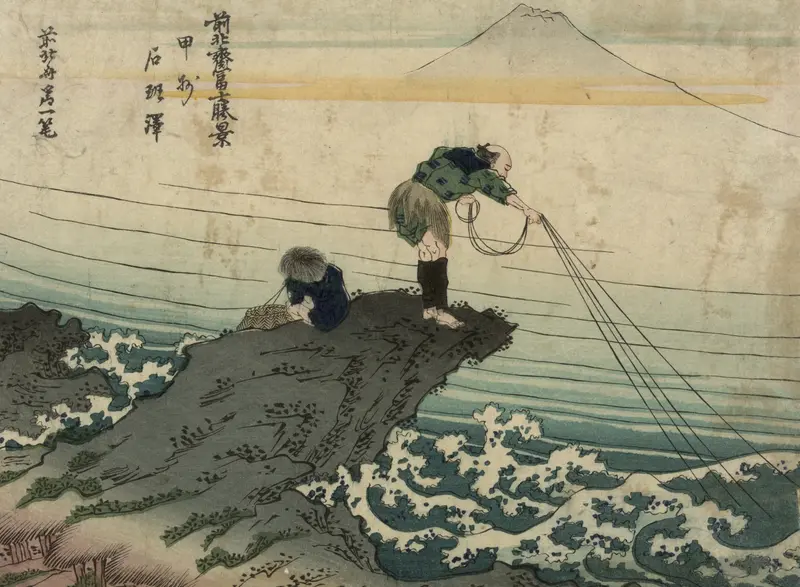
Kōshū kajikazawa
Katsushika Hokusai
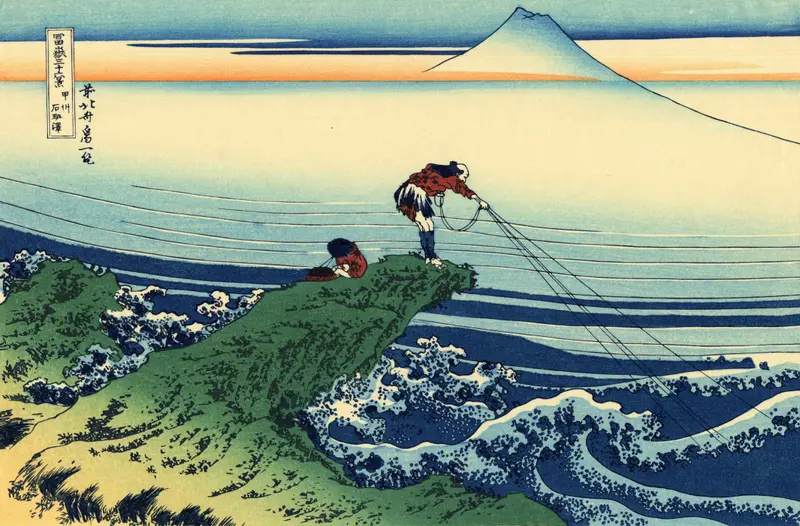
Kōshū kajikazawa 2
Katsushika Hokusai
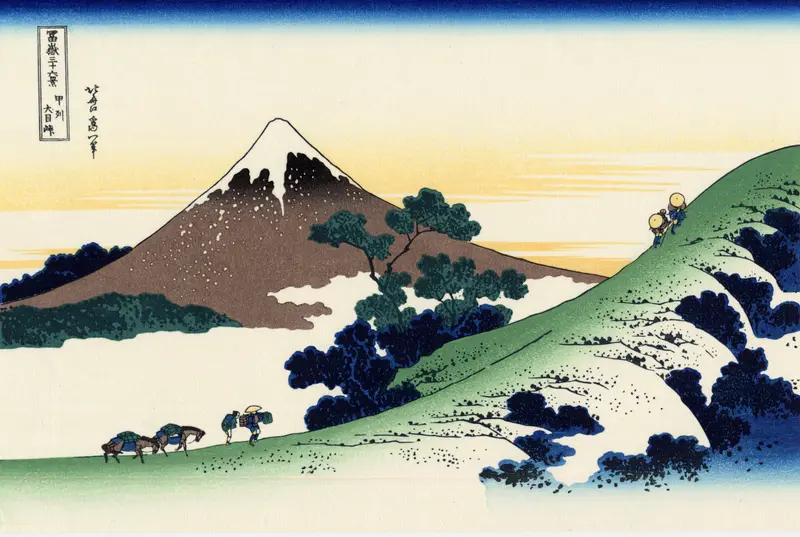
Inume Pass in Kai Province (Kôshû inume-tôge)
Katsushika Hokusai

Yoro Falls in Mino Province (Mino no Yoro no taki), from the series "A Tour of Waterfalls in Various Provinces (Shokoku taki meguri)"
Katsushika Hokusai
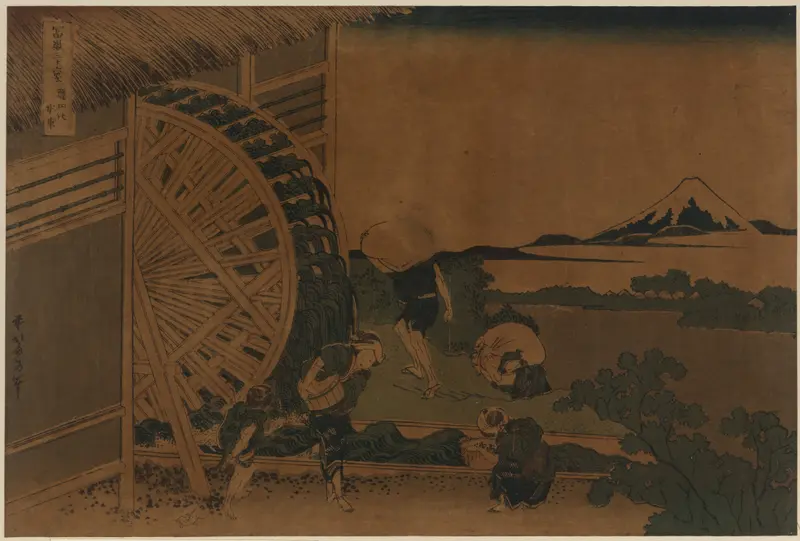
Onden no suisha
Katsushika Hokusai





