
Cloud March over the Sands of Dee — History & Facts
Who listens when art speaks of silence? In Cloud March over the Sands of Dee, the haunting expanse of the landscape invites contemplation, capturing the profound solitude that echoes through its vastness. Look to the horizon where the soft, billowy clouds gather—a juxtaposition against the stark, textured sands below. The delicate interplay of muted blues and warm ochres creates a sense of depth, while the sweeping strokes suggest a gentle breeze, evoking an ethereal quality. Notice how the light dances across the scene, illuminating patches of sand that seem to shimmer, drawing you deeper into the painting’s serenity.
Each brushstroke plays a role, guiding the viewer’s eye toward the converging lines of sand and sky, hinting at an unbroken solitude. Beneath the serene beauty lies the tension of isolation; the stretch of unoccupied sands speaks volumes about loneliness and introspection. The clouds, while majestic, also evoke a sense of impending change—a reminder of life’s transience. The solitary landscape may stir feelings of longing or melancholy, underscoring the artist’s mastery in capturing the nuances of human emotion wrapped within nature's expanse. Created during a period where art was steering toward Impressionism, the artist painted this piece in England, amidst the evolving artistic landscape of the late 19th century.
As a printmaker and painter, Short was influenced by the natural beauty of the British Isles and sought to convey the sublimity of the environment. During this time, the exploration of color and light in landscapes became a significant focus, marking a pivotal movement in depicting man’s relationship with nature.
More Artworks by Sir Frank Short
Browse all →
Morning Haze in Chichester Harbor
Sir Frank Short
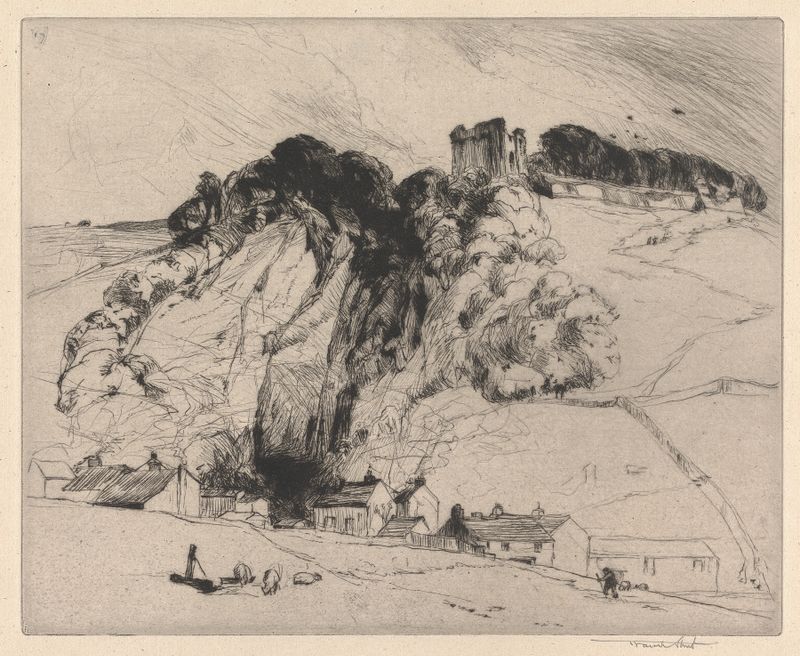
Peveril’s Castle, Derbyshire
Sir Frank Short
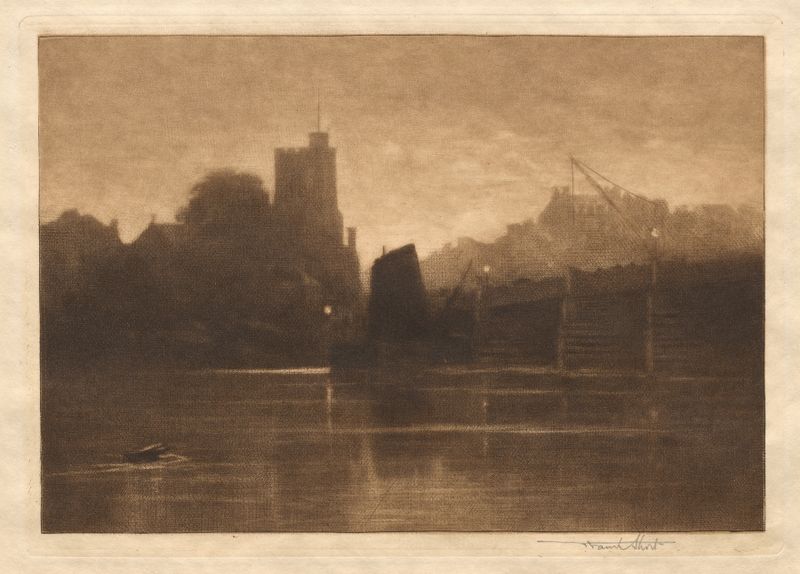
Ebb Tide, Putney Bridge
Sir Frank Short
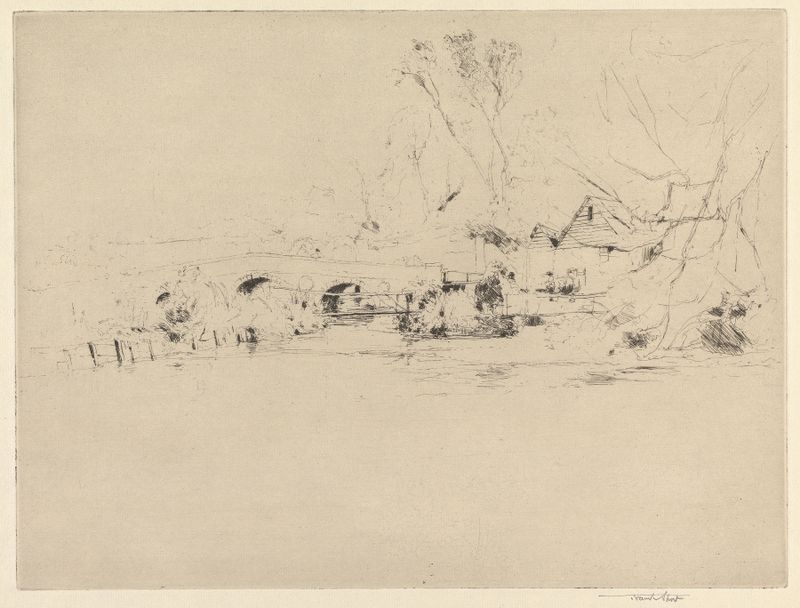
Old Mill on the Wandle, at Mitcham
Sir Frank Short

Moonlight on the Medway at Chatham
Sir Frank Short

Parkgate
Sir Frank Short
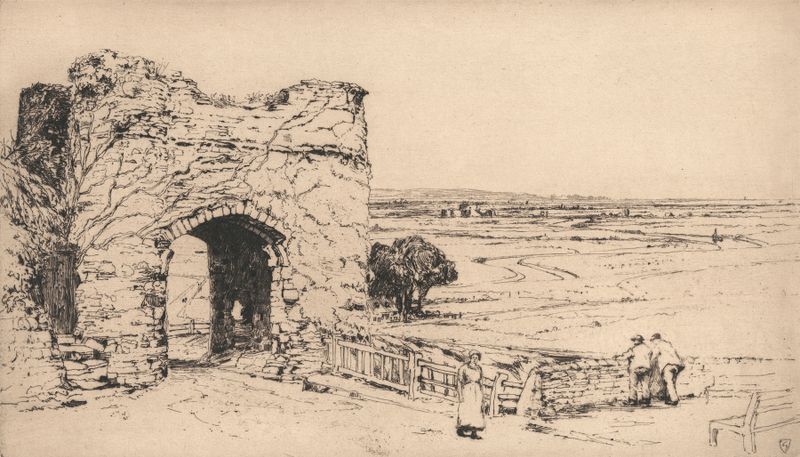
The Strand Gate, Winchelsea
Sir Frank Short

Bridgenorth
Sir Frank Short
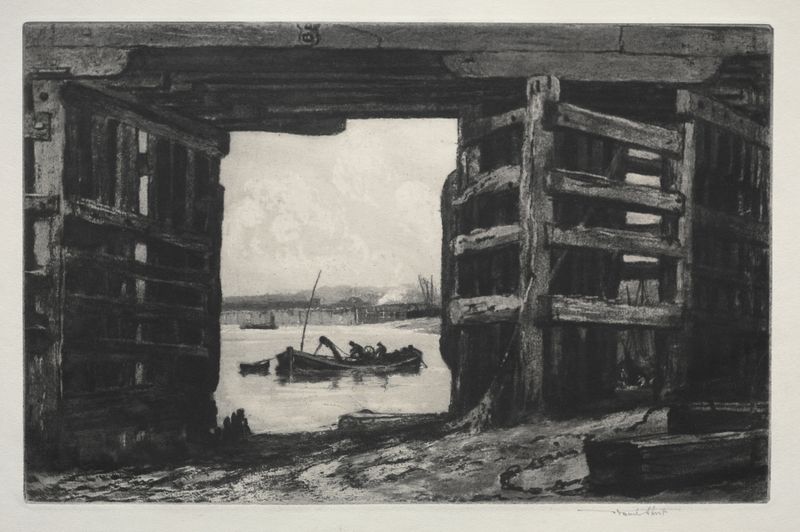
A Span of Old Battersea Bridge
Sir Frank Short

The Rope Walk, Spittal Bridge Whitby
Sir Frank Short





