Coast, Tangier — History & Facts
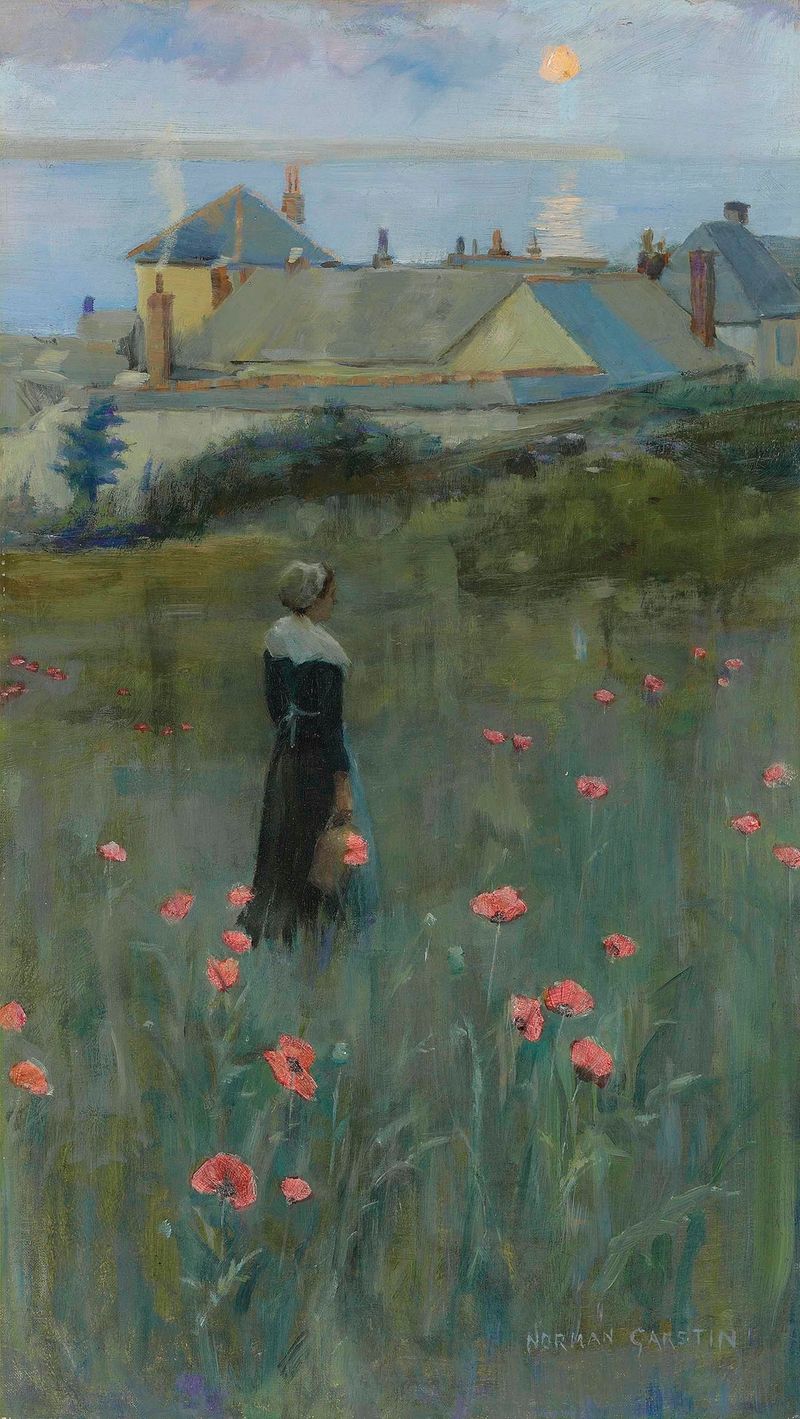
This poignant reflection reminds us that beneath the surface of stunning landscapes lies a deeper awakening, one that beckons us to consider the emotions tethered to our perception of beauty. Look closely at the horizon, where the sun dips below the edge of the sea, casting a warm, golden hue that dances upon the water's surface. The vivid blues and greens of the coastal landscape create a sharp contrast, while the swaying palms reach upwards, their silhouettes dark against the light. Notice how the brushstrokes vary in texture; the roughness of the land contrasts with the smoothness of the water, revealing Garstin’s talent for capturing both serenity and turmoil within a single frame. Delve deeper into the scene, and you’ll discover hints of an inner struggle.
The dense clouds above, though beautiful, hint at an impending storm, symbolizing the volatility of human emotion. The vibrant colors evoke a sense of longing, merging joy with melancholy, as if the viewer stands at the brink of an awakening. This tension between light and shadow encapsulates the complexities of beauty, urging us to reflect on what lies beneath our own façades. In 1885, Garstin painted this work while living in Tangier, a place that inspired many artists with its unique light and exotic allure.
During this time, the artist experienced a period of introspection and transformation, grappling with his identity and the changing landscape of art, as Impressionism began to take hold. The merging of cultures in Tangier provided him with a rich backdrop, both artistically and personally, shaping his vision for Coast, Tangier.