
Coastal landscape — History & Facts
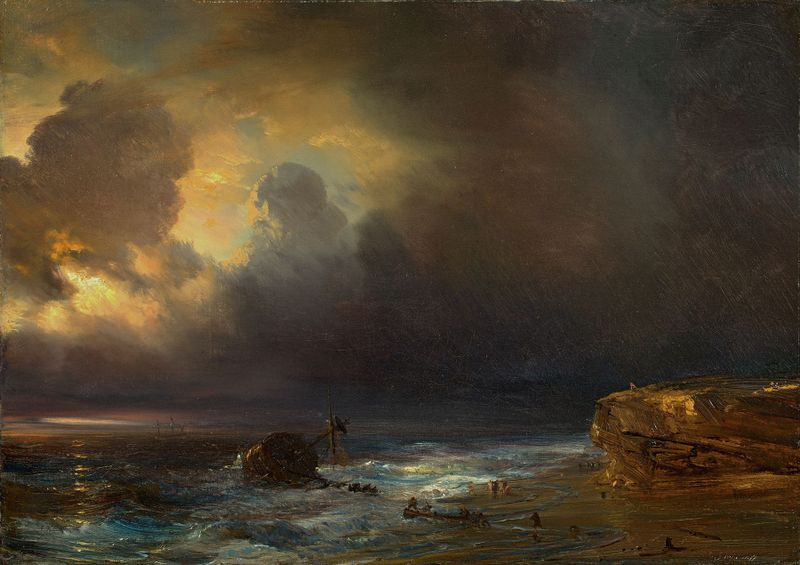
This sentiment echoes through the waves and horizons of a dreamlike landscape, where nature’s splendor wrestles with its underlying tensions. Look to the horizon, where the vibrant blues of the sea meet the soft pastels of a fading sky. Notice how the sunlight dances on the water’s surface, casting shimmering reflections that appear almost ethereal. The delicate brushwork and layered colors bring forth a sense of movement, inviting your gaze to explore the dynamic interplay between sea and sky, while rocky outcrops jut defiantly into the foreground, grounding the composition with their rugged presence. The emotional pull of this landscape is multifaceted.
The calm waters contrast with the jagged coastline, suggesting a latent turbulence beneath the surface. The horizon seems to stretch infinitely, evoking a sense of longing and dreaminess, while the golden hues of sunset hint at both warmth and melancholy. Together, these elements create an exquisite tension, where beauty becomes a fragile veil over deeper, unexpressed yearnings. In 1835, in a France rapidly transforming through industrialization, Gudin captured this coastal scene during a time when Romanticism was flourishing.
Set against the backdrop of rising interest in the sublime aspects of nature, he sought to reconcile the beauty of the sea with the emotional complexities of human experience. His work reflects not just the picturesque, but also a deep yearning for connection to a more profound, often tumultuous, natural world.
More Artworks by Théodore Gudin
Browse all →
Sormy Seas by a Chalk Coast
Théodore Gudin

The Gulf of Naples with View of Mount Vesuvius
Théodore Gudin
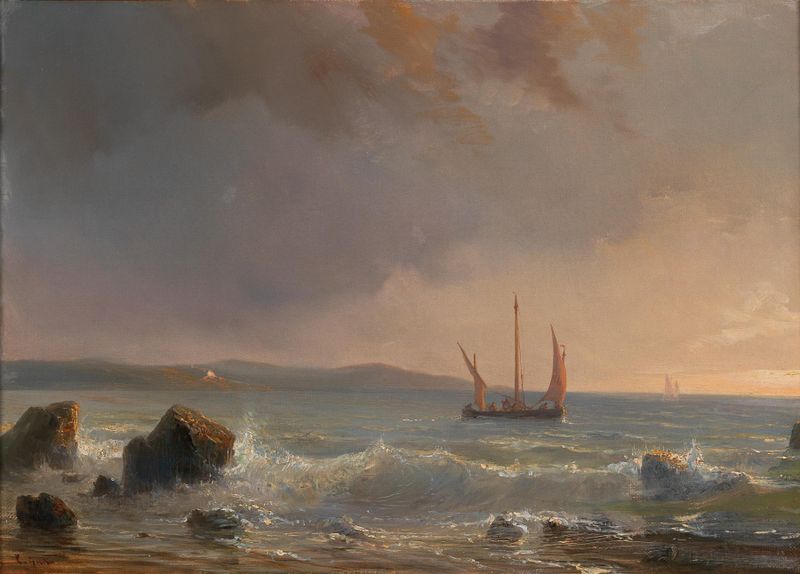
Abendstimmung über einer Meereslandschaft mit Segelbooten
Théodore Gudin
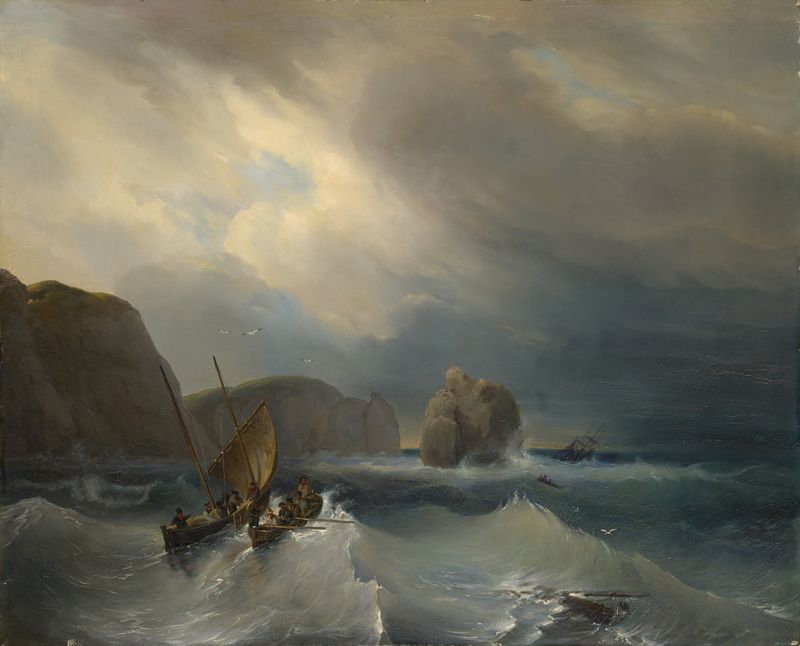
Rough Sea with Ships
Théodore Gudin

Fishermen at the harbour wall, low tide
Théodore Gudin
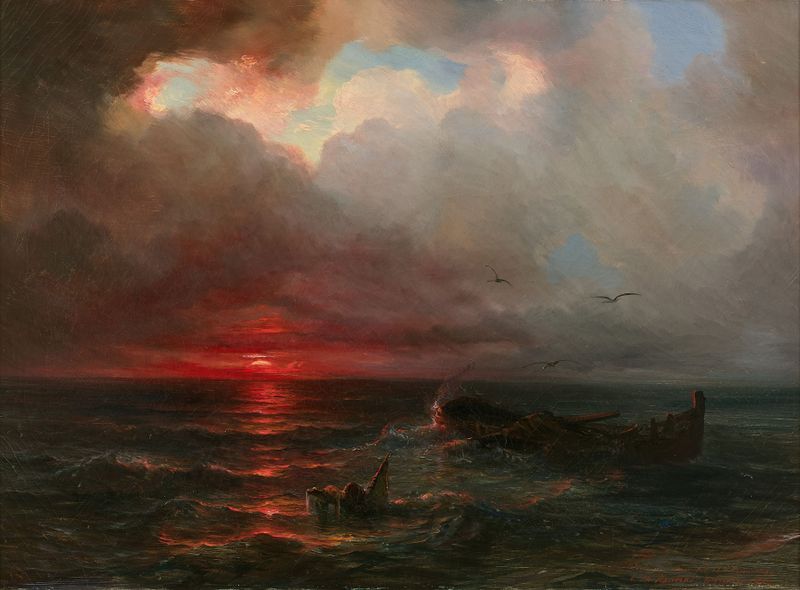
Coucher de soleil sur un littoral
Théodore Gudin
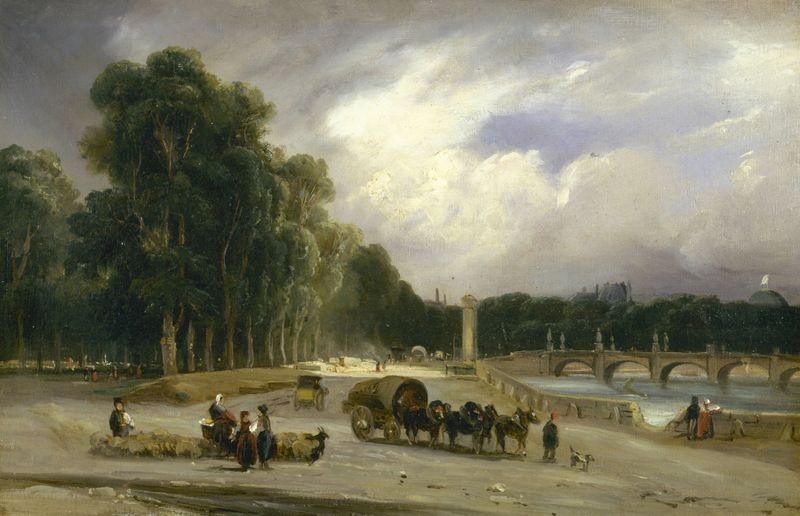
Le Cours-la-Reine
Théodore Gudin
Coastal scene by moonlight
Théodore Gudin
View Of Constantinople
Théodore Gudin

Shipwreck at Castello sul Mare in Rapallo
Théodore Gudin





