
Coin de la Rue de la Lune — History & Facts
Is this a mirror — or a memory? In Coin de la Rue de la Lune, the viewer is drawn into a moment suspended in time, where the weight of nostalgia clings to the air like morning mist. Look to the foreground, where the cobbled street unfurls, glistening under a soft, diffused light. The interplay of shadow and illumination invites your gaze, emphasizing the gentle curvature of the buildings that lean in, as if listening to whispered secrets. Notice how the artist layers warm earth tones with cool blues, creating a palpable tension between the familiar and the elusive, the present and the past. As you delve deeper, consider the solitary figure shrouded in shadow, their presence both haunting and contemplative.
This character embodies the obsession with lost moments, a silent witness to the passage of time. The slight tilt of their head suggests longing, while the blurred outlines of the buildings echo the fleeting nature of memory — both vivid and obscured, concrete yet intangible. In 1890, Lepère was navigating the evolving landscape of Parisian art, absorbing influences from Impressionism while forging his own path in printmaking and watercolor. During this period, the world was rife with social change, and artists were increasingly compelled to capture the richness of urban life.
His work reflects this duality, revealing the beauty and isolation inherent in the hustle of city streets, as he sought to immortalize transient moments through his brush.
More Artworks by Auguste Louis Lepère
Browse all →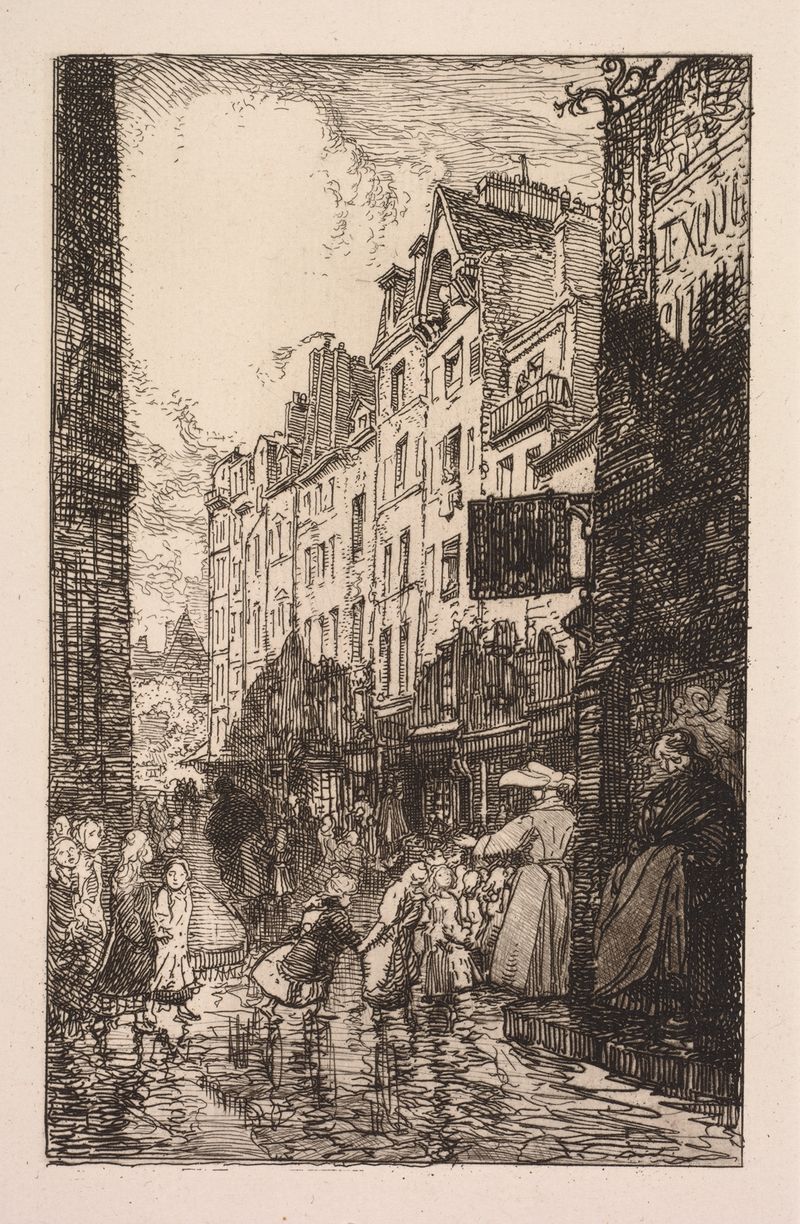
La Rue des Prêtres Saint-Séverin
Auguste Louis Lepère
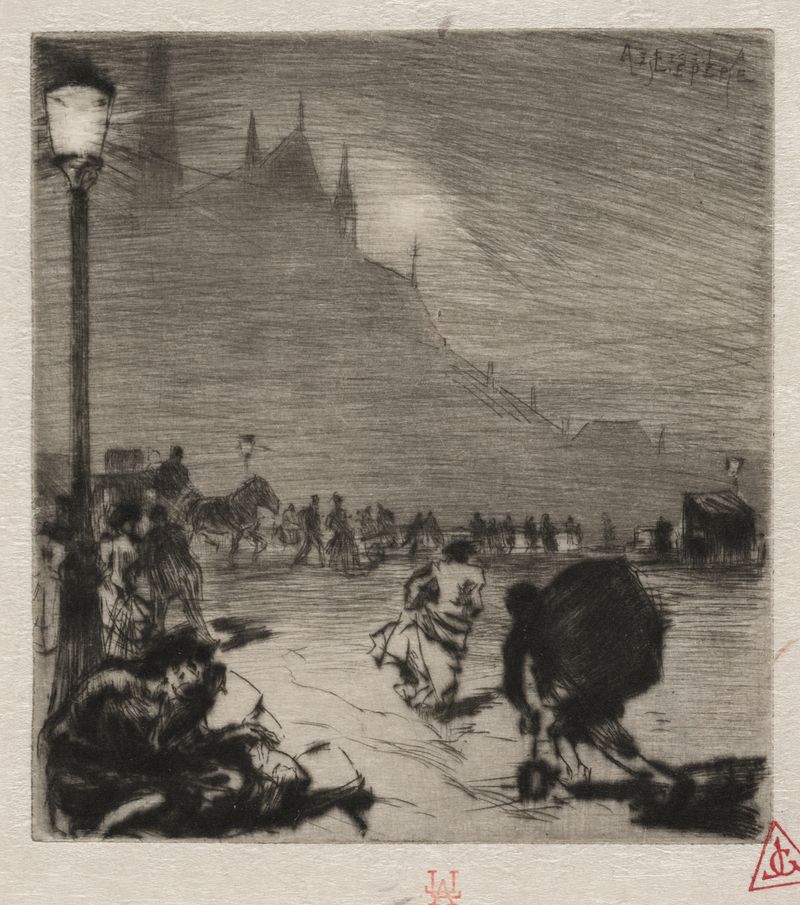
Au Coin du Pont-aux-Doubles
Auguste Louis Lepère
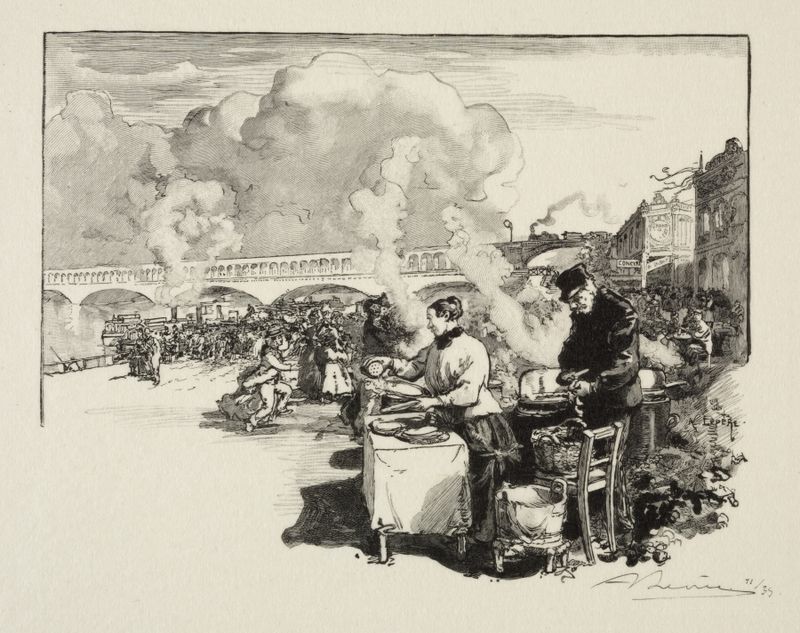
Debarcadère des bateaux-omnibus
Auguste Louis Lepère

La Seine, au quai de la Rapée
Auguste Louis Lepère
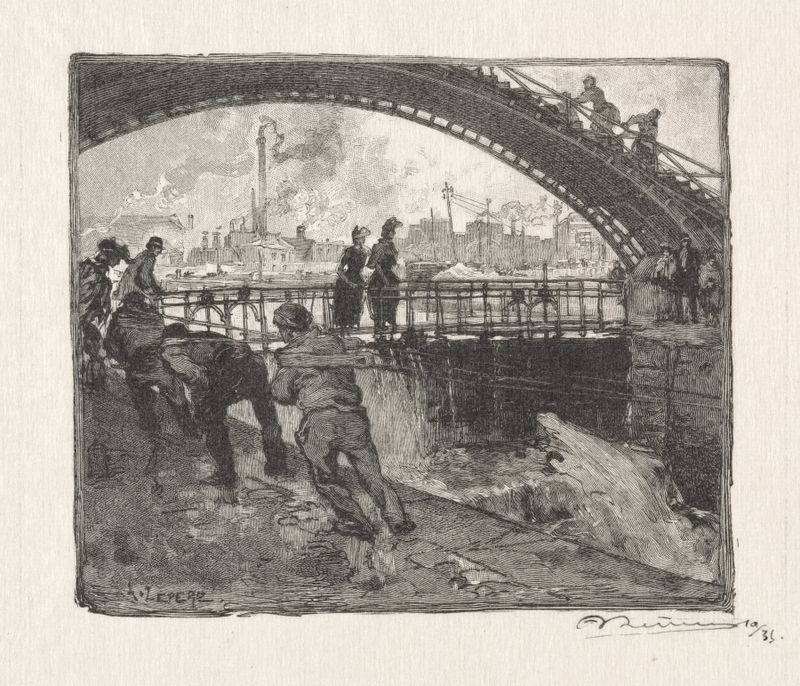
L’Ecluse du Canal St. Martin
Auguste Louis Lepère

Le Boulevard Montmartre, le Soir
Auguste Louis Lepère

Une Chasse au Mont Gérard
Auguste Louis Lepère
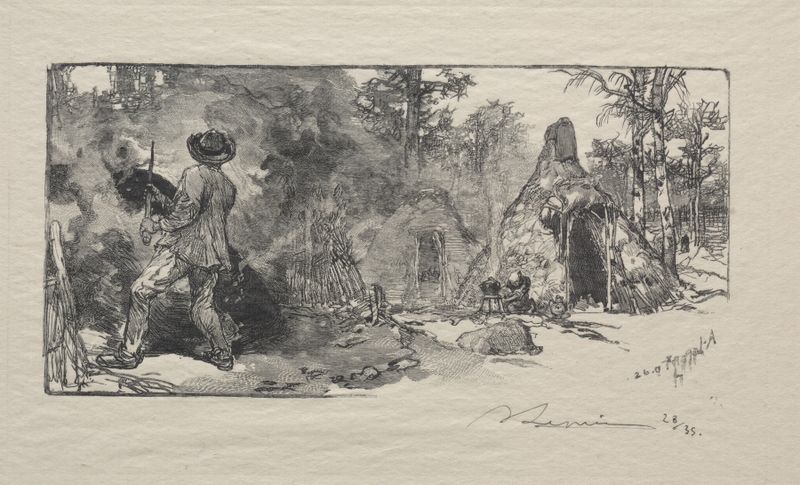
Les Charbonniere
Auguste Louis Lepère
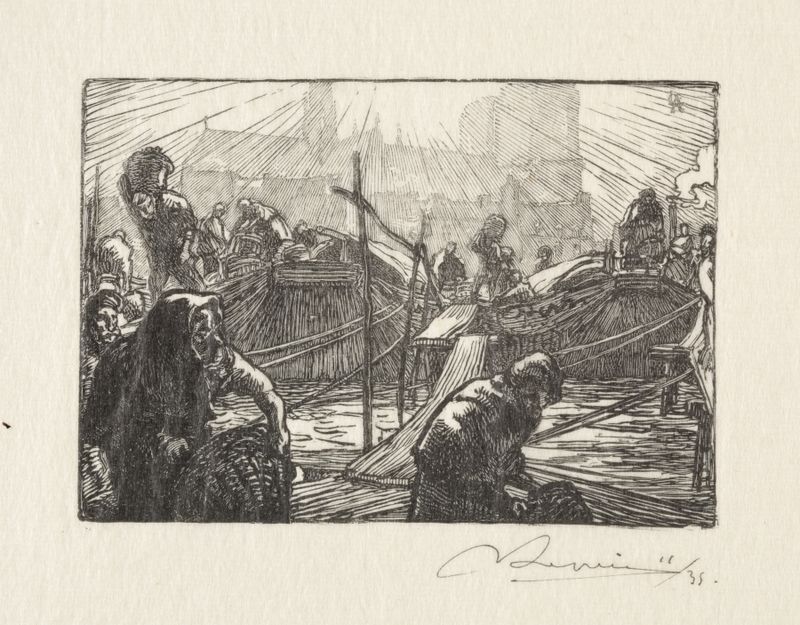
Notre Dame vue du Marché aux pommes
Auguste Louis Lepère

Le Palais des Arts Liberaux, Intèrieur
Auguste Louis Lepère





