
Collision Between the Erebus & Terrror to Windward of Icebergs, 13th March 1842 — History & Facts
Could beauty survive in a century of chaos? In Charles Hamilton Smith's Collision Between the Erebus & Terror to Windward of Icebergs, 13th March 1842, we are drawn into the paradox of serene beauty amidst the perilous embrace of nature’s icy grip. Look to the left at the massive, looming icebergs, stark against the cool-toned sky, their jagged edges slicing through the canvas. Focus on the subtle gradients of blue and white, where light dances upon the ice, creating a breathtaking contrast. The ships, the Erebus and Terror, rest quietly in the foreground, their sails taut yet trapped in the stillness of the scene, as if suspended in time.
The meticulous detail in the ships' rigging invites the viewer to explore the intricate craftsmanship while the smooth water reflects an almost mirror-like calmness, enhancing a sense of isolation despite the impending chaos. Within the painting lies a tension between the sublime beauty of nature and the vulnerability of man-made vessels. The towering icebergs suggest a looming threat, their grandeur both awe-inspiring and menacing, while the tranquility of the water hints at a fleeting moment before disaster. Smith captures this delicate balance, evoking a sensation of serenity that contradicts the lurking danger, reminding us of humanity’s fragile existence when set against the vastness of nature. Charles Hamilton Smith painted this work in the early 1840s, a period marked by explorations and the Romantic movement's fascination with the sublime.
As a British artist and naturalist, he was deeply engaged with the themes of adventure and the sublime, reflecting his own experiences in the Arctic. During this time, the world witnessed advances in exploration, and the icy landscapes became emblematic of uncharted territories, embodying both the allure and the treachery of nature.
More Artworks by Charles Hamilton Smith
Browse all →
Situation of H.M.S. Hecla & Griper
Charles Hamilton Smith
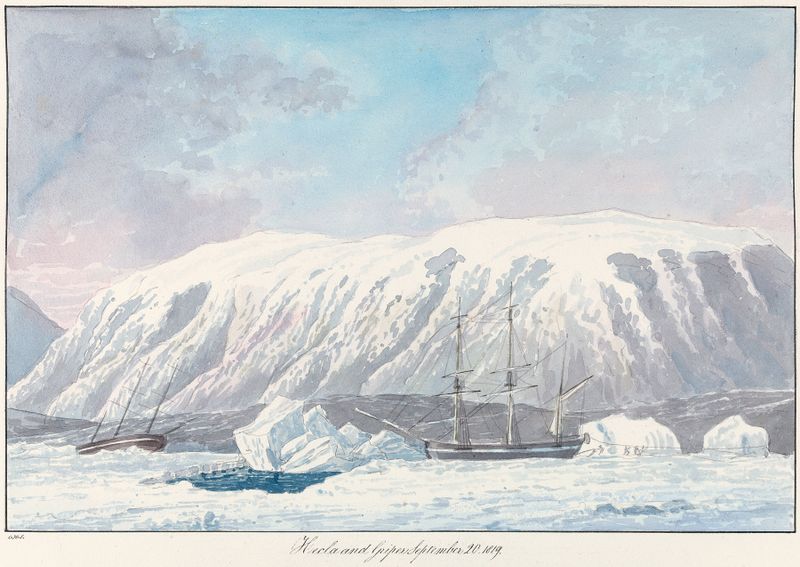
Hecla and Griper
Charles Hamilton Smith

Friendly Cove, Nootka Sound
Charles Hamilton Smith

Iceberg in Baffin’s Bay
Charles Hamilton Smith
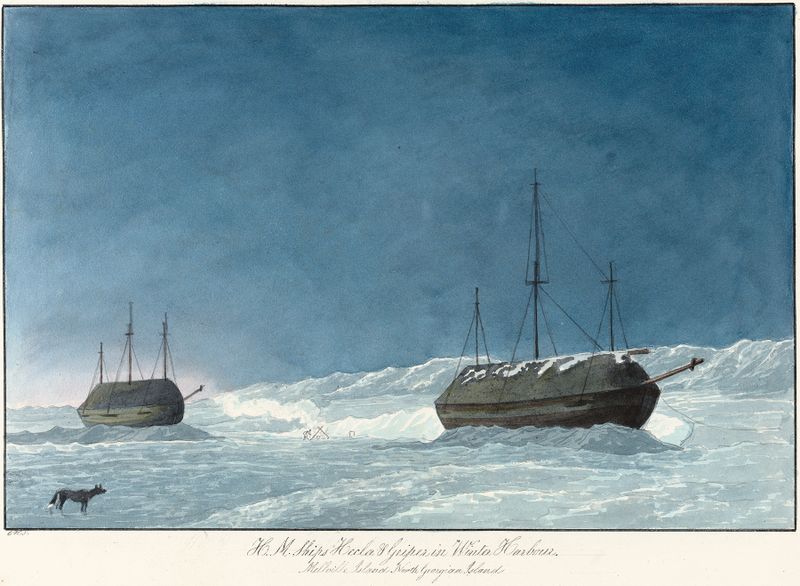
H. M. Ships Hecla and Griper in Winter Harbour
Charles Hamilton Smith

The Erebus & Terror in a Gale in the Pack of the Ice
Charles Hamilton Smith
View of the Douro towards Porto
Charles Hamilton Smith
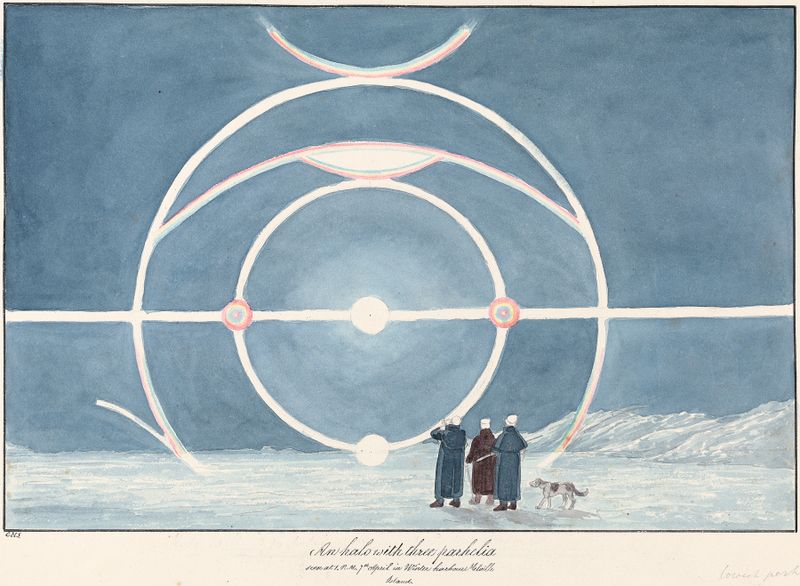
Halo with Three Parhelia, Winter Harbour Melville Island
Charles Hamilton Smith
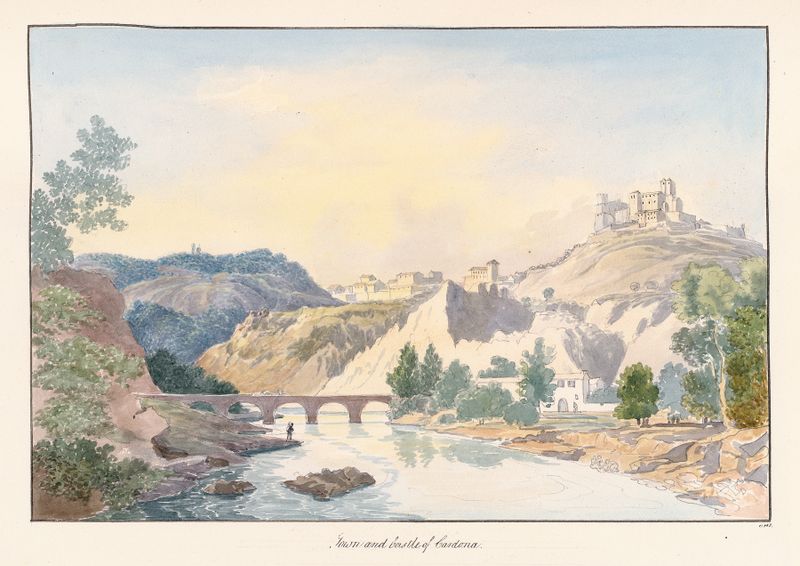
Town and Castle of Cardona
Charles Hamilton Smith
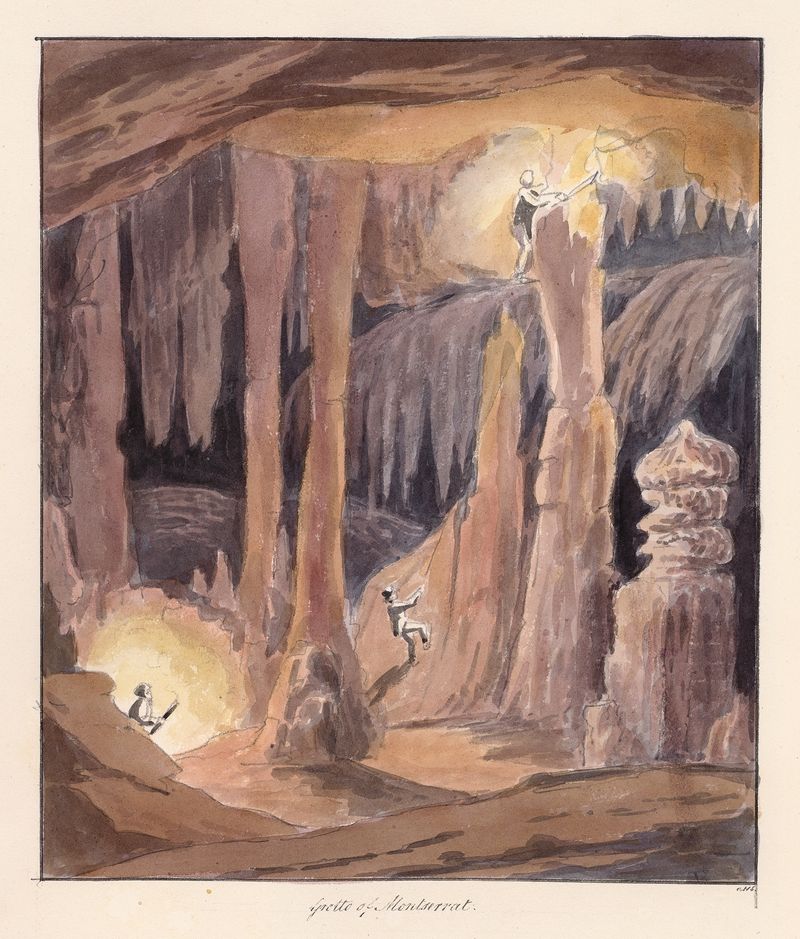
Grotto of Montserrat
Charles Hamilton Smith





