
Cottage in the Woods — History & Facts
What draws the eye first in Cottage in the Woods is not the cottage itself, but the way its windows burn with an improbable yellow, bright as lanterns against a sea of blue and green. The house is half-swallowed by the shadow of a tree, its trunk bending like a figure in motion, while the foliage radiates outward in short, deliberate strokes. The brushwork is restless, almost feverish, as if the painter wanted to capture not just a place but a sensation—the hush and pulse of evening, the comfort of light behind glass, the sense of shelter.
The palette is cool and dense, yet those two windows anchor the scene, promising warmth and life within. Painted in 1903, this work belongs to a moment when artists like Alexej von Jawlensky were pushing the boundaries of landscape painting, experimenting with color and form to capture emotion rather than mere likeness. In Germany and across Europe, the turn of the twentieth century saw artists breaking free from academic traditions, searching for new ways to see and feel the world. The thick, visible brushstrokes and bold contrasts here echo the innovations of Post-Impressionism, yet the mood is distinctly introspective, almost private.
Now held in the Bridgeman Art Library, Cottage in the Woods stands as a quiet testament to an era when the familiar could be made strange—and the ordinary, luminous.
More Artworks by Alexej von Jawlensky

Murnau
Alexej von Jawlensky
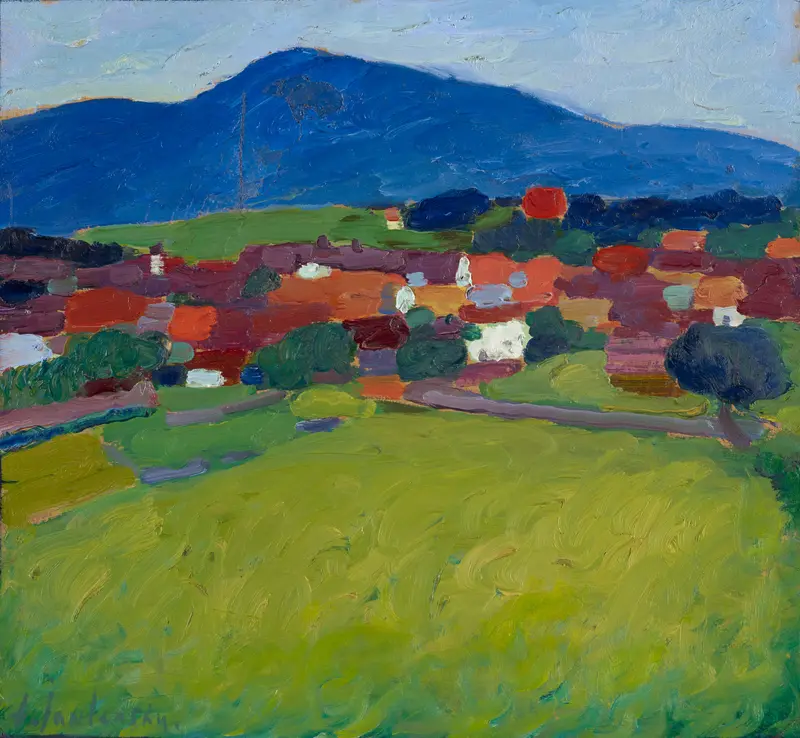
The Village Of Murnau
Alexej von Jawlensky
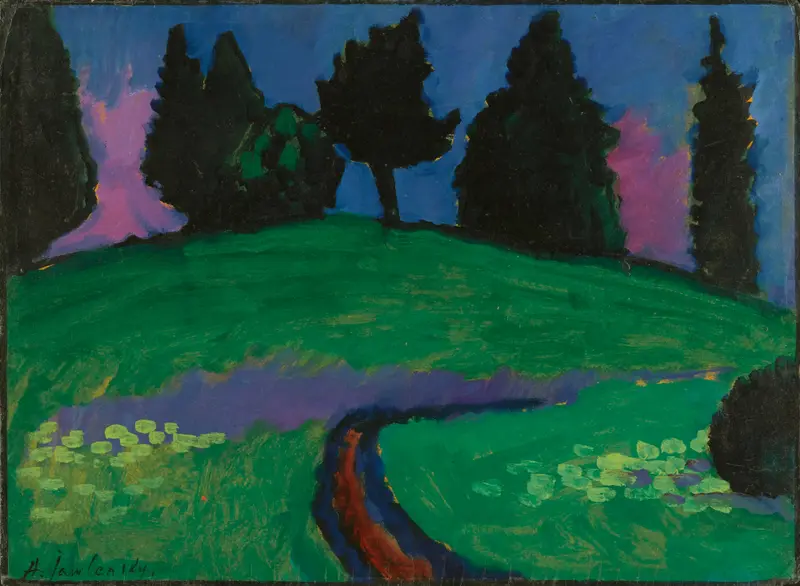
Dunkle Bäume über Grünem Hang (Dark Trees Over Green Slope)
Alexej von Jawlensky
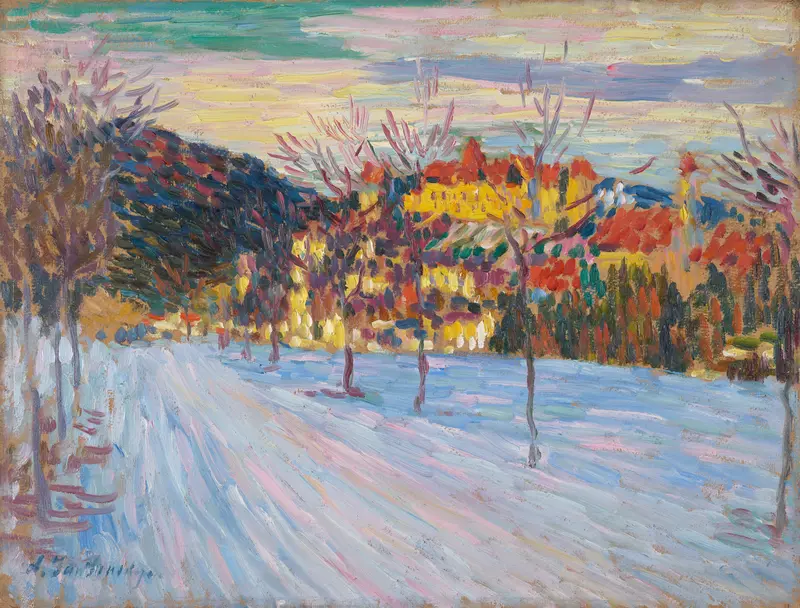
Füssen
Alexej von Jawlensky
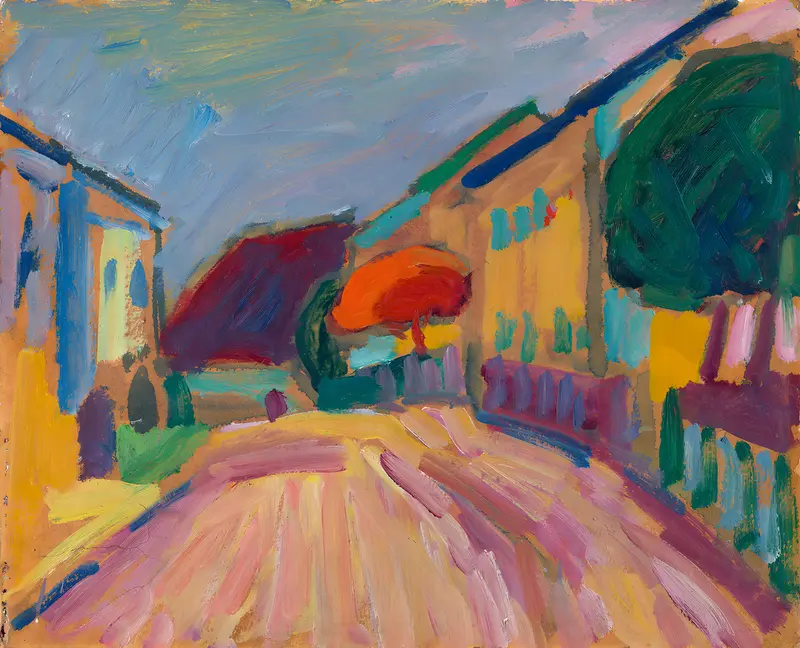
Sketch from Murnau
Alexej von Jawlensky
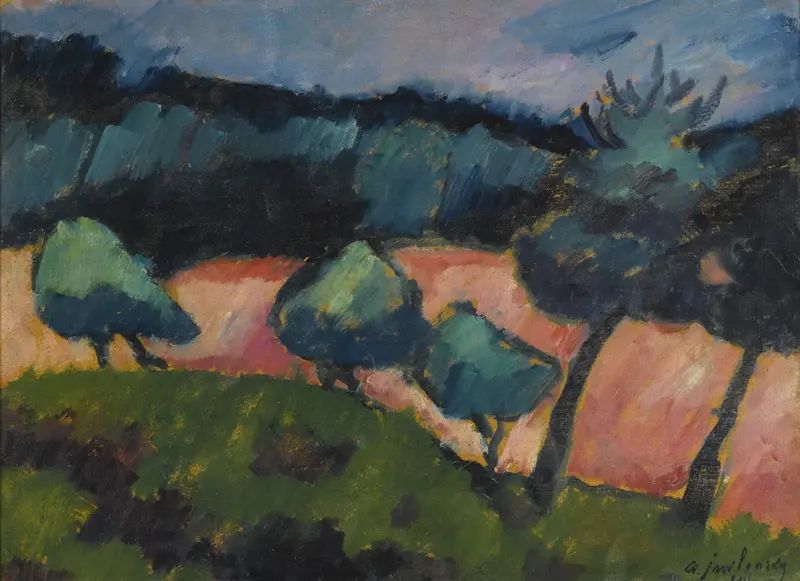
Bäume und Dünen in Prerow (Trees and dunes in Prerow)
Alexej von Jawlensky
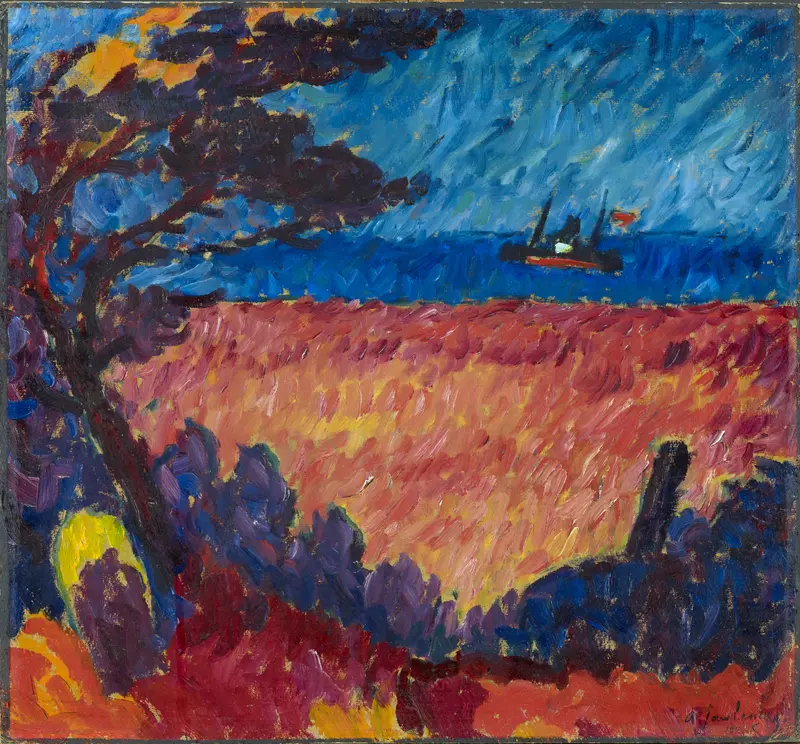
At The Baltic Sea
Alexej von Jawlensky
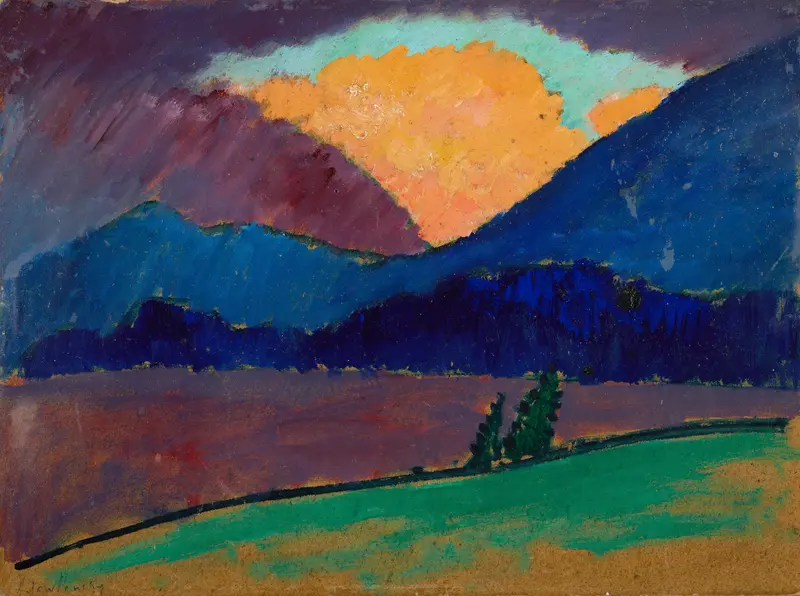
Summer evening in Murnau
Alexej von Jawlensky
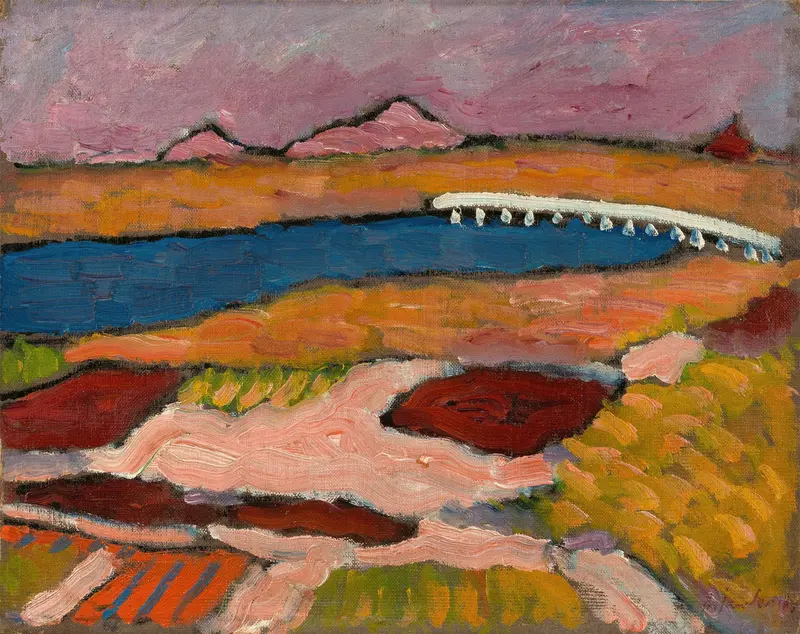
Prerow (Darß), Pommern
Alexej von Jawlensky
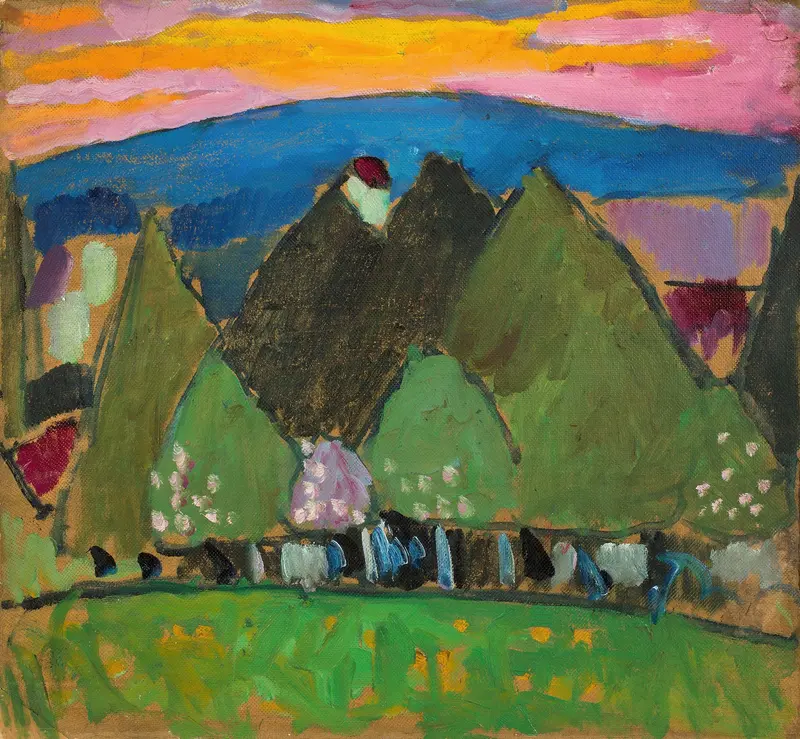
Landschaft mit Bäumen
Alexej von Jawlensky
More Landscape Art

The Starry Night
Vincent van Gogh

View of Delft
Johannes Vermeer

Water Lilies
Claude Monet

The Grand Canal, Venice, looking north-west from the Ca' Corner to the Ca' Contarini degli Scrigni, with the campanile of Santa Maria della Carità
Canaletto

Windsor Castle
Canaletto

The Grand Canal looking North-East from the Palazzo Dolfin-Manin to the Rialto Bridge
Canaletto