
Cour et voûte rue Chanoinesse — History & Facts
Can beauty exist without sorrow? In Cour et voûte rue Chanoinesse, light dances delicately through the archways, revealing the complex relationship between joy and melancholy that permeates this piece. The interplay of shadow and illumination captures the essence of a moment held in time, evoking both nostalgia and a sense of longing. Look to the upper left at the ethereal glow filtering in through the vaulted ceiling. Notice how Jouas uses soft pastels to create a harmonious blend of warm and cool tones, bathing the courtyard in a tranquil embrace.
The gentle contours of the walls cradle the scene, while the textured surfaces invite viewers to trace their fingers across the painted stone. The composition pulls your gaze inwards, creating a sense of intimacy within the architectural framing that is at once inviting yet eerily quiet. Within this serene setting lies an intricate web of contrasts—the stillness of the space against the vibrant whispers of color, the solidity of the brickwork juxtaposed with the ephemeral quality of light. Each corner seems to hold a whisper of stories untold, where the absence of figures prompts reflection on solitude and connection.
It’s a moment suspended, hinting at the lives that flit through the shadows and the laughter that has faded into echoes. Charles Jouas painted this work during a tumultuous period in France, between 1915 and 1945, a time marked by both the ravages of war and the emergence of modern art movements. Living in Paris, he witnessed the transformations of his city and the evolving artistic landscape, blending traditional techniques with a modern sensibility. His commitment to capturing the quiet beauty of urban spaces reflects a searching spirit, one that sought solace in the familiar amidst a world in flux.
More Artworks by Charles Jouas
Browse all →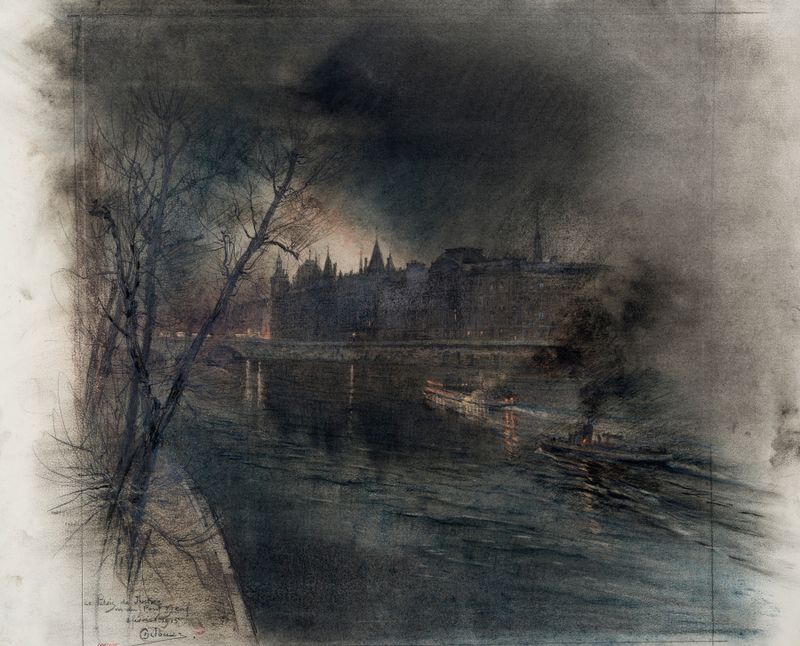
Le Palais de Justice vu du Pont-Neuf
Charles Jouas
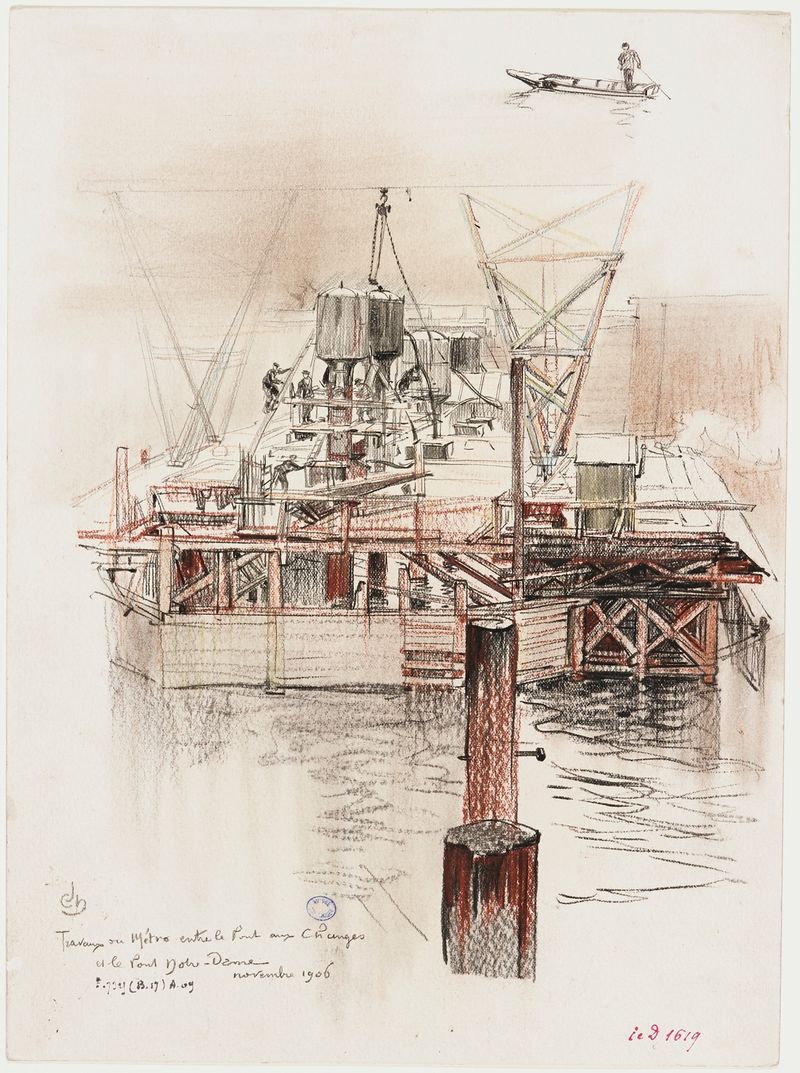
Travaux du métro entre le pont au Change et le pont Notre Dame
Charles Jouas
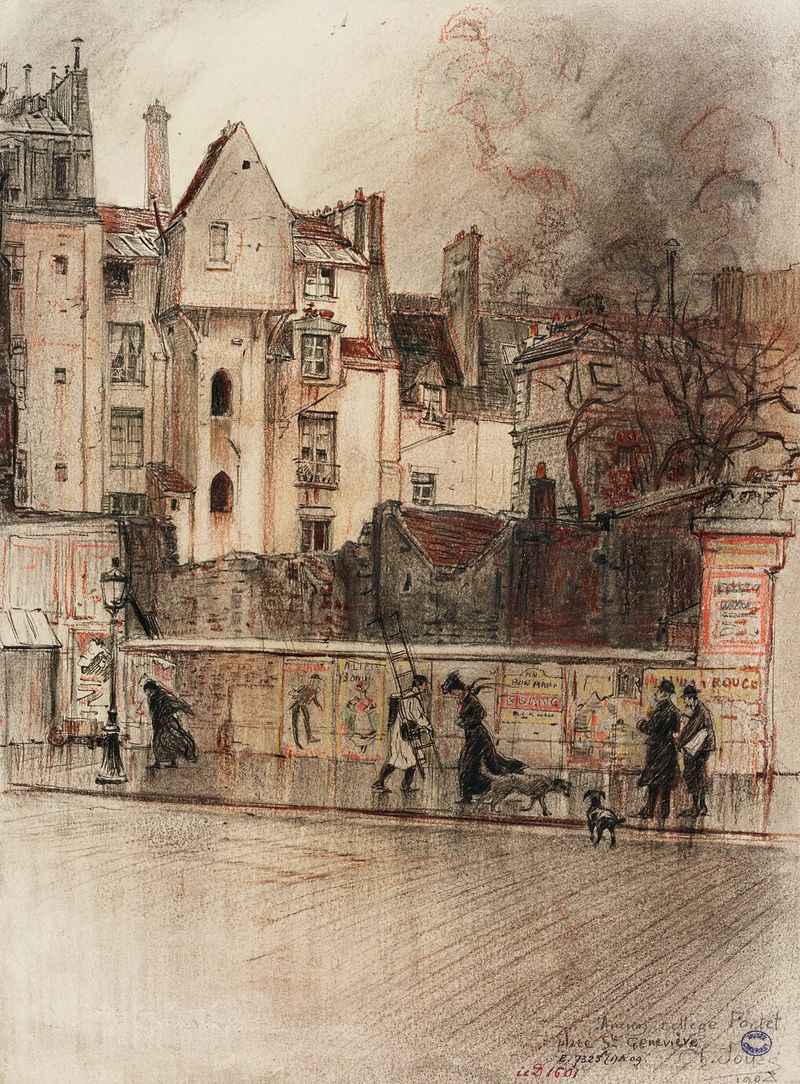
La tour de Calvin (ancien collège de Fortet), place Sainte Geneviève
Charles Jouas

Travaux du métro entre le pont au Change et le pont Notre Dame
Charles Jouas
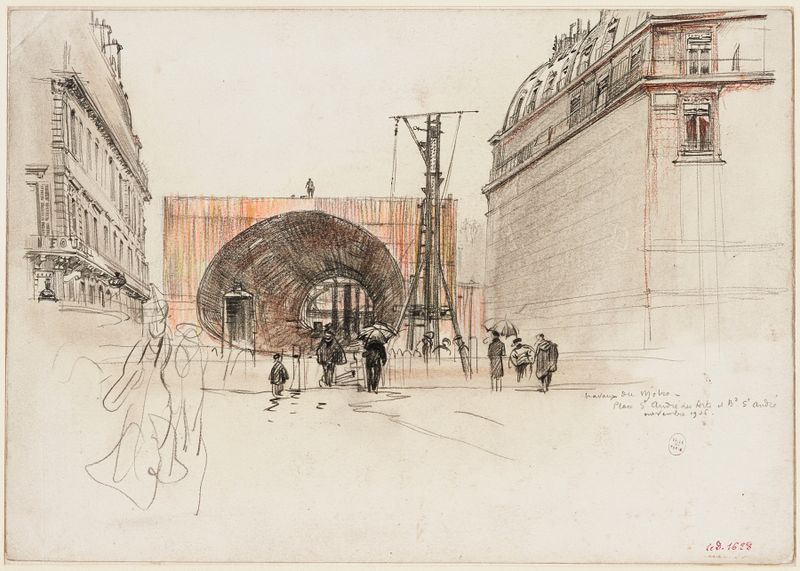
Travaux du métropolitain rue Danton et boulevard Saint-André (le caisson), 6ème aarondissement, Paris
Charles Jouas
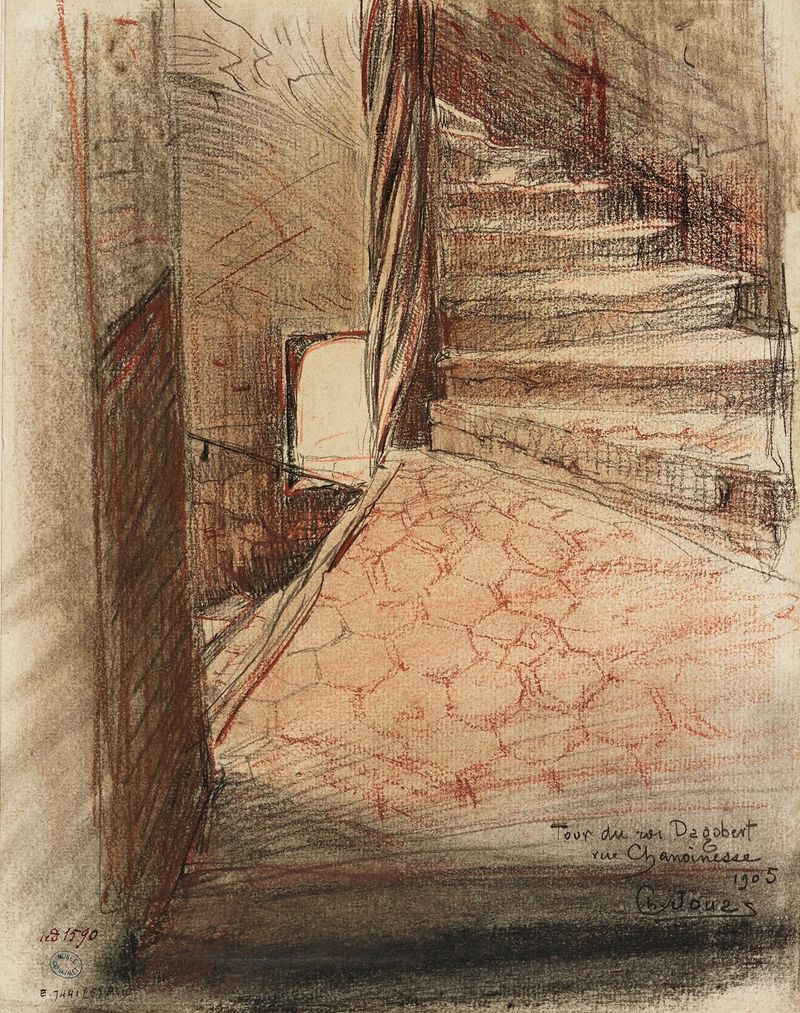
Escalier de la tour Dagobert, rue Chanoinesse
Charles Jouas

Escalier intérieur, 16 rue du Cloître Notre-Dame
Charles Jouas

L’escalier de la rue des Barres
Charles Jouas
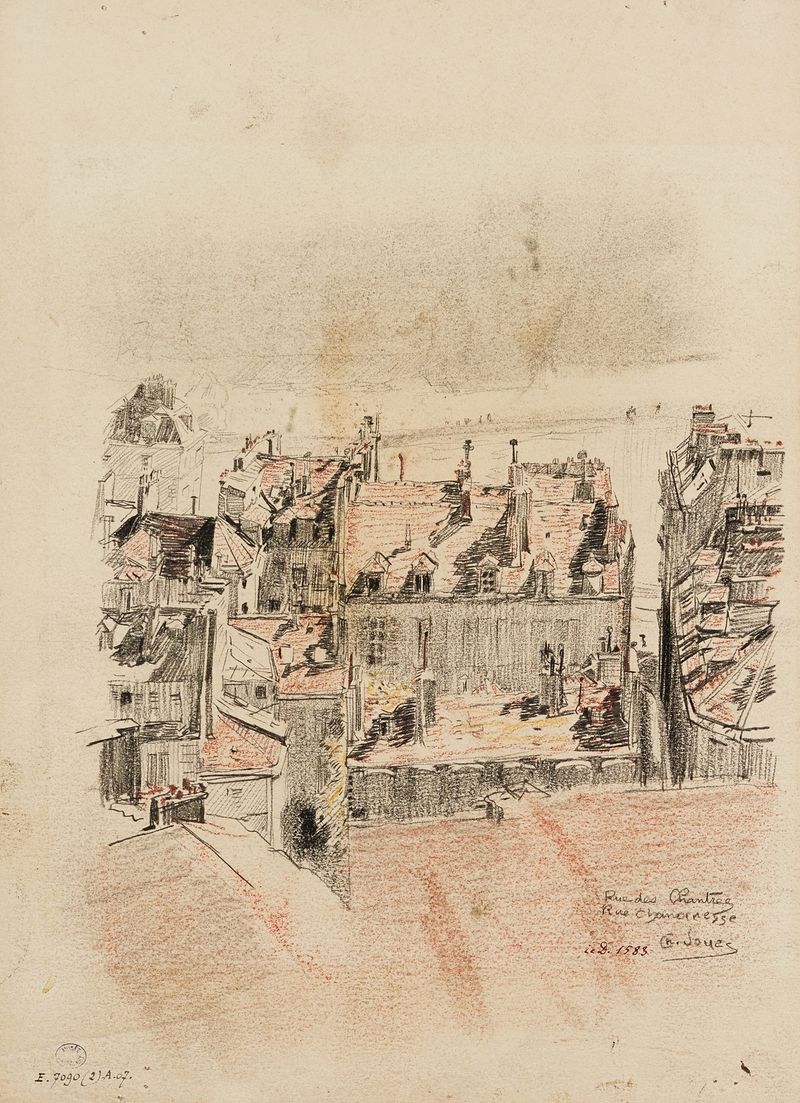
Rue des Chantres et rue Chanoinesse
Charles Jouas

Rue Grenier sur l’Eau
Charles Jouas
More Architecture Art
Browse all →
The statue of Liberty
Frédéric Auguste Bartholdi

View of Houses in Delft, Known as ‘The Little Street’
Johannes Vermeer

View of Houses in Delft, Known as ‘The Little Street’
Johannes Vermeer

The Cathedral in Rouen. The portal, Grey Weather
Claude Monet

The yellow house
Vincent van Gogh

The Church in Auvers-sur-Oise, View from the Chevet
Vincent van Gogh