
Cour intérieure du musée Carnavalet, rue de Sévigné — History & Facts
This sentiment echoes through the quiet corridors of memory, where the weight of mortality is etched into every detail. Look to the center of the canvas, where the soft, textured walls invite your gaze into the heart of the museum. The muted hues blend seamlessly, creating a sense of solitude that envelops the viewer. Notice how light spills through the delicate archways, highlighting the stillness of the space while casting gentle shadows that whisper of the past.
This interplay of light and shadow speaks to the transience of existence, urging us to reflect on what lingers long after we leave. As you explore the edges of the painting, you may discover the subtle interplay of life and decay. The aged architecture hints at the passage of time, while the empty benches suggest the absence of visitors—moments frozen in history. Each brushstroke encapsulates the delicate balance between admiration and loss, drawing attention to the beauty inherent in what is ephemeral.
The artist’s careful choice of composition reminds us that even in stillness, there is a pulse of life waiting to be acknowledged. In 1918, Georges-Henri Manesse painted this work during a time of great tumult following World War I. Living in Paris, amidst a city that was healing and rebuilding, he captured the essence of introspection within a historical context. Art was undergoing a transformation, seeking new forms of expression, and this piece reflects his endeavor to convey deeper truths through the lens of mortality and the spaces that hold our collective memories.
More Artworks by Georges-Henri Manesse
Browse all →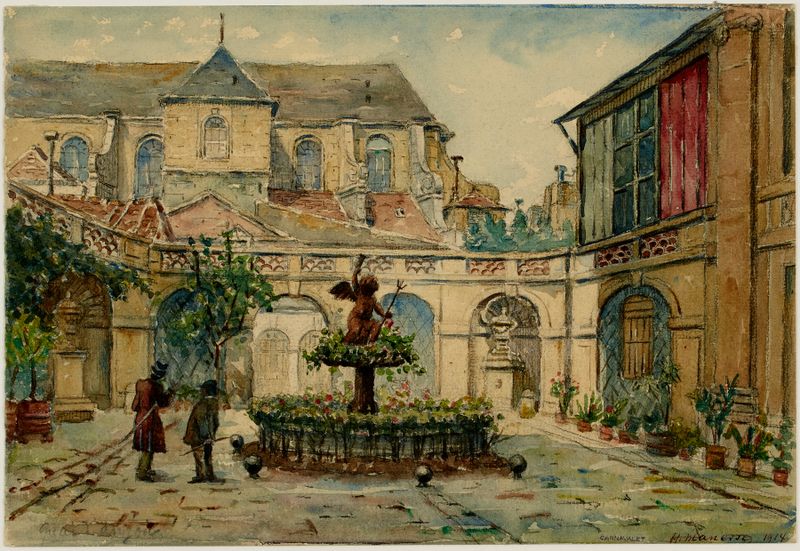
Cour intérieure de l’Hôtel Hesselin, 24 quai de Béthune
Georges-Henri Manesse
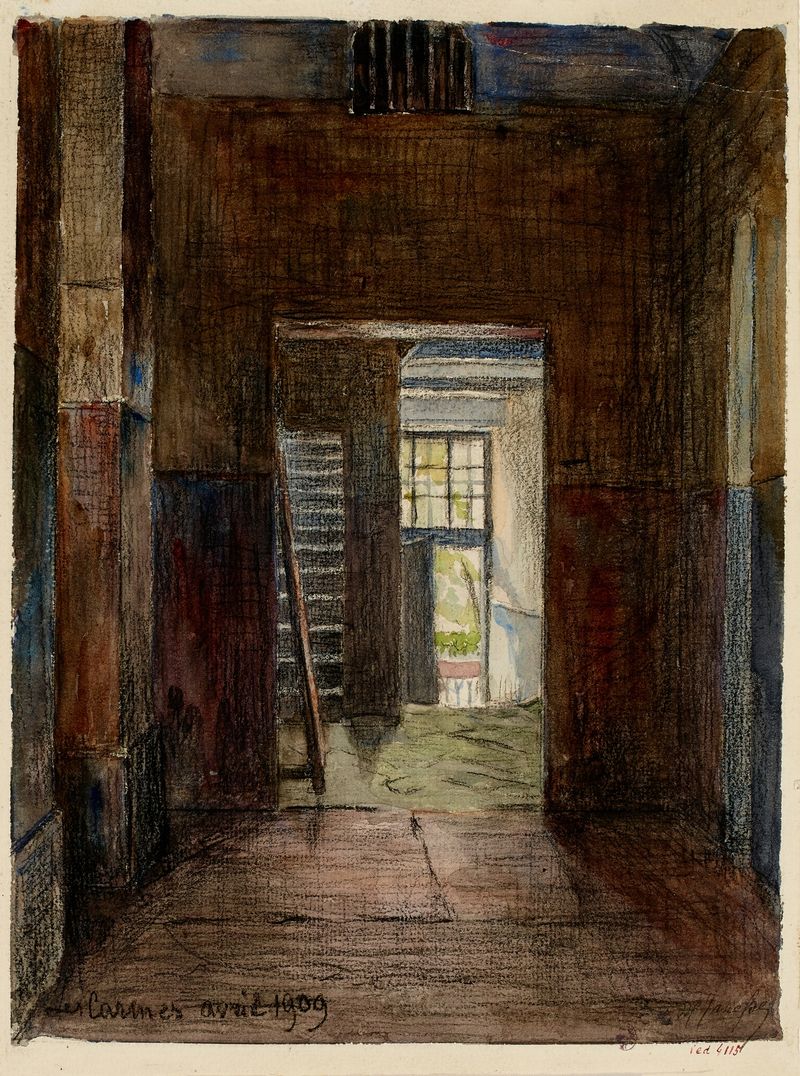
Intérieur du couvent des Carmes, rue de Vaugirard
Georges-Henri Manesse
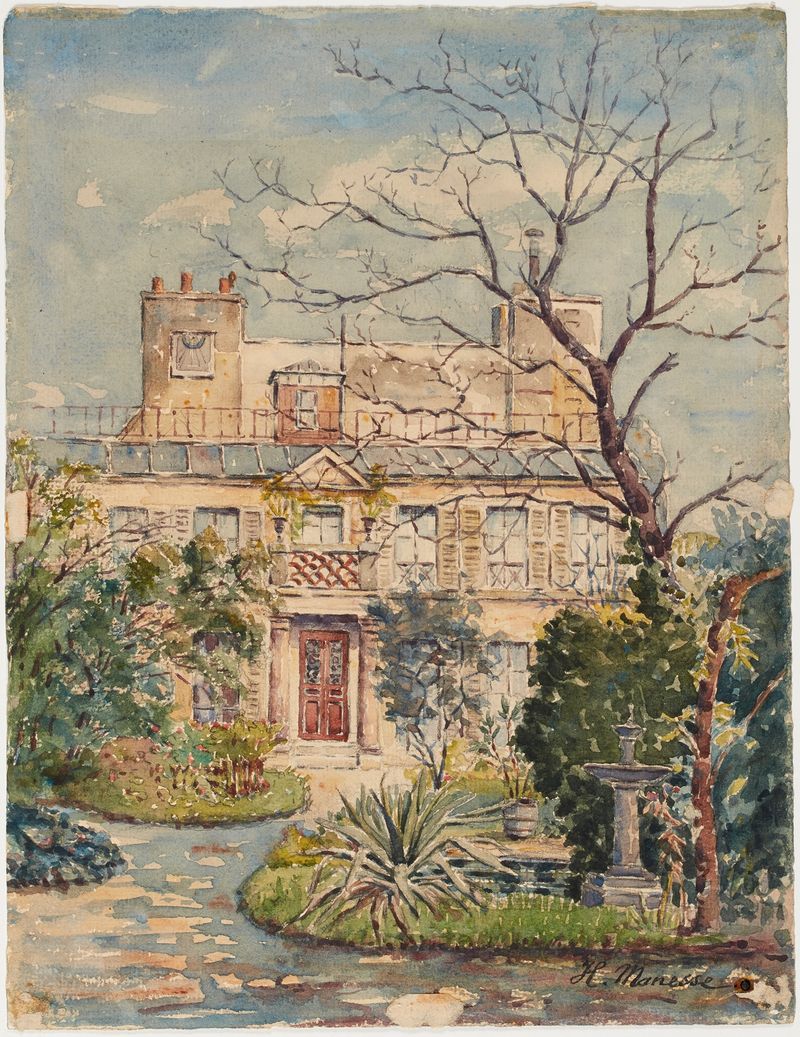
Maison de Victor Hugo, rue du Cherche-Midi
Georges-Henri Manesse
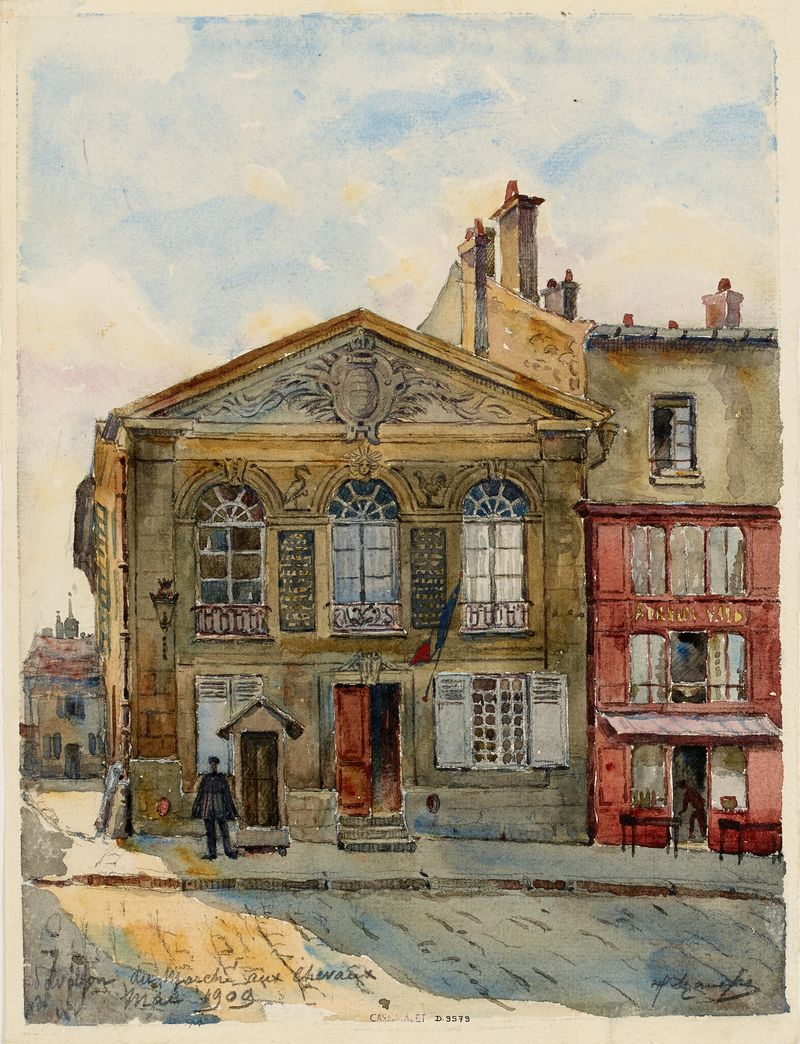
Le pavillon de police du Marché aux chevaux, rue Geoffroy Saint Hilaire
Georges-Henri Manesse

Passerelle des Arts
Georges-Henri Manesse

Vieille maison du XVè siècle, 6 rue Boutebrie
Georges-Henri Manesse
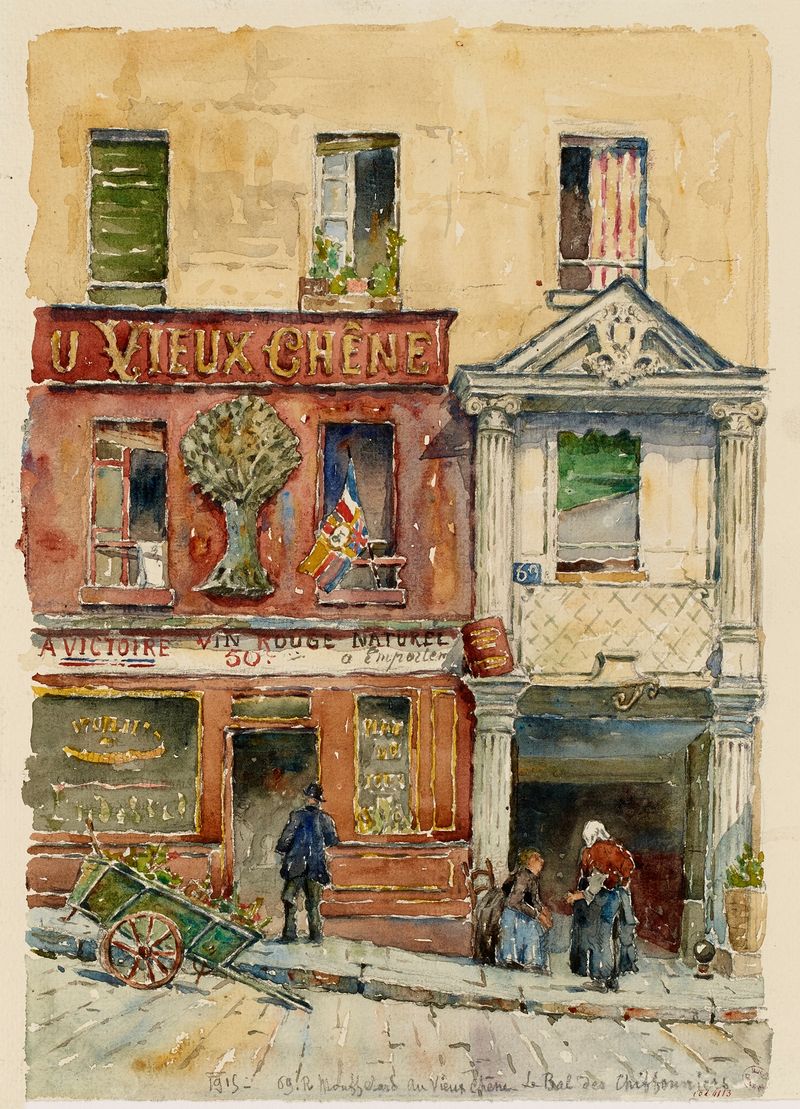
69, rue Mouffetard Boutique de vins à l’enseigne du Vieux chêne
Georges-Henri Manesse
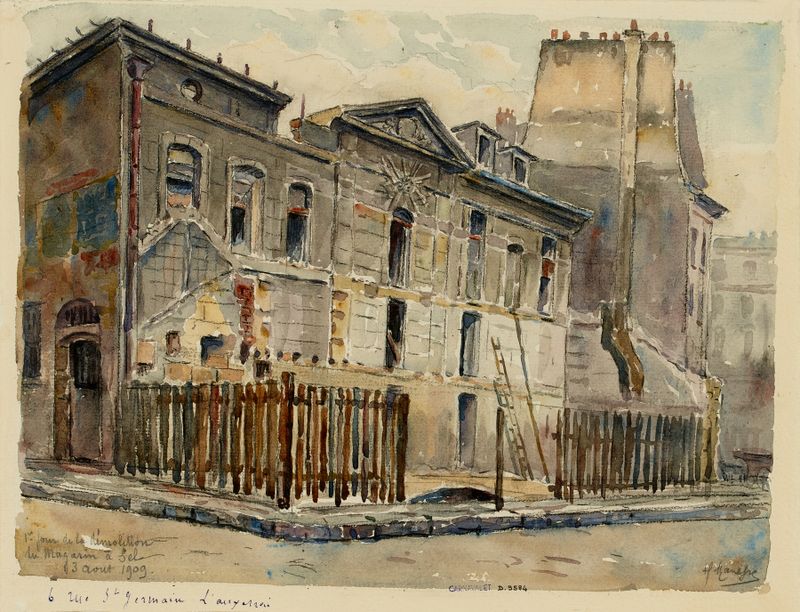
Premier jour de la démolition du magasin à sel, 6 rue Saint Germain de l’Auxerrois
Georges-Henri Manesse
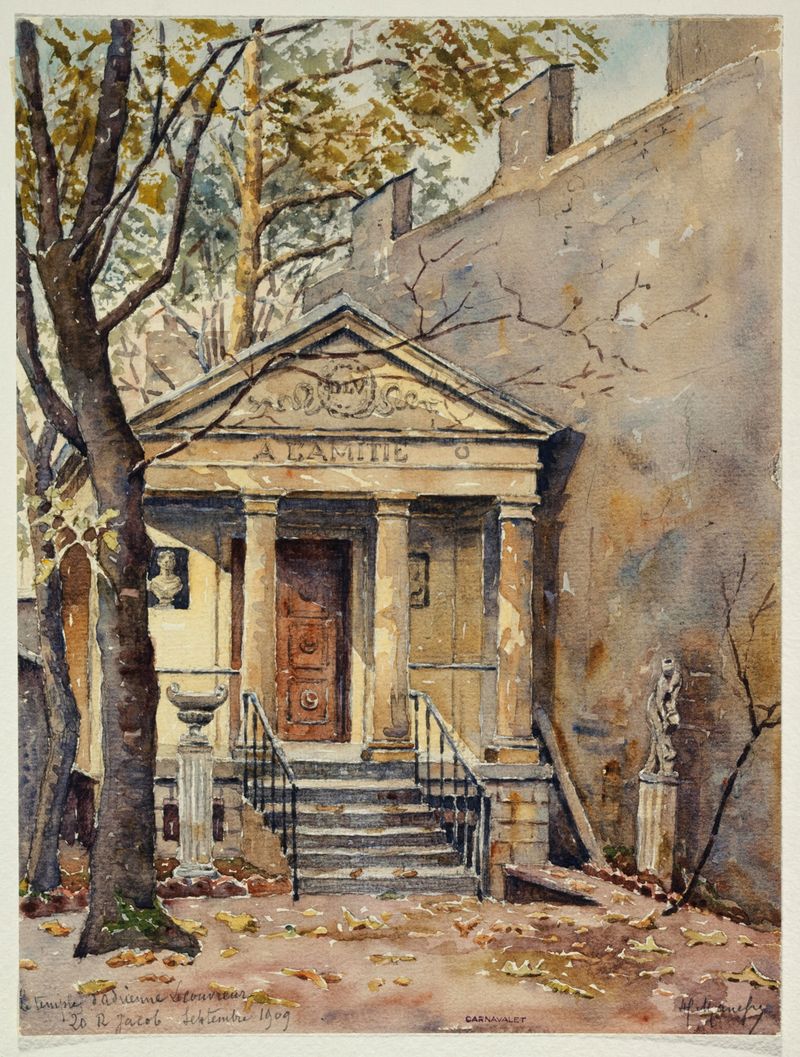
Temple de l’Amitié, 20 rue Jacob où habita Adrienne Lecouvreur
Georges-Henri Manesse

Maison de campagne de Jean-Jacques Rousseau, 20 quai de Passy
Georges-Henri Manesse





