
Cour Lamoignon ou St-Martin au Palais de Justice — History & Facts
Could a single brushstroke hold eternity? In Cour Lamoignon ou St-Martin au Palais de Justice, the canvas becomes a vessel of legacy, capturing a moment that reverberates with the complexities of time and place. Look to the left at the grand architecture, where intricate details of the Palais de Justice rise majestically, their solemnity emphasized by a muted palette of grays and ochres. The figures scattered throughout the scene, tiny yet compelling, draw your attention toward the central archway, framing the entrance like a portal to history. The light filters softly through the scene, illuminating the subtle textures of clothing and stone, inviting viewers to feel the weight of the past mingling with the present. As you delve deeper, notice the contrasts that emerge: the rigidity of the stone juxtaposed with the fluidity of human movement; the historical grandeur set against the ephemeral nature of busy lives.
Each figure, each shadow conveys an unspoken story — the blend of hope and despair that resonates in public spaces, a reminder that every interaction is part of a larger narrative, woven into the fabric of time. Delauney painted this piece in 1866, during a period marked by great social and political changes in France. Living in Paris, he was surrounded by the burgeoning Impressionist movement, yet his focus remained on capturing more formal, historical scenes. This work reflects a transitional moment in his career, bridging the gap between traditional representation and a burgeoning interest in capturing the fleeting moments of contemporary life.
More Artworks by Alfred Alexandre Delauney
Browse all →
Eglise St-Etienne du Mont, côté nord
Alfred Alexandre Delauney
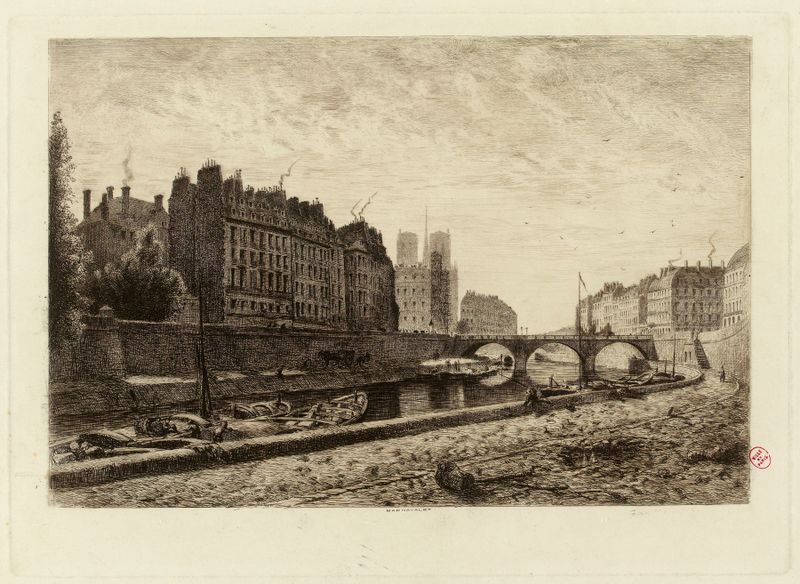
Pont St-Michel
Alfred Alexandre Delauney

Ancienne poterne du Palais de Justice, quai des Orfèvres
Alfred Alexandre Delauney
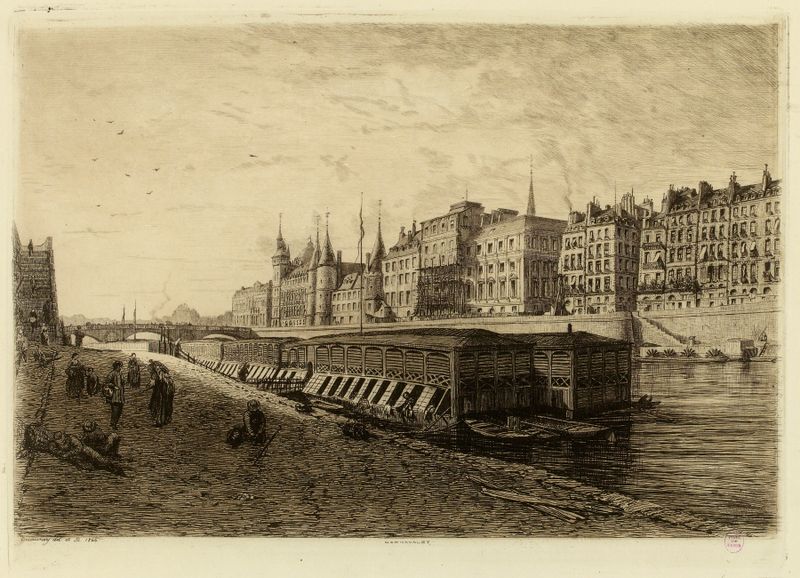
Quai de l’Horloge
Alfred Alexandre Delauney
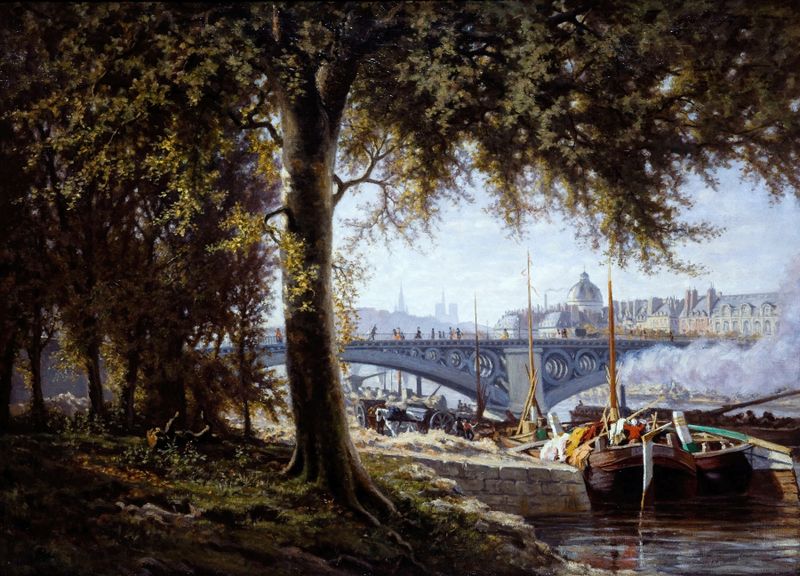
Le Pont des Saints-Pères
Alfred Alexandre Delauney

Pont-Neuf et quai Conti
Alfred Alexandre Delauney
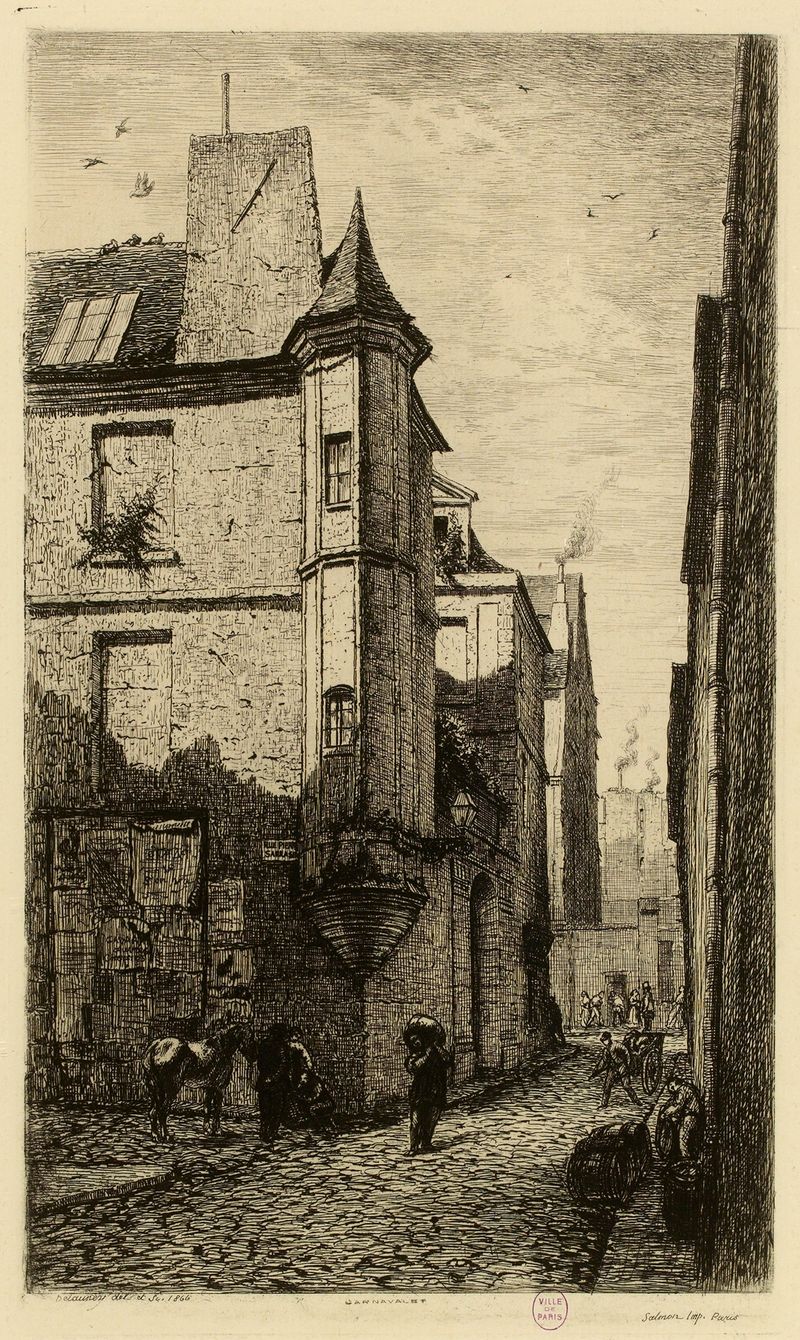
Tourelle rue Hautefeuille
Alfred Alexandre Delauney
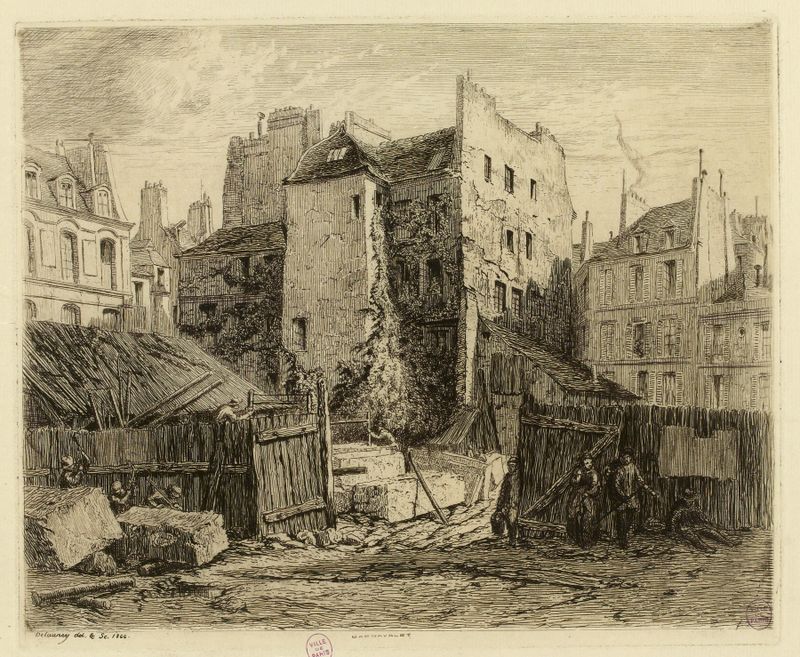
Maisons rue du Cloître Notre-Dame
Alfred Alexandre Delauney
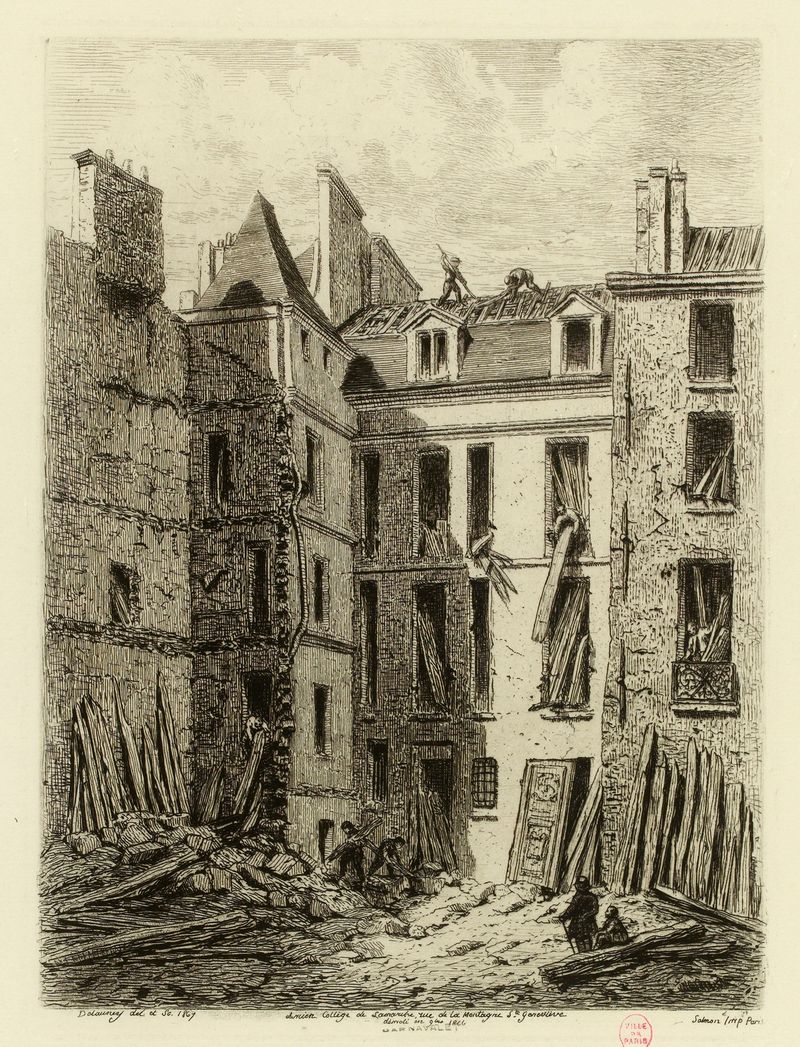
Ancien collège de Lamarche rue de la Montagne Ste-Geneviève, démoli en octobre 1866
Alfred Alexandre Delauney

Rue Grenier sur l’eau à Paris
Alfred Alexandre Delauney
More Architecture Art
Browse all →
The statue of Liberty
Frédéric Auguste Bartholdi

View of Houses in Delft, Known as ‘The Little Street’
Johannes Vermeer

View of Houses in Delft, Known as ‘The Little Street’
Johannes Vermeer

The Cathedral in Rouen. The portal, Grey Weather
Claude Monet

The yellow house
Vincent van Gogh

The Church in Auvers-sur-Oise, View from the Chevet
Vincent van Gogh