
Courtyard in Constantinople — History & Facts
What draws the eye first in Courtyard in Constantinople is the hush before movement: figures pause at the foot of broad stone steps, their shadows stretching across the cool flagstones, while horses wait patiently in the dappled sunlight. The painting is a study in contrasts—between the deep, enveloping shade cast by the monumental building on the left and the open, luminous sky that bathes the distant trees and rooftops in gentle gold. Every gesture is purposeful: a man bends to wash, two dogs nose along the edge of the steps, and a cluster of men in loose robes confer quietly, their attention divided between the entrance and the courtyard’s edge.
The angled composition leads the viewer from the shadowed threshold up the steps and out, toward the promise of the bright city beyond. Painted in 1868, this work belongs to a moment when European artists—especially those from France and Italy—were captivated by the allure of the Ottoman East. Scenes like this, often called “Orientalist,” were collected by Western patrons eager for glimpses of a world both exotic and orderly, where daily rituals played out against grand architecture and sunlit gardens. Alberto Pasini was among the most accomplished painters of this genre, known for his ability to balance precise observation with atmospheric mood.
Today the painting resides in the collection of the Museum of Fine Arts, Boston, a quiet witness to the 19th-century fascination with travel, difference, and the everyday poetry of distant places. Let your gaze linger on the threshold—where shadow meets sun, and the story is just about to unfold.
More Artworks by Alberto Pasini

Mercato in Oriente
Alberto Pasini
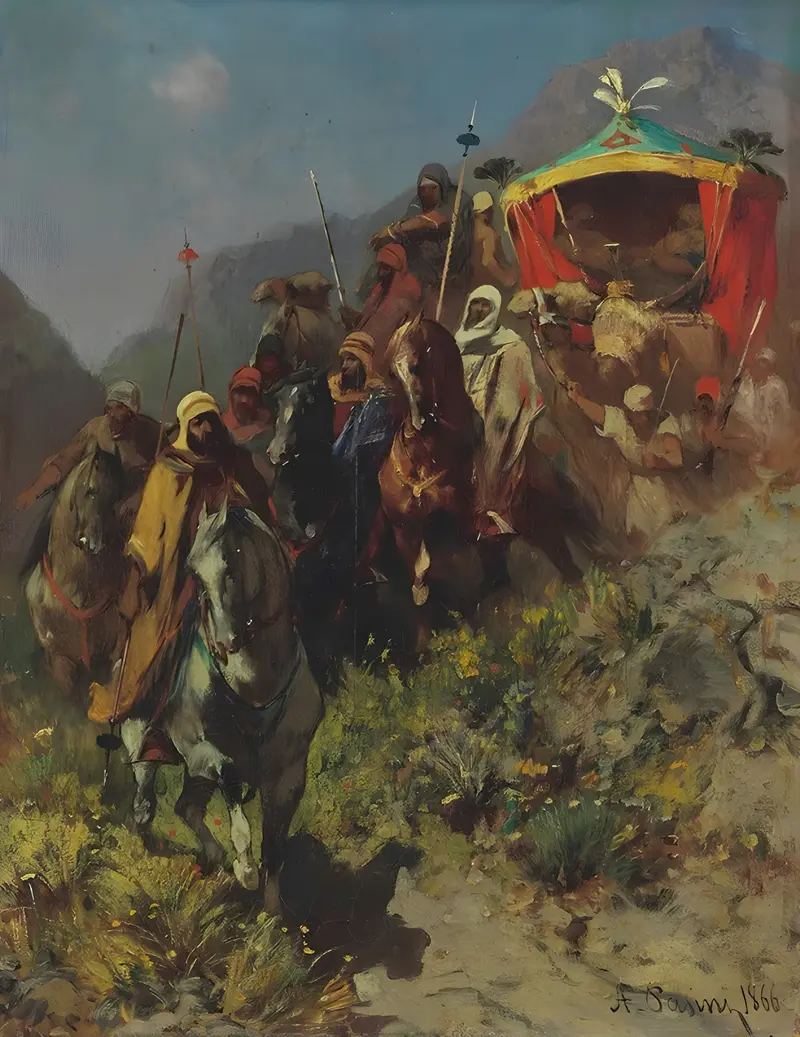
A Caravan on a Mountain Pass
Alberto Pasini

The blacksmith’s shop
Alberto Pasini
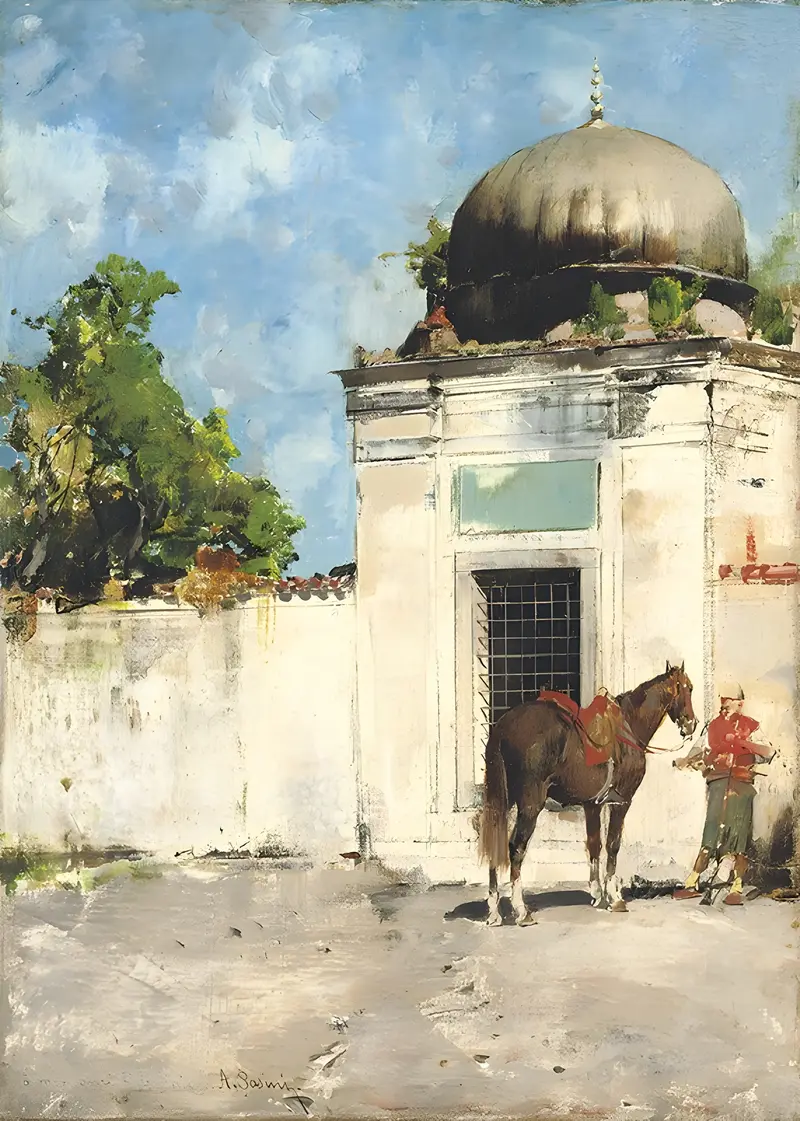
The Sentinel
Alberto Pasini
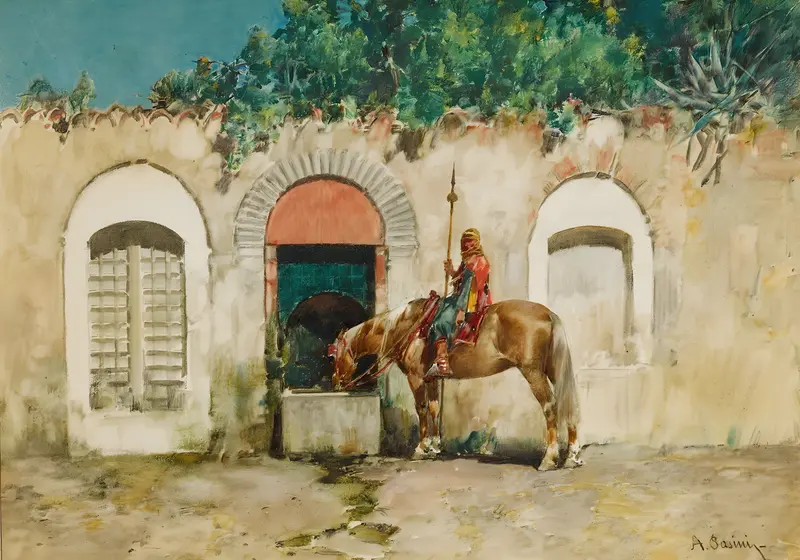
Horseman At A Fountain
Alberto Pasini
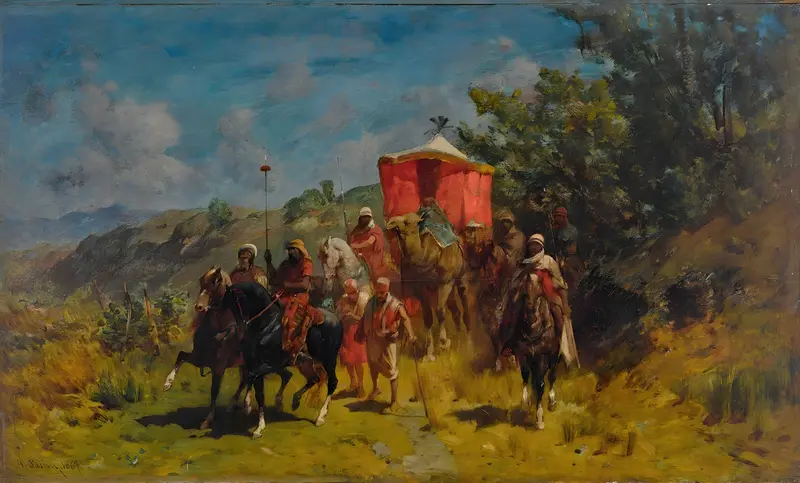
An Arab Caravan
Alberto Pasini
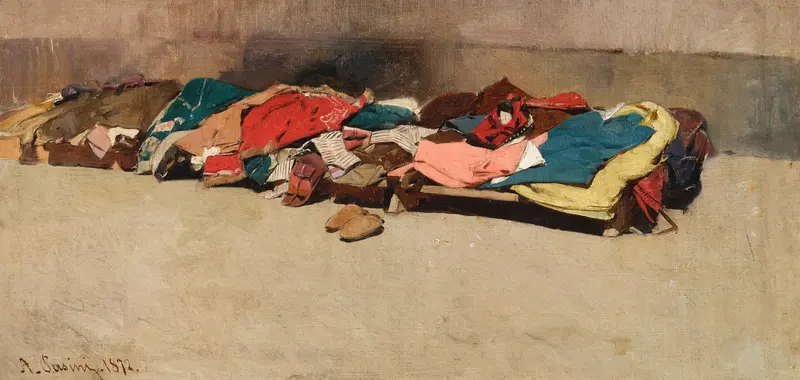
Mercato
Alberto Pasini
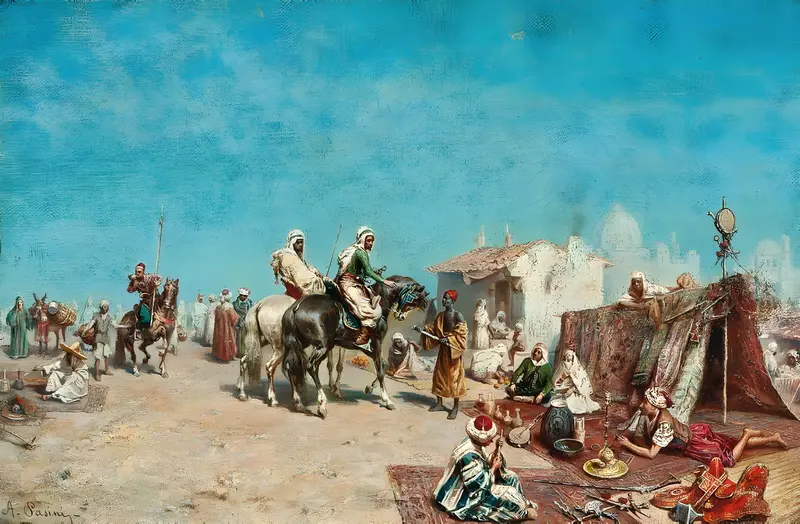
Arab merchants at a market by the city walls
Alberto Pasini
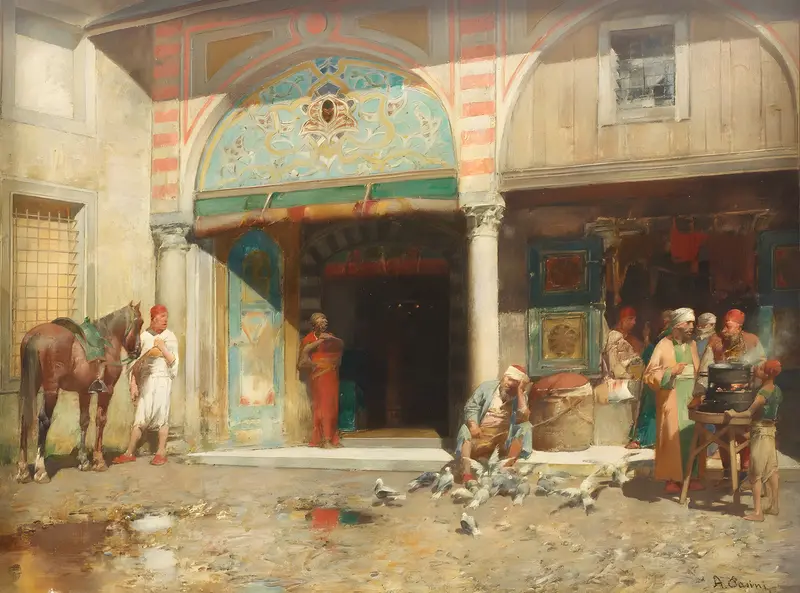
Outside the mosque
Alberto Pasini
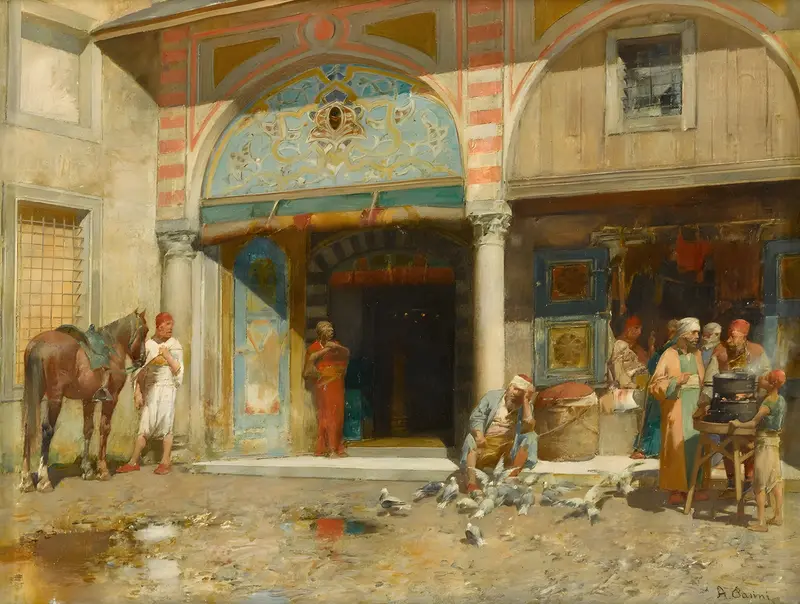
Outside the Mosque
Alberto Pasini
More Genre Scene Art

Banquet of the Officers of the St George Civic Guard
Frans Hals

Rembrandt and Saskia in the Scene of the Prodigal Son
Rembrandt van Rijn

Bal du moulin de la Galette
Pierre-Auguste Renoir

Quadrille at the Moulin Rouge
Henri de Toulouse-Lautrec

A Burial at Ornans
Gustave Courbet

When Will You Marry?
Paul Gauguin