
Crucifixion of Jesus — History & Facts
What first catches the eye in Crucifixion of Jesus by Albrecht Altdorfer is the restless energy that fills every corner of the scene. The drama is not confined to the three crosses at the center; it ripples outward, drawing viewers into a tangle of gestures, glances, and silent grief. The artist leads us from the clustered mourners in the foreground—where a woman collapses into the arms of her companions—upward along the ladder that bisects the composition, to the figure of Jesus, whose limp body is rendered with a startling vulnerability.
Soldiers gesticulate and confer below the crosses, their armor catching the light, while a stormy sky cracks open above, hinting at the cosmic upheaval of the moment. Painted in 1526, this work belongs to a period when religious imagery was both a public spectacle and a private meditation. The crowded composition, with its dense forest of figures and trees, is typical of early sixteenth-century German painting, where narrative detail and emotional immediacy were prized. Such scenes were often commissioned by churches or wealthy patrons for altarpieces, intended to draw the faithful into the passion story through vivid, almost theatrical storytelling.
While history has kept few traces of this particular painting’s journey, its intensity and complexity invite us to linger, searching out the small dramas unfolding at every level of the panel.
More Artworks by Albrecht Altdorfer

Landscape with Two Pines
Albrecht Altdorfer
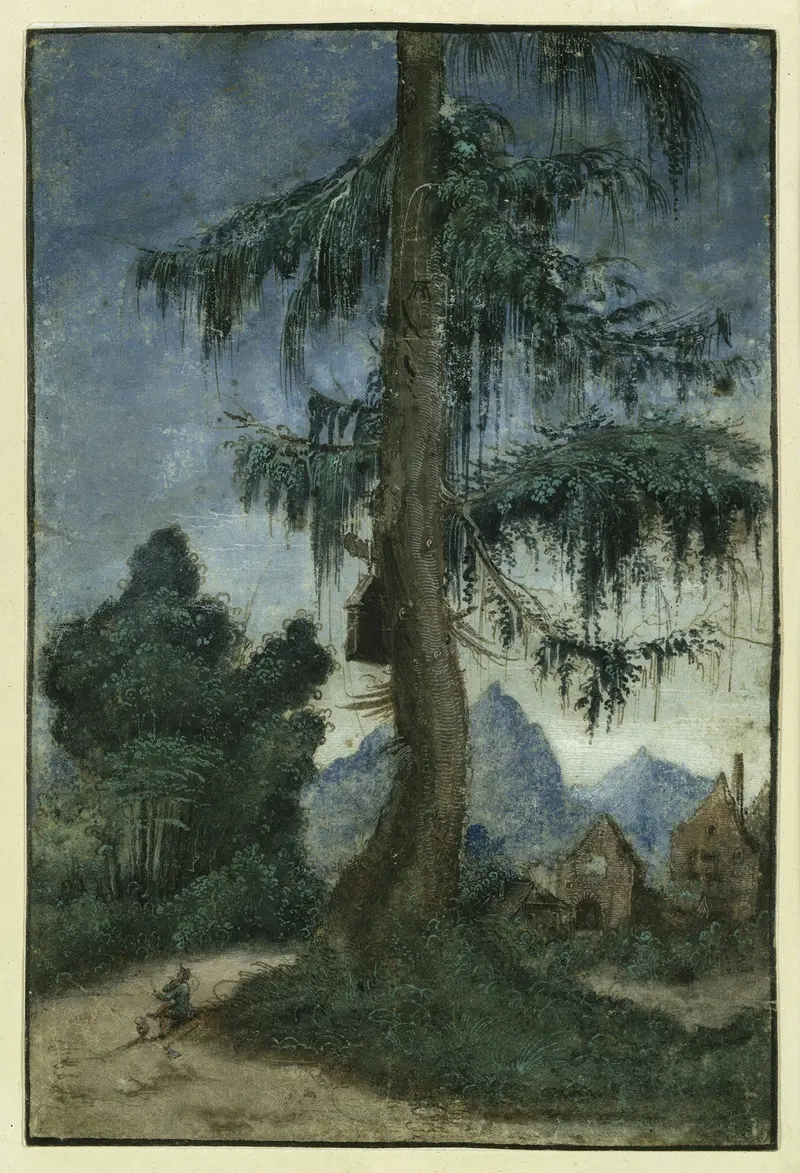
Landscape with spruce
Albrecht Altdorfer
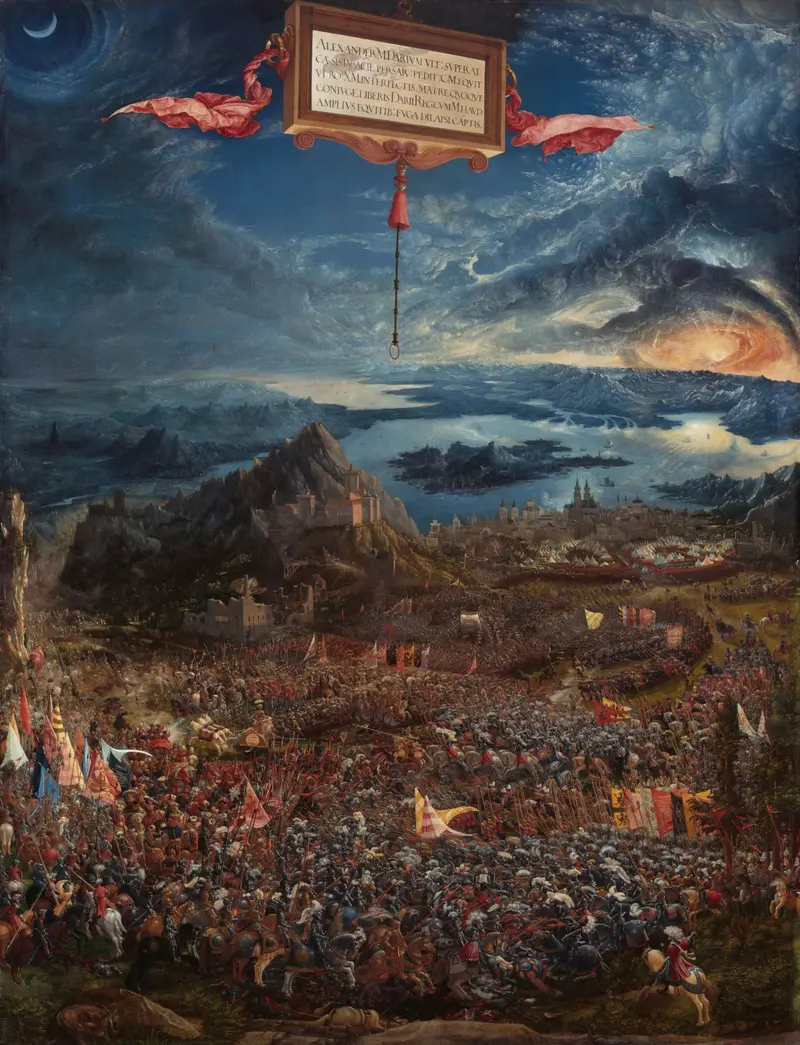
The Battle of Alexander at Issus
Albrecht Altdorfer
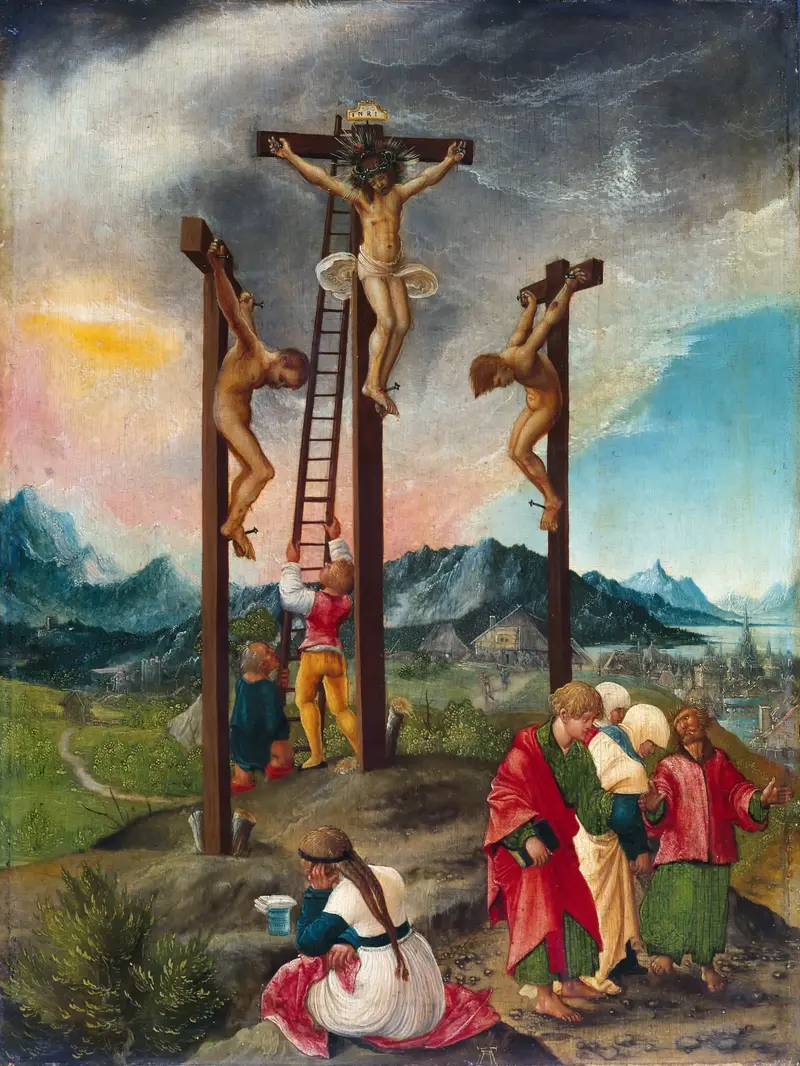
Christ on the Cross between the Two Thieves
Albrecht Altdorfer
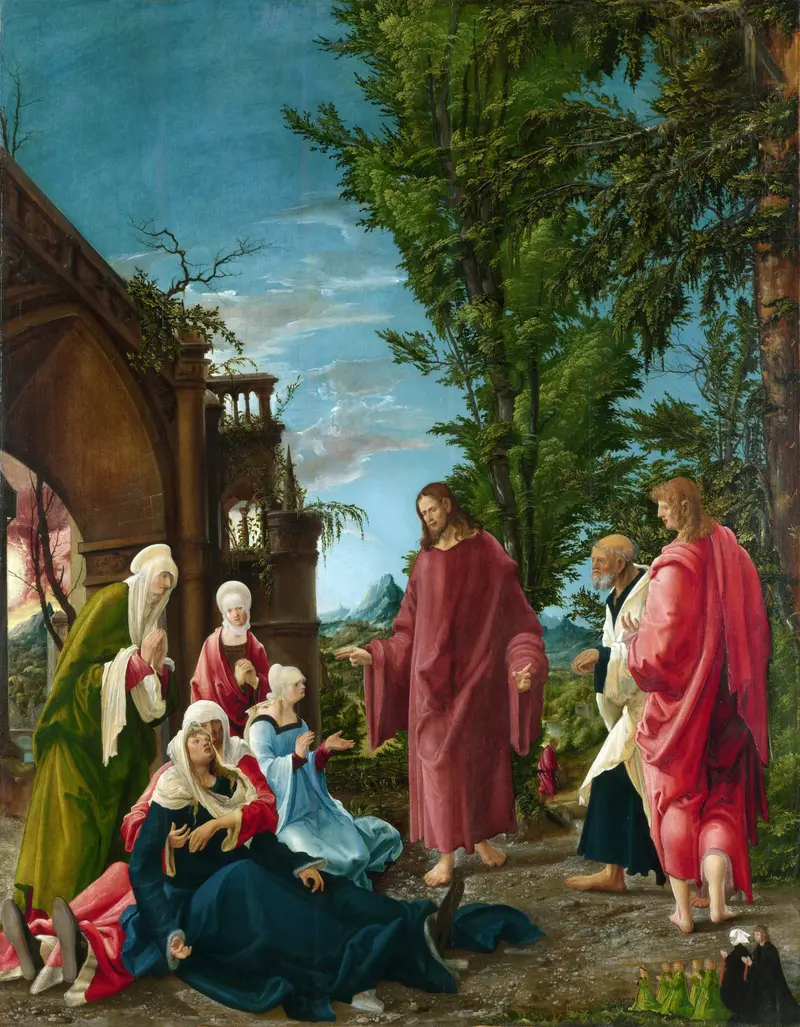
Christ Taking Leave of his Mother
Albrecht Altdorfer
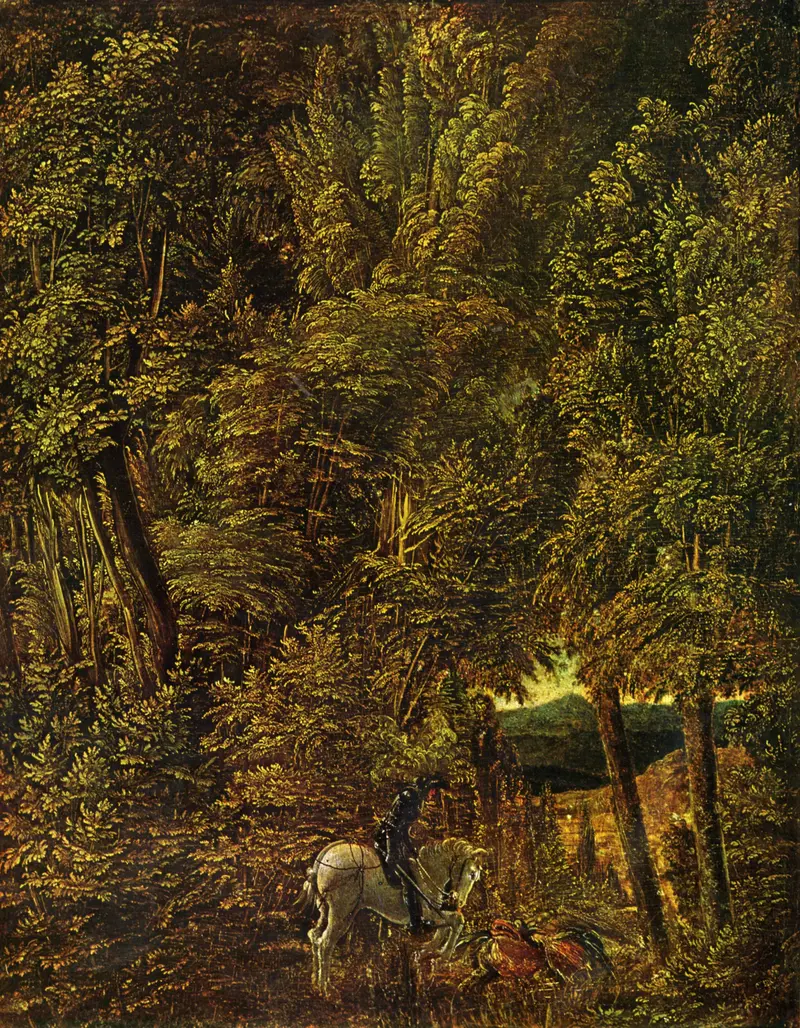
Countryside of Wood With Saint George Fighting the Dragon
Albrecht Altdorfer
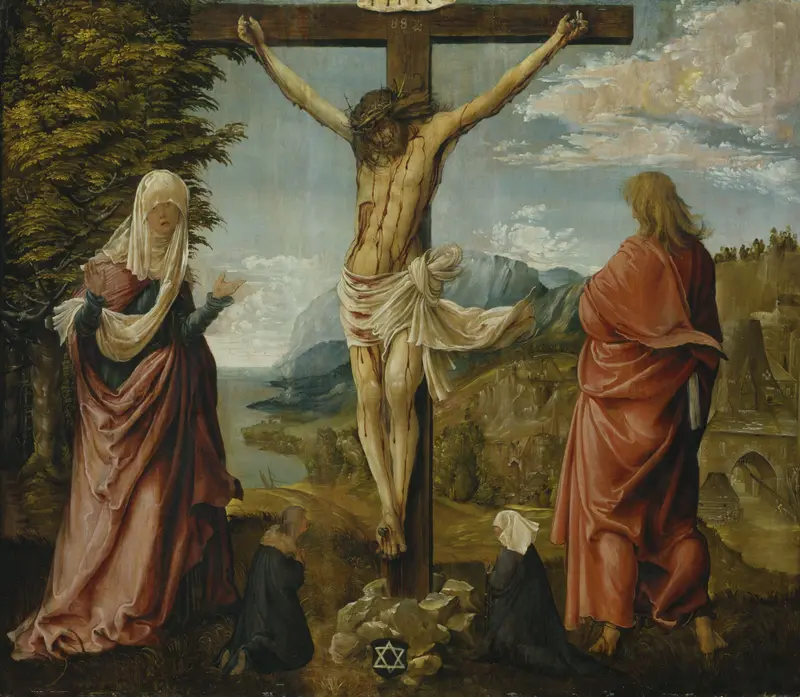
Crucifixion with Mary and John
Albrecht Altdorfer
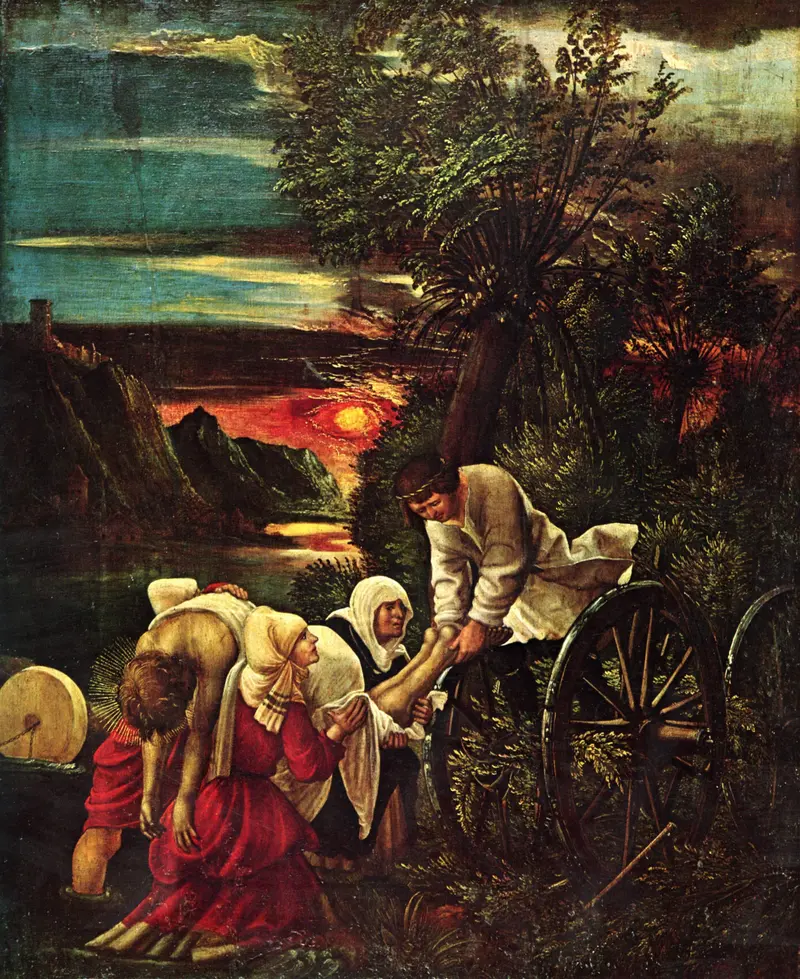
Finding of the Body of Saint Florian
Albrecht Altdorfer
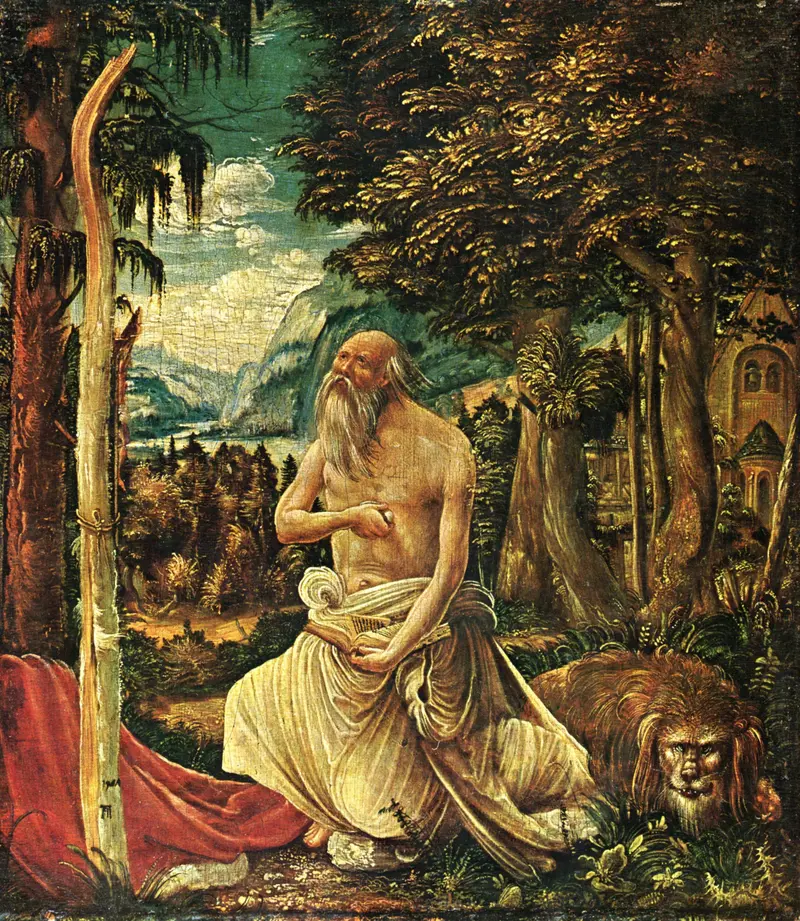
Penitent Hieronymus
Albrecht Altdorfer
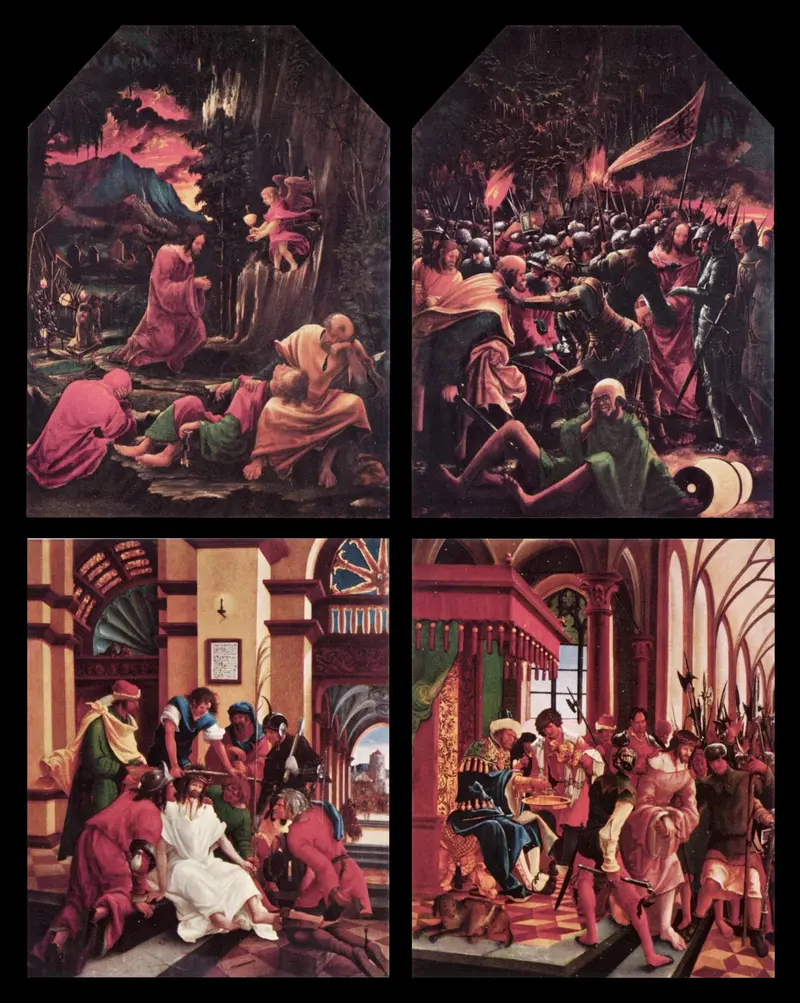
Pilate Washing His Hands by Altdorfer
Albrecht Altdorfer





