Dachauer Landschaft mit weißem Felsen — History & Facts
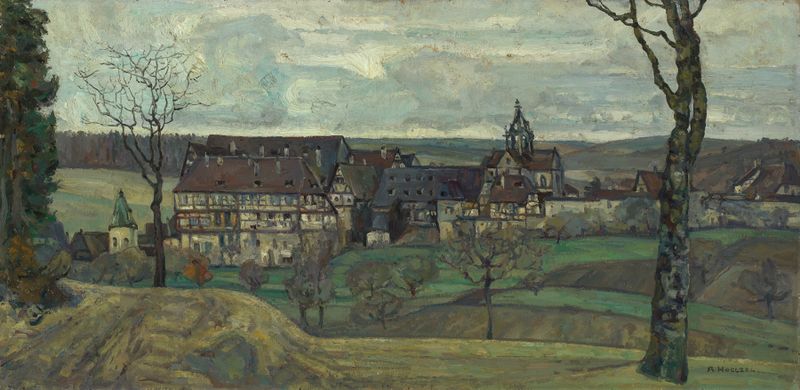
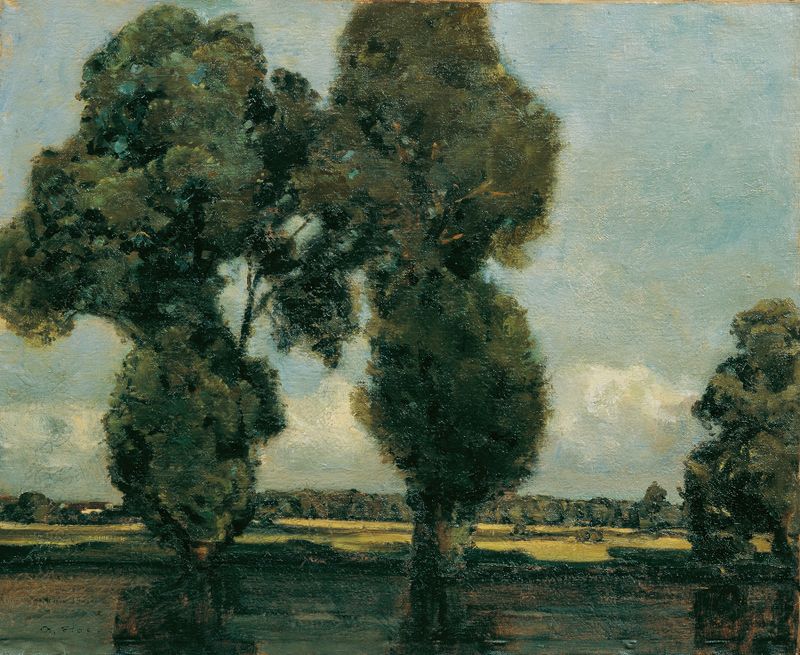
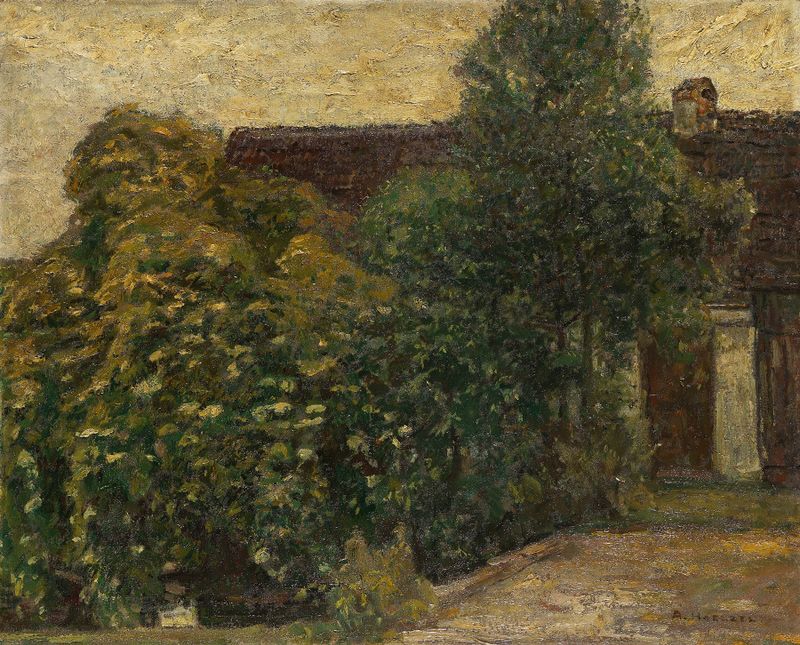
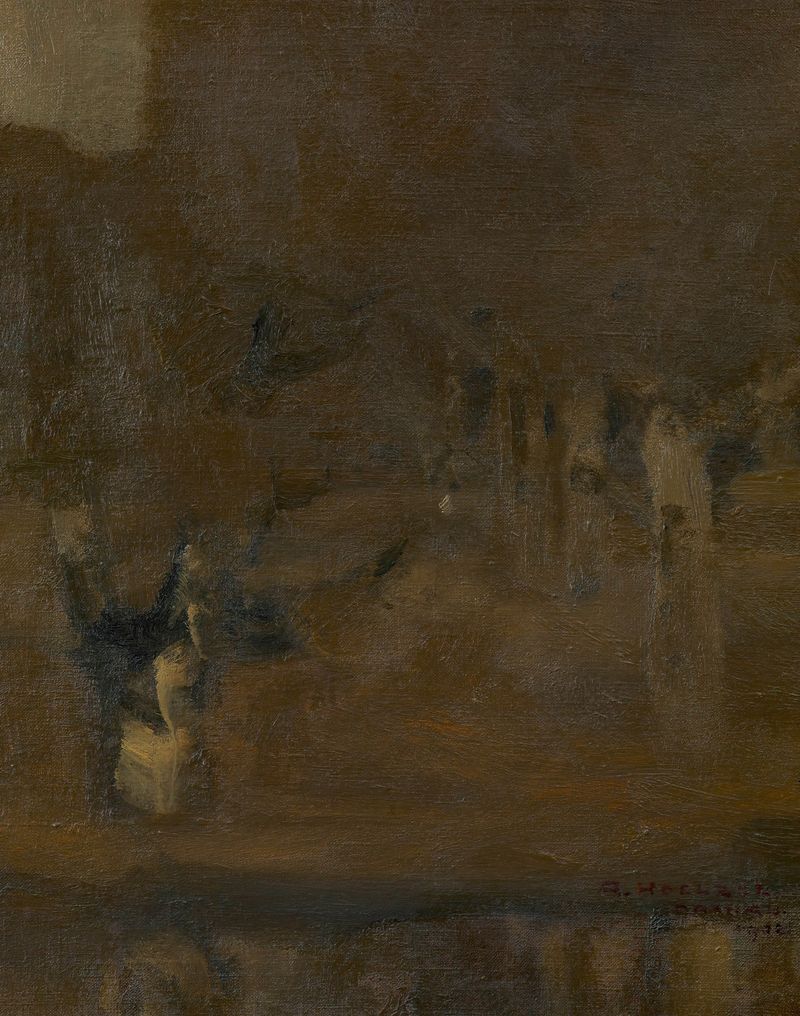
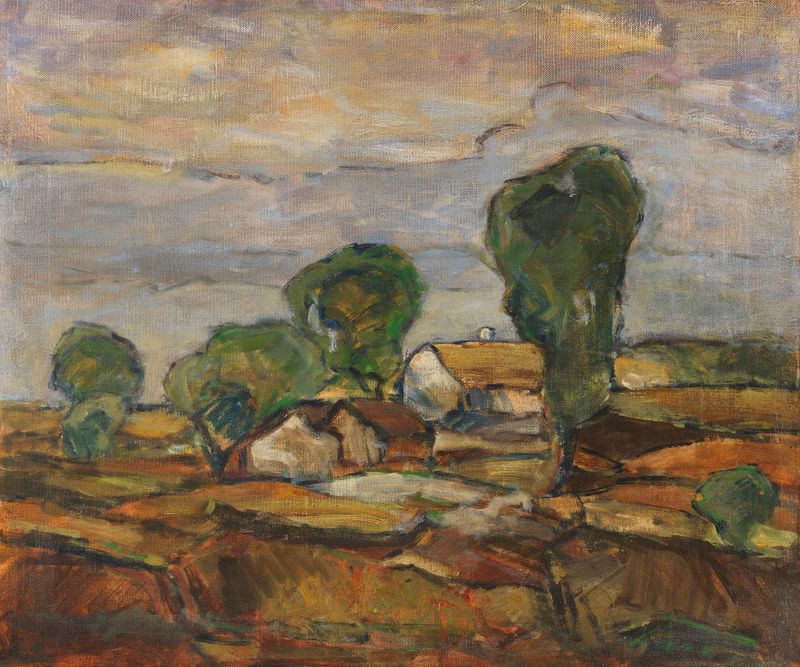
Who listens when art speaks of silence? In Dachauer Landschaft mit weißem Felsen, the resonance of stillness invites the viewer into a dreamlike landscape where light and shadow dance in harmony. Focus first on the striking white rock to the right, an anchor against the gentle undulations of the painted hills. The soft greens and earthy browns of the surrounding foliage create a serene backdrop, while the application of delicate brushstrokes evokes a tranquil breeze. Notice how the light cascades over the landscape, illuminating the rock and casting subtle shadows that suggest an ethereal presence, almost as if the land itself breathes quietly in this moment. Within this scene lies a profound contrast between the solidity of the rock and the fluidity of the landscape.
The juxtaposition hints at resilience amid transience—how nature persists even as time flows past. The colors and forms coalesce into a harmonious whole, yet the ghostly outlines blur the boundaries of reality, suggesting that this landscape may not exist beyond the artist's imagination. Each brushstroke adds to the sense of a world suspended between waking and dreaming, inviting introspection and evoking the stillness of an unspoken narrative. Adolf Hölzel painted this piece in 1900 while living in Dachau, near Munich, during a period of artistic exploration and personal turmoil.
The artist was deeply engaged with the Symbolist movement, seeking ways to express emotions through color and form. At this time, he was developing his unique approach to abstraction, reflecting broader shifts within the art world as artists began to break away from traditional representation and move towards more expressive, subjective interpretations of their environments.