Landschaftsstudie aus Dachau — History & Facts
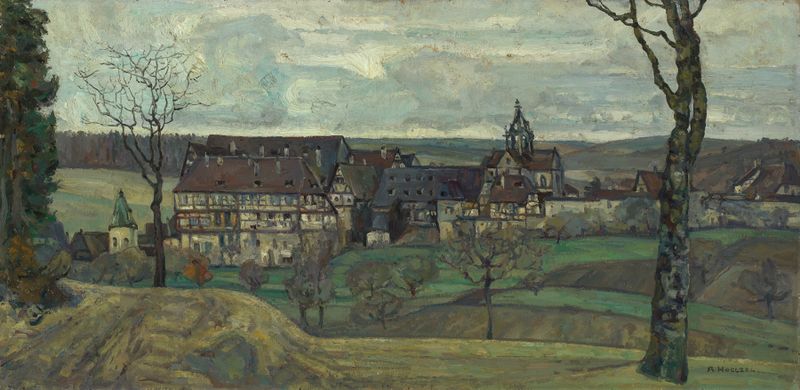
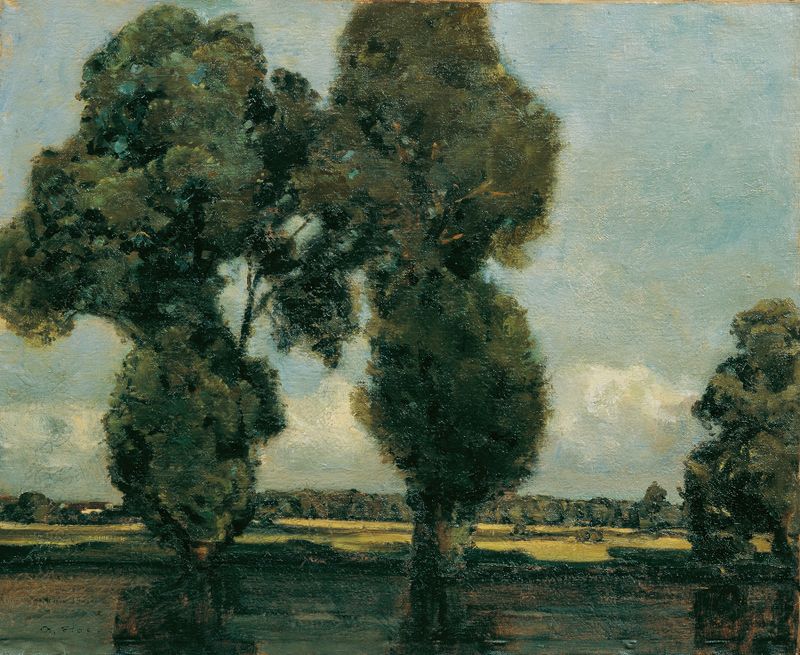
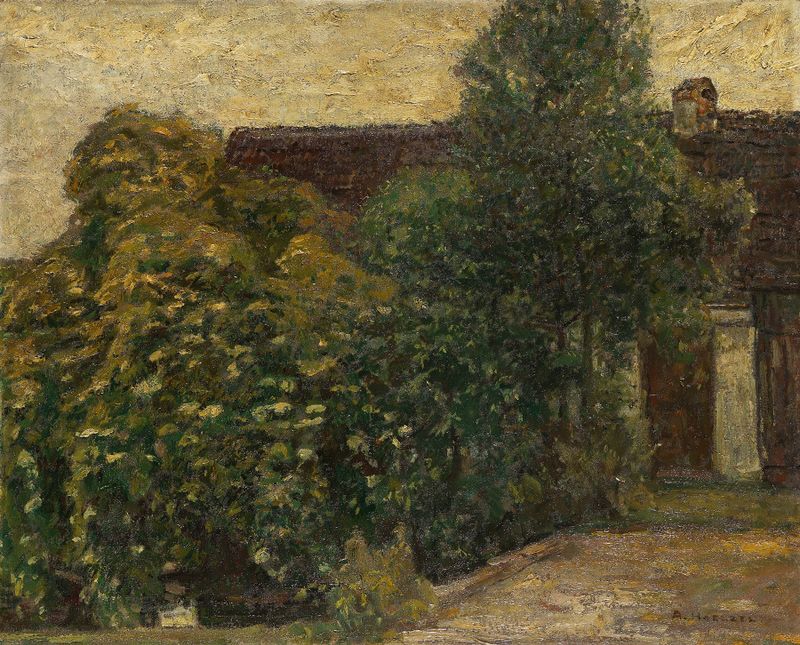
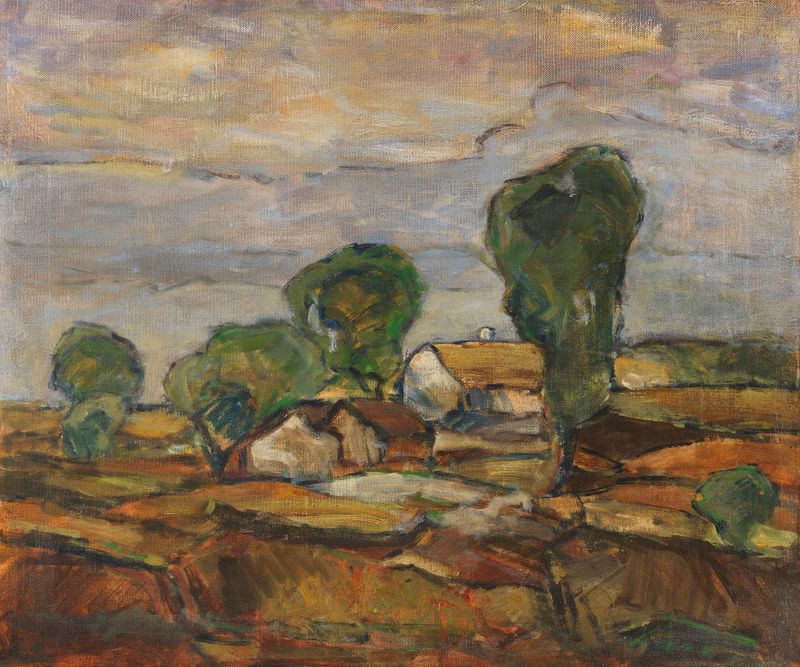
In the stillness of nature, Hölzel finds a profound dialogue between the seen and the unseen, capturing a moment where hope thrives just beneath the surface. Look to the lower left at the gentle curve of the meadow, inviting your gaze into the painting's serene expanse. Soft brush strokes of greens and browns meld together, suggesting a lush landscape that breathes with life. Notice how the light filters through the trees, creating dappled patterns that dance across the ground, enhancing the sense of tranquility and promise in the scene.
The composition draws you in, almost as if the horizon beckons for exploration. Among the hidden details, the interplay of shadows reveals deeper emotional tensions: the darkness of the forest threatens to encroach on the brightness of the meadow, a metaphor for uncertainty nestled within hope's embrace. The gentle rise of the hills suggests upward movement, as if nature speaks of aspirations and a future yet to unfold. Each stroke holds the weight of longing, while the palette embodies a balance between calm and anticipation. In 1902, Hölzel painted this piece during a time of personal introspection.
Living in Dachau, he was deeply affected by the blend of artistic innovation and spiritual inquiry prevalent in the art world. The early 20th century found many artists seeking to express new forms, and Hölzel's work reflects both his exploration of landscape and his philosophical contemplation of existence, encapsulating a moment of resonance in his artistic journey.