Flusslandschaft mit Dorf — History & Facts
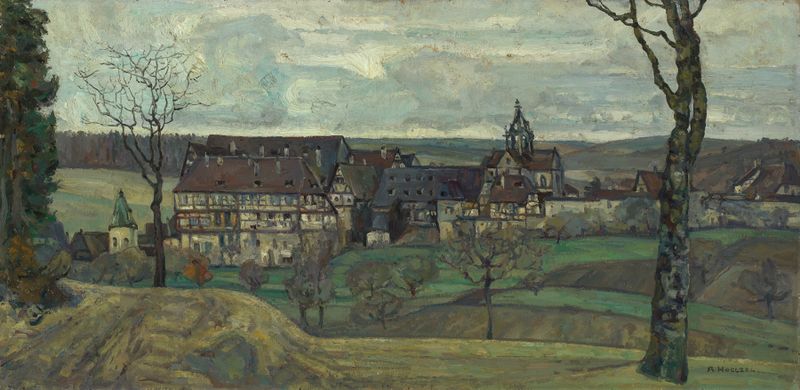
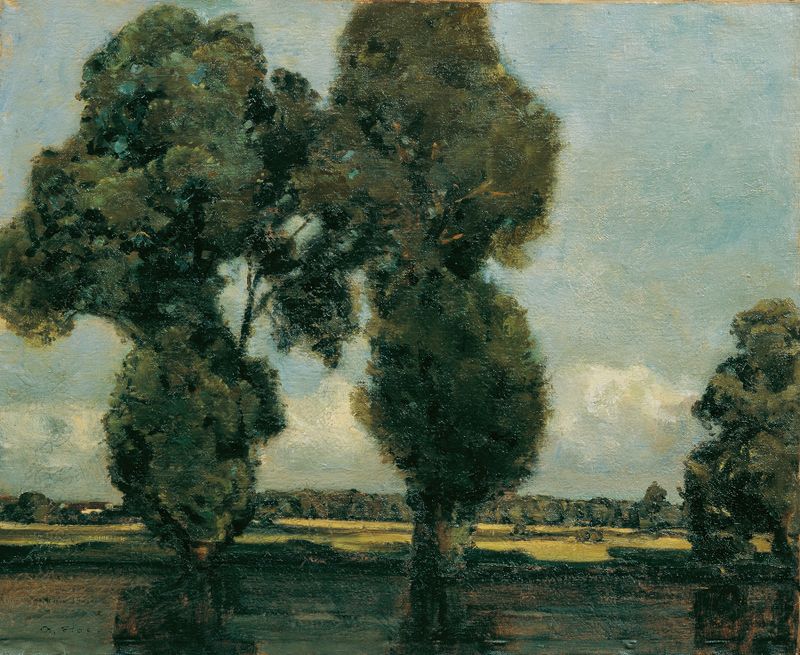
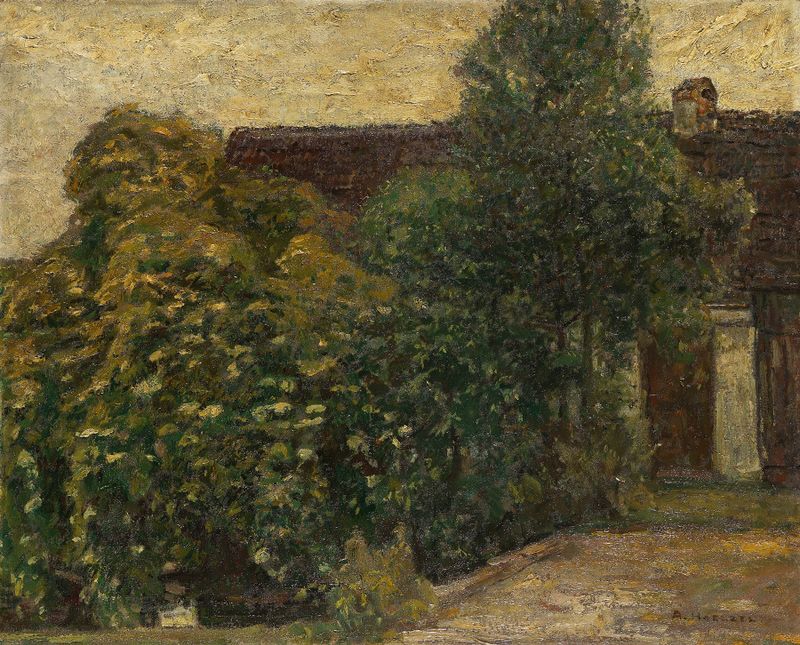
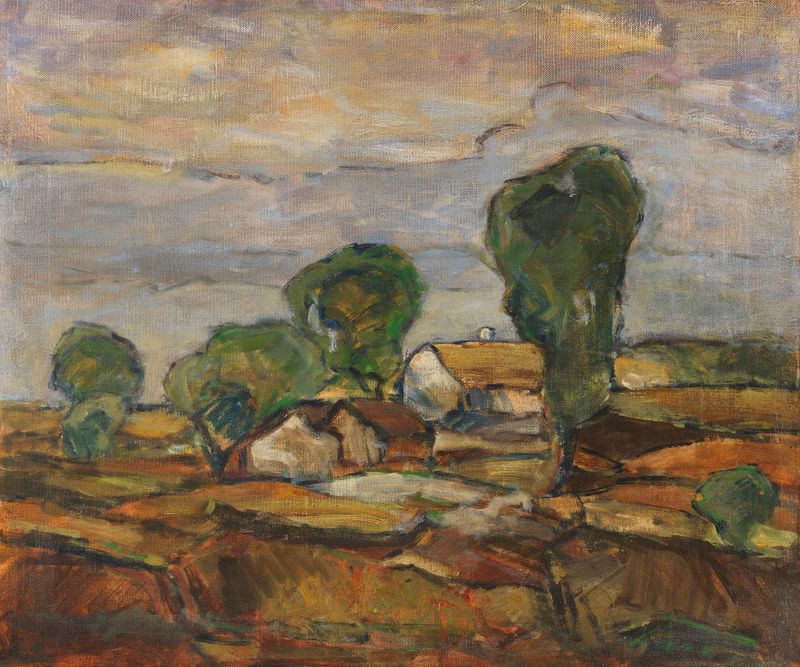
Who listens when art speaks of silence? In the void between the visible and the unseen, Flusslandschaft mit Dorf invites us to contemplate the whispers of nature and the stillness of human presence. Look to the left, where the gentle curve of the river beckons the eye, its surface a glimmering ribbon of blues and greens, reflecting the world above. Notice how the light falls softly upon the quaint village nestled along the banks, each structure rendered in muted earth tones that harmonize with the landscape. The composition flows seamlessly, guiding the viewer through a tranquil yet rich tapestry of form and color, masterfully arranged by the artist’s delicate brushwork. Within this serene vista lies an exploration of contrast; the vibrant life of the village stands in juxtaposition to the vast expanses of nature, evoking a sense of harmony yet tension between human existence and the wilderness.
The trees, lush and teeming with foliage, seem to cradle the houses, while the river, with its quiet current, whispers secrets of the land's deeper stories—of time, solitude, and reflection. Each element speaks to a shared intimacy, a fleeting moment captured in paint that transcends its visual surface. Created in 1890, during a period of great experimentation in the world of art, the piece reflects Hölzel’s time in Stuttgart, where he was exploring his burgeoning interest in color theory and Impressionism. The late 19th century marked a shift from traditional representation to a more expressive approach, as artists sought to depict not just what they saw, but how they felt about their surroundings.
This painting stands as a testament to that evolving vision, encapsulating both a specific moment in Hölzel's journey and a broader artistic awakening.