
Dansende boerenparen — History & Facts
In the delicate interplay of color and form, Dansende boerenparen captures a moment of joyful abandon, where the spirit of creation dances freely. Here, the vibrant life of the countryside unfurls before our eyes, beckoning us to explore its depth. Look to the right at the jubilant farmers locked in a lively embrace, their faces alight with merriment. The artist employs soft, earthy tones that contrast beautifully with the bright highlights, creating a sense of warmth and community.
Notice how the rhythm of their movements is echoed in the swirling lines of their clothes, drawing your gaze around the canvas, inviting you to join the celebration. Beyond the surface charm lies a poignant exploration of rural life and communal joy. The dancers represent not just individuals, but a tightly-knit society, celebrating labor and leisure. The subtle tension between the figures, closely intertwined yet distinctly individual, hints at the balance between personal freedom and collective identity that defines their existence. Hans Sebald Beham painted Dansende boerenparen between 1546 and 1547 during a period marked by the rise of genre painting, which sought to depict everyday life with authenticity.
At this time, Beham was living in Nuremberg, contributing significantly to the Northern Renaissance. His work reflects a shift in focus from religious themes to the human experience, celebrating the vibrancy of common folk and their stories.
More Artworks by Hans Sebald Beham
Browse all →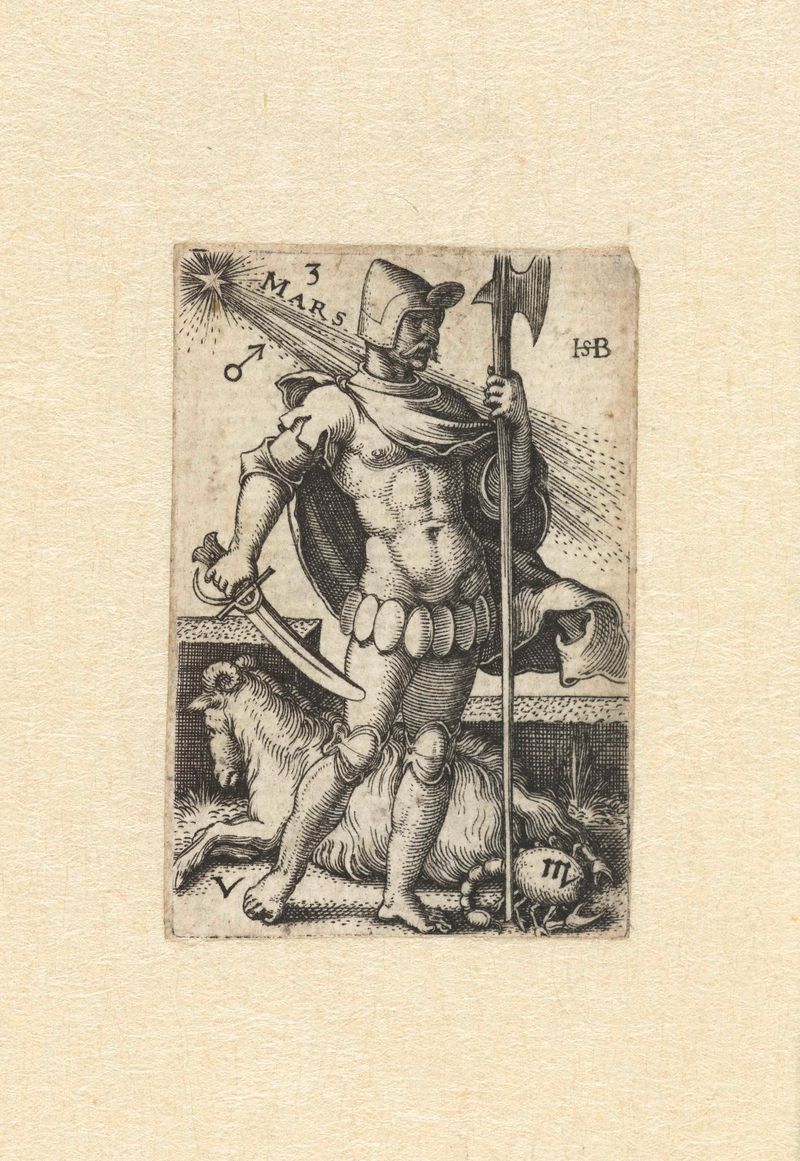
Mars met sterrenbeelden Ram en Schorpioen
Hans Sebald Beham

Achilles in gevecht met Hector
Hans Sebald Beham
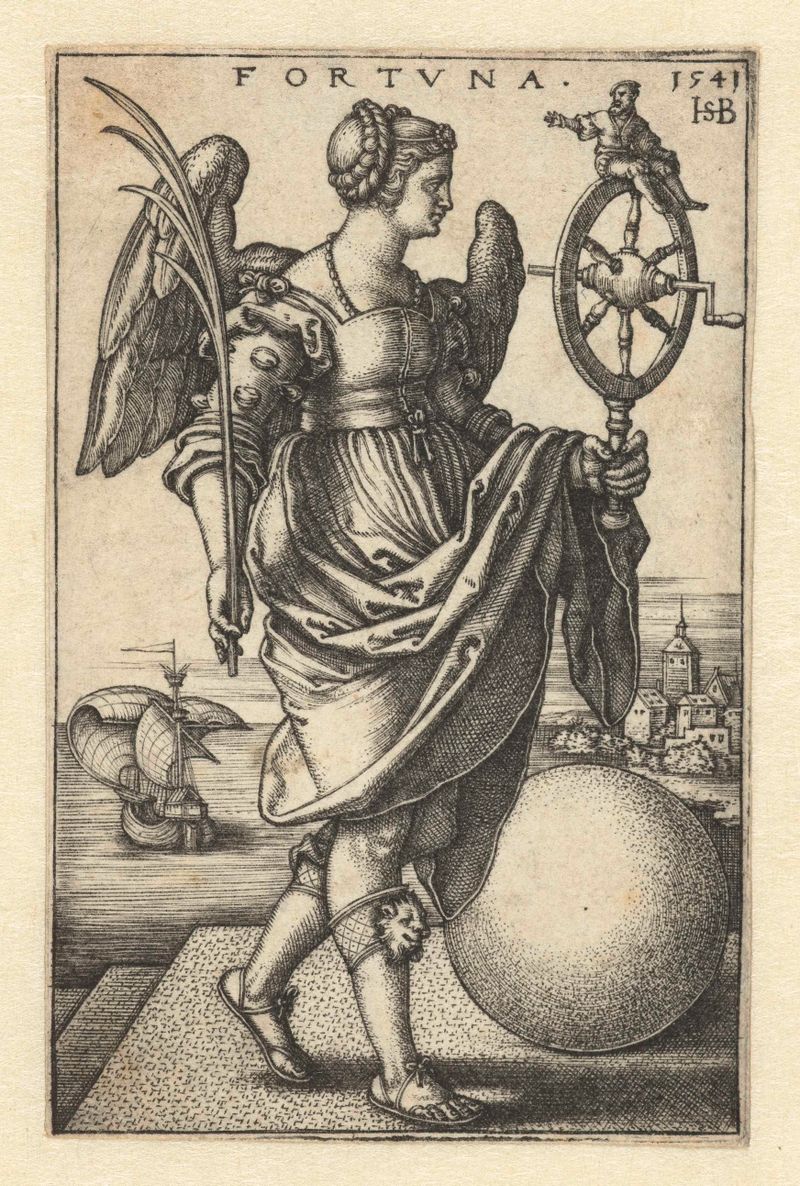
Fortuna
Hans Sebald Beham

Hercules worstelt met Antaeus
Hans Sebald Beham

Twee muzikanten met schalmey en doedelzak
Hans Sebald Beham

Voorzichtigheid (Prudentia)
Hans Sebald Beham

Hercules in gevecht met de Trojanen
Hans Sebald Beham
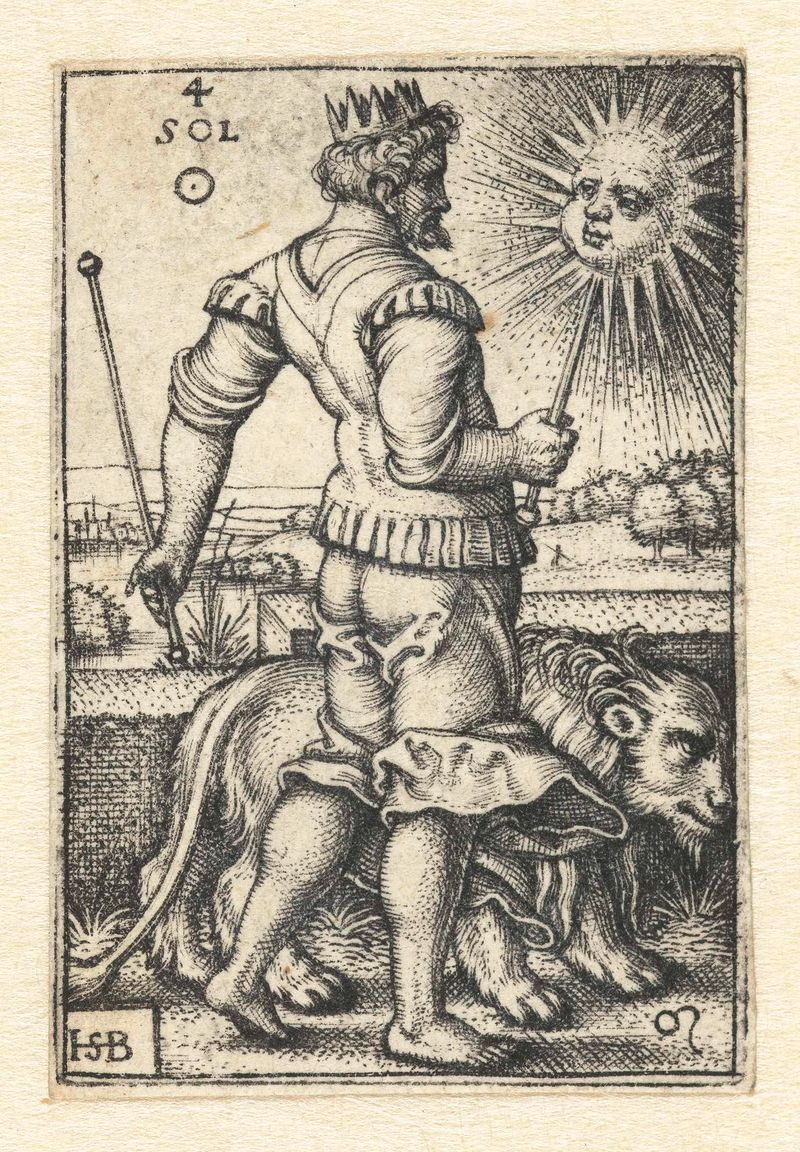
Apollo (Sol) met sterrenbeeld Leeuw
Hans Sebald Beham
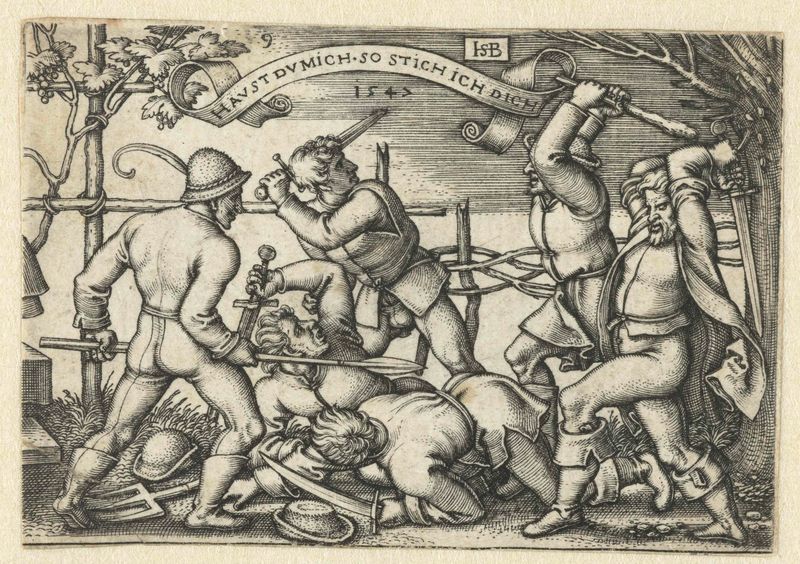
Vechtende boeren met zwaarden
Hans Sebald Beham
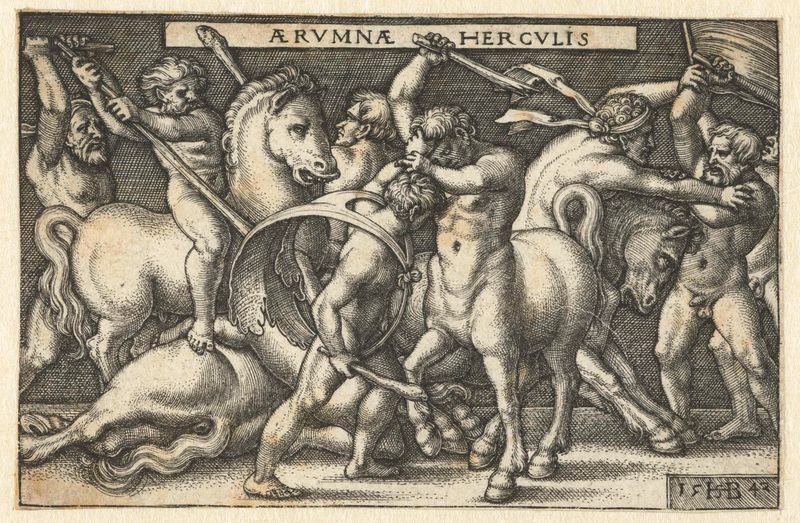
Hercules in gevecht met centaurs
Hans Sebald Beham





