
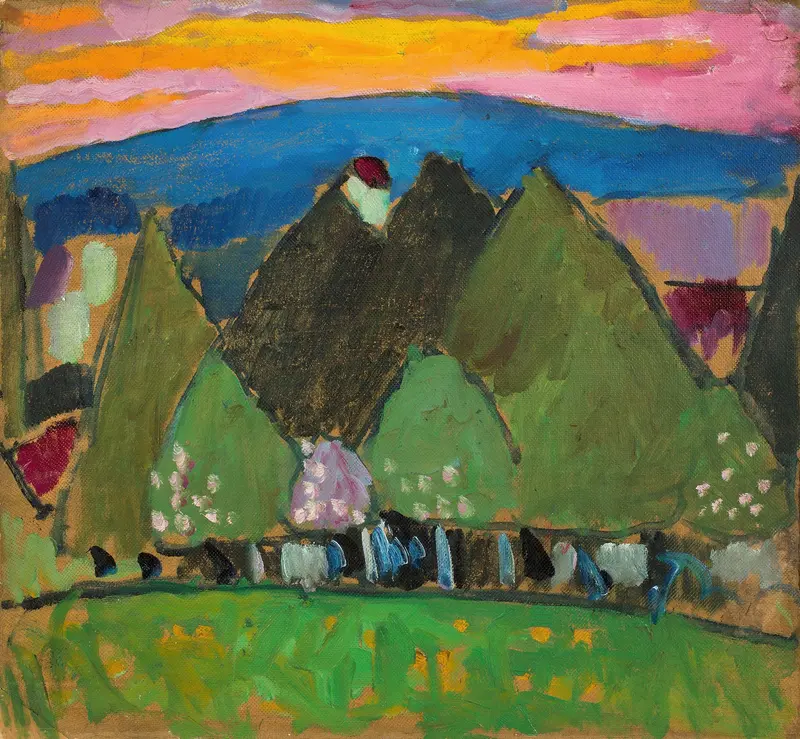
Dark trees over green slope — History & Facts
A sweep of emerald green rises before us, cut by a winding violet path that draws the eye up toward a row of brooding trees. The scene in Dark trees over green slope is not a tranquil countryside, but a charged encounter between color and form. The trees, rendered in dense, almost impenetrable black, stand against a sky of electric blue and bursts of magenta, as if dusk itself were aflame behind their silhouettes.
There is nothing accidental in the placement of these colors: the green of the slope pulses with energy, the purple shadows hint at something just out of sight, and the fiery horizon suggests a world in flux. The painting’s rhythm—its undulating lines and bold contrasts—invites the viewer to linger, to feel the tension between serenity and drama. Painted in 1910, Dark trees over green slope belongs to a moment when artists like Alexej von Jawlensky were reshaping the language of landscape. No longer a mere record of place, the landscape became a vessel for emotion and spiritual searching.
Jawlensky, associated with the Expressionist movement in Germany, used color as a force in itself, not just a description. Works like this, now held in collections such as Sotheby’s, remind us how the early twentieth century broke with old certainties. The world was changing fast—artists, collectors, and viewers alike were searching for new ways to see.
Look again at the path twisting through the green: it is a question as much as a road, leading deeper into the painting’s mysteries.
More Artworks by Alexej von Jawlensky

Murnau
Alexej von Jawlensky
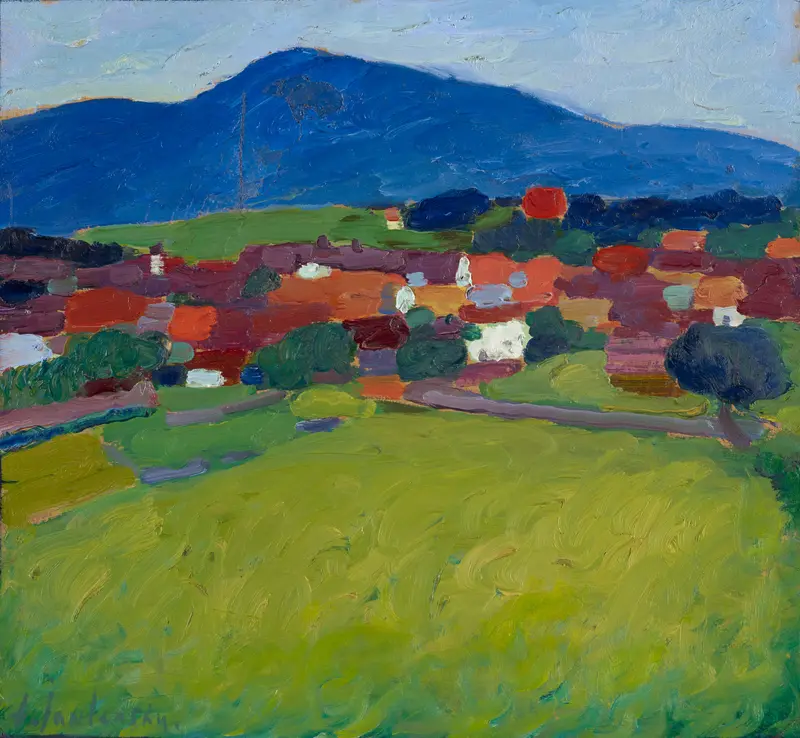
The Village Of Murnau
Alexej von Jawlensky
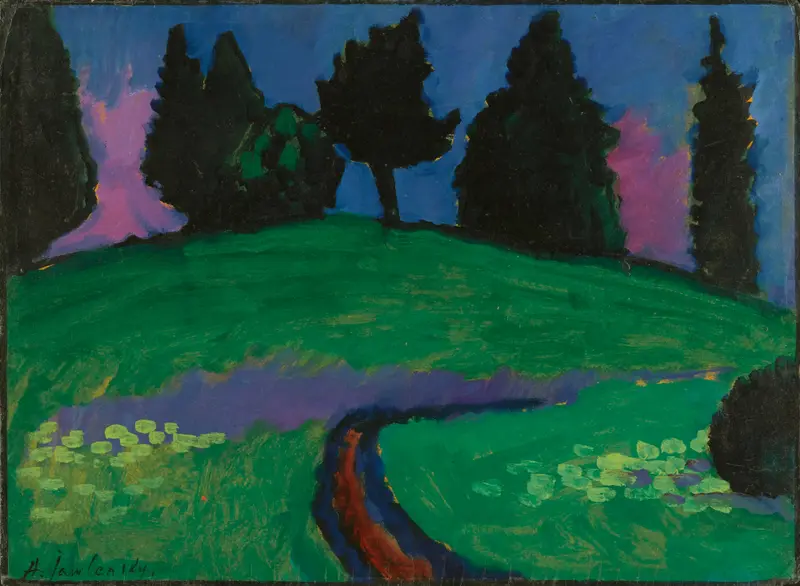
Dunkle Bäume über Grünem Hang (Dark Trees Over Green Slope)
Alexej von Jawlensky
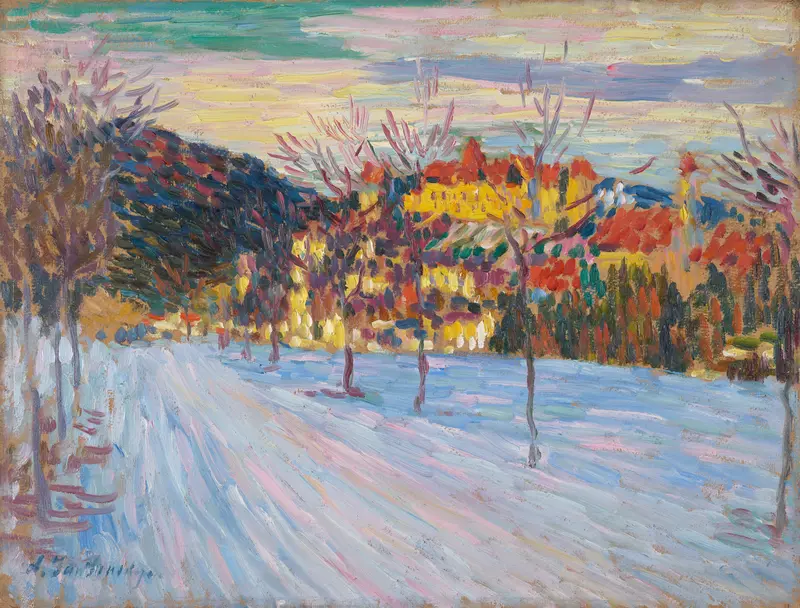
Füssen
Alexej von Jawlensky
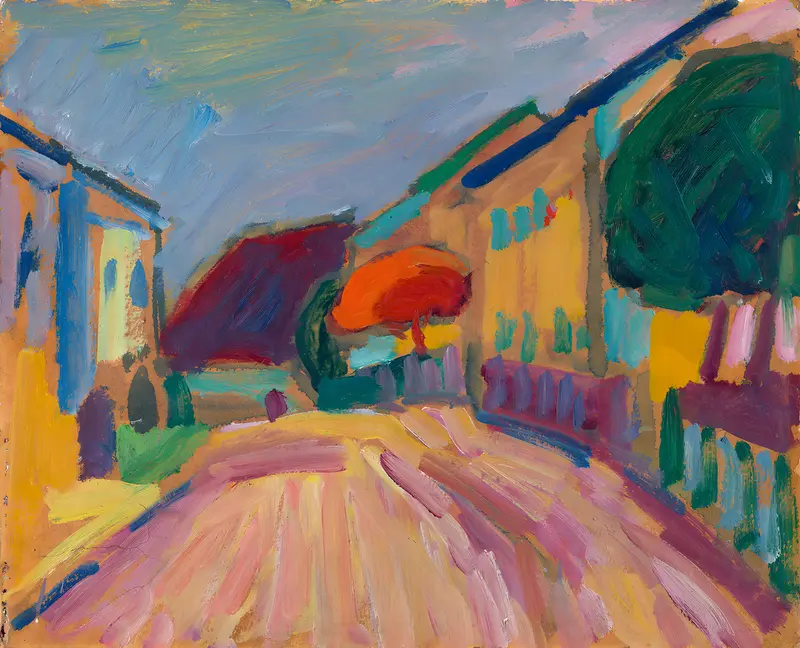
Sketch from Murnau
Alexej von Jawlensky
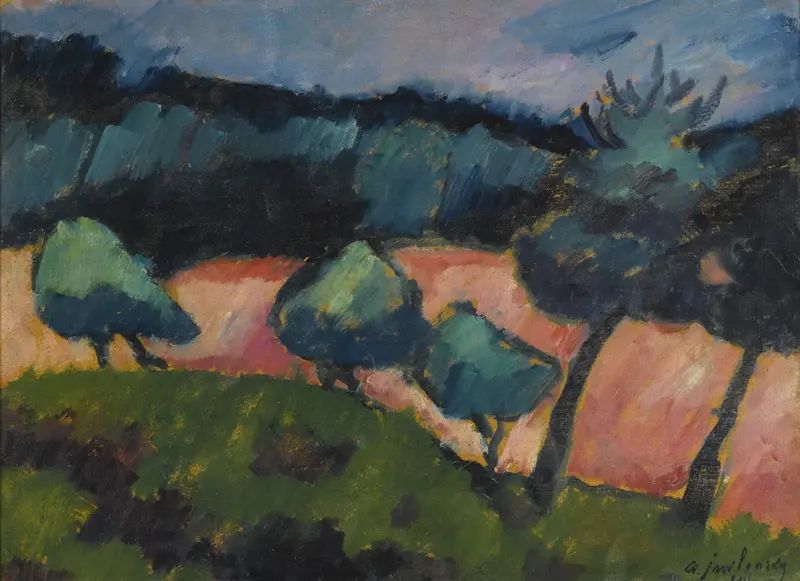
Bäume und Dünen in Prerow (Trees and dunes in Prerow)
Alexej von Jawlensky
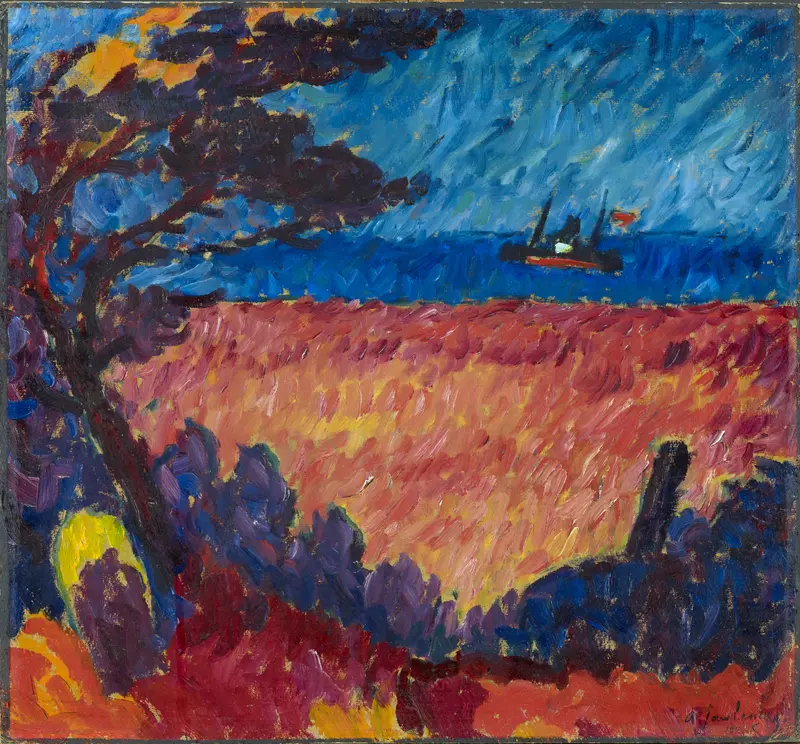
At The Baltic Sea
Alexej von Jawlensky
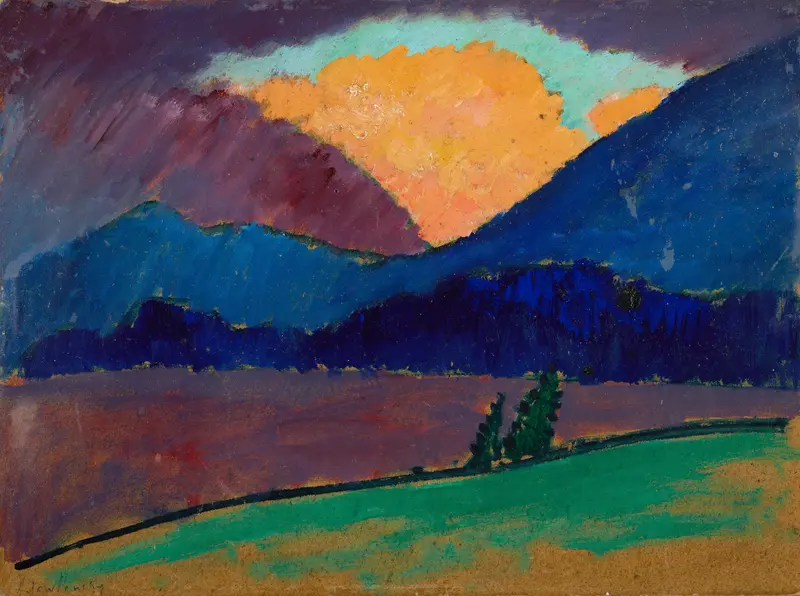
Summer evening in Murnau
Alexej von Jawlensky
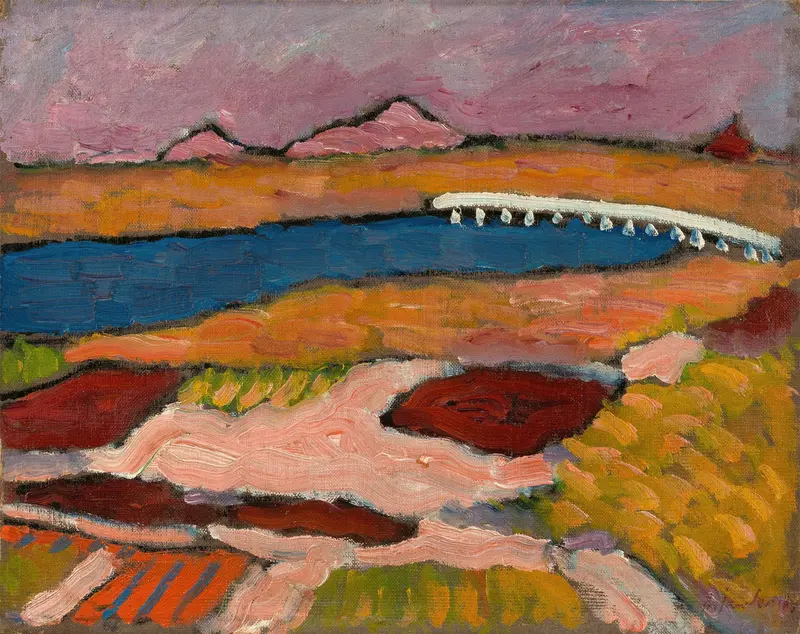
Prerow (Darß), Pommern
Alexej von Jawlensky
Landschaft mit Bäumen
Alexej von Jawlensky
More Landscape Art

The Starry Night
Vincent van Gogh

View of Delft
Johannes Vermeer

Water Lilies
Claude Monet

The Grand Canal, Venice, looking north-west from the Ca' Corner to the Ca' Contarini degli Scrigni, with the campanile of Santa Maria della Carità
Canaletto

Windsor Castle
Canaletto

The Grand Canal looking North-East from the Palazzo Dolfin-Manin to the Rialto Bridge
Canaletto